
Fruits
Growing Kiwi Fruit Vines
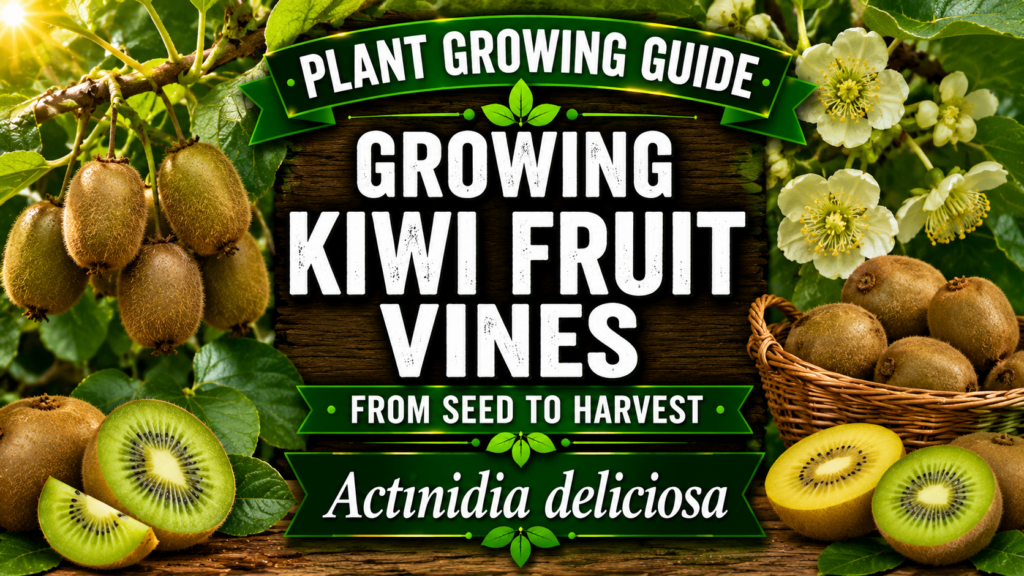
Growing Kiwi Fruit Vines. Kiwi Fruit (Actinidia deliciosa), which is also known as Chinese Gooseberry, is a perennial, deciduous vine that prefers a temperate climate. During the spring, both male and female kiwi vines bear prolific, white (sometimes creme-to-pale-yellow) flowers that, when fertilized, become the kiwi fruit. The fruit is a good source of vitamin C, vitamin K, vitamin E, folate, and potassium.
Growing Kiwi Fruit Vines From Seed
- Sow Kiwi Seeds in summer to autumn.
- Add potting soil to a tray or container. Spread the seeds out on top of the soil mix.
- Mist the seeds and soil mix. Put the container in a sunny spot.
- Keep the soil moist until germination takes place.
- Transplant the seedlings into individual containers. Re-pot into bigger containers once the plants become root bound.
- Once the plants are about 30cm in height, you can plant them out into a permanent spot in the garden.
- Kiwi vines are not self fertile and you need at least 1 male plant, for successful pollination. It is recommended to plant at least 3 or 4 plants close together, for successful pollination.
- Kiwi plants require well-drained soil, as they are prone to root rot if kept too wet.
- In South Africa it is best if the vines are planted in partial shade or in a spot where it gets afternoon shade.
- These vines can grow to a height of 9m and a spread of 5m.
- Make sure to plant the vines next to a strong trellis for support.
Maintaining Kiwi Fruit Vines
- Train the Kiwi vines by tying the shoots to the trellis.
- Prune the plants every winter by trimming excess vines and lateral growth.
- Fertilize with a well-balanced fertilizer in the spring.
- Kiwi vines are not drought tolerant, so water the plants regularly during dry spells.
- If the vines are planted in direct sun, then provide the plants with some shade cloth during the hot summer months.
- Kiwi plants flower and fruit on old wood.
- The female kiwi plants bear fruit within 3 – 5 years.
Buy Kiwi Vine Seeds
Related Articles
Growing Watermelon
Read MoreGrowing Guava Tree
Read MoreGrowing Cucamelon
Read MoreGrowing Star Fruit Tree
Read MoreGrowing Kei Apple
Read MoreGrowing Raspberry
Read MoreGrowing Blueberry
Read MoreGrowing Goji Berry
Read More