
Fruits
Growing Cape Gooseberry
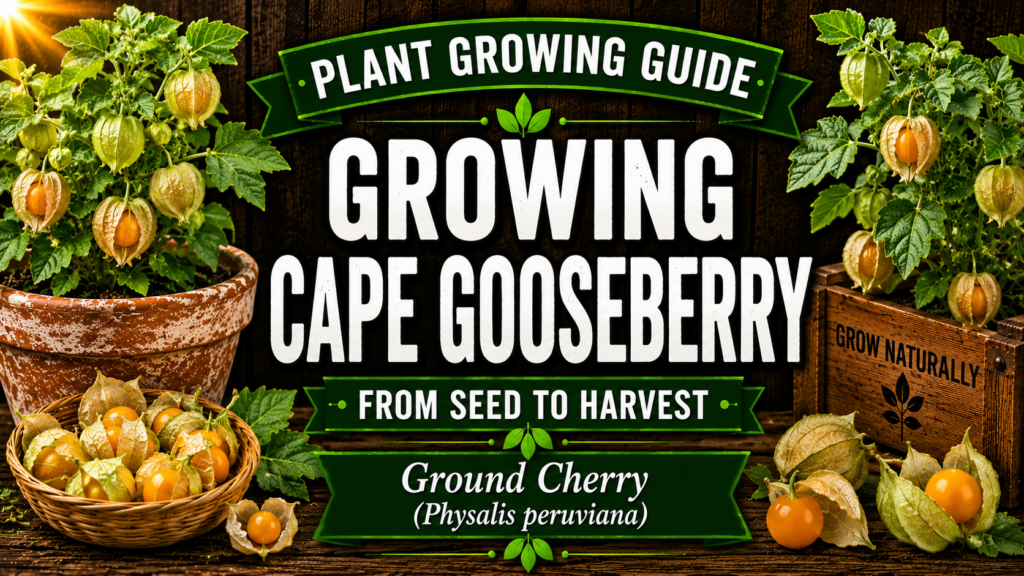
Growing Cape Gooseberry from seed is easy and it can overwinter outdoors in mild areas or when grown in favored positions such as the foot of a sunny wall. It is part of the family called physalis, a nightshade relative of the tomato and some other ground-growing berries. Cape gooseberry is not a true gooseberry and is in fact a ground cherry, which is not a true cherry but more closely related to tomatoes and tomatillos. The cape gooseberry is an excellent source of vitamins and is a good source of energy, protein, and phosphorus. It can be grown in almost any environment and is an easy plant to care for.
Growing Cape Gooseberry from Seed
- Start Gooseberry Seeds indoors 6 – 8 weeks before the end of frost season.
- Best planted at soil temperatures between 10°C and 25°C.
- Cape gooseberries can be grown fairly easily from seed.
- Don’t give up on them – the seeds take longer to germinate than those of many other plants.
- Plant seeds into damp potting compost and water carefully and consistently.
- Seeds need to be kept in a warm place in order to germinate.
- It is adaptable to most soil types and will grow almost anywhere, although it does best in sand or gravel.
- Cape gooseberries need full sun to thrive, which means at least six hours a day of bright sunlight.
Maintaining Cape Gooseberry Plants
- The cape gooseberry is easy to care for.
- The plant does not need a lot of water and over-watering is not good for the plant.
- Pruning is not required until after the first harvest.
Harvesting Cape Gooseberry
- Flowering can last up to 75 days after seeding, and the first harvest usually occurs up to 100 days after that.
- It will produce fruit for up to three years, but after the first year, the fruit is usually smaller.
- Some fruit will fall to the ground, and if still in the husk, it will remain edible up to several days.
- Additionally, cape gooseberries will continue to ripen after you pick them, especially if you place them in a windowsill to ripen.
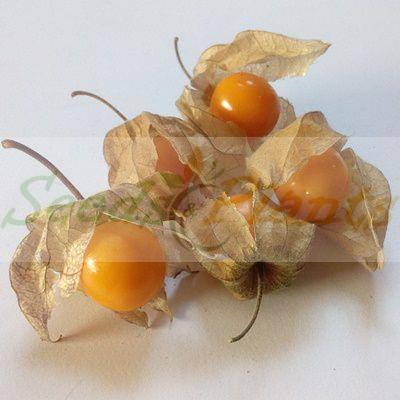
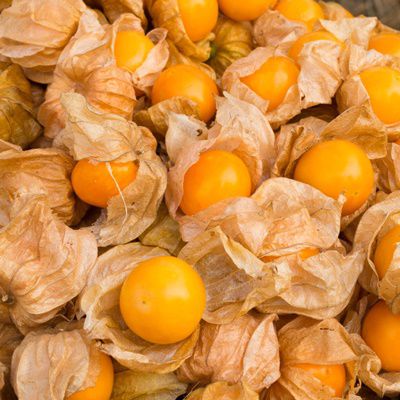
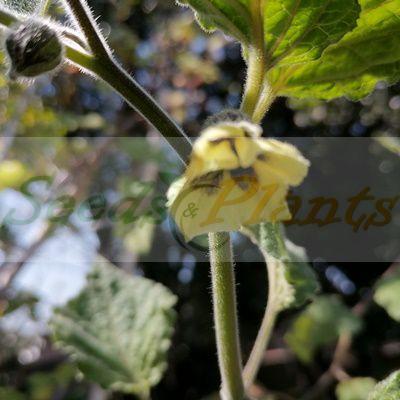
Our Cape Gooseberry Seed Varieties

Related Articles
Growing Watermelon
Read MoreGrowing Guava Tree
Read MoreGrowing Cucamelon
Read MoreGrowing Star Fruit Tree
Read MoreGrowing Kiwi Fruit Vines
Read MoreGrowing Kei Apple
Read MoreGrowing Raspberry
Read MoreGrowing Blueberry
Read More