Blue Butterfly Bush – 5 Seeds
(Rotheca myricoides)
R50.00
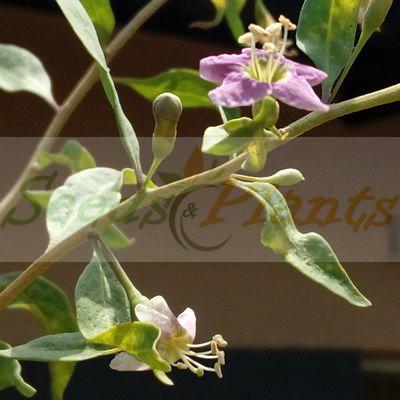
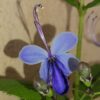
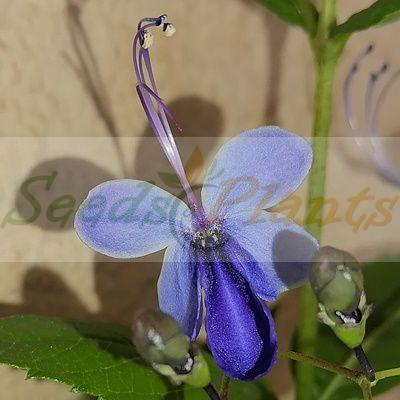
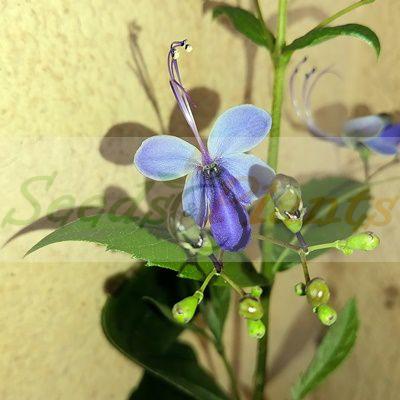
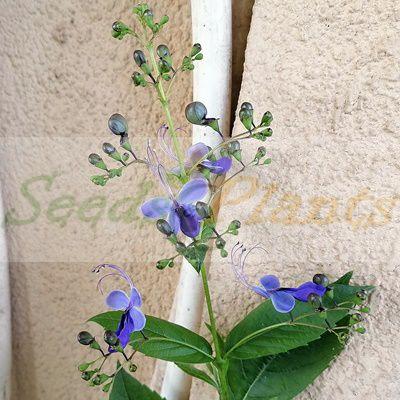
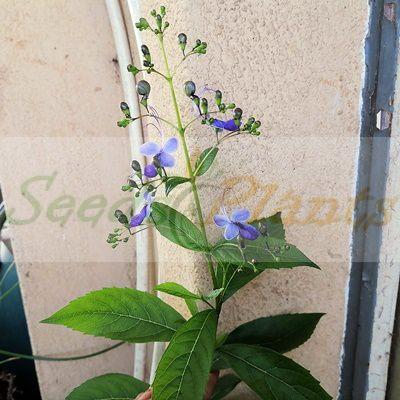
Blue Butterfly Bush produces striking, two-toned butterfly-shaped violet-purple flowers with long, curved, violet anthers. The plant has traditional uses and is a significant medicinal plant in various African traditional healing systems.
Common names: Blue Butterfly Bush, Blue Cat’s Whiskers, Blue Glory Bower, Bloutontelhout, Umbozwa, Blue Oxford/Cambridge Bush.
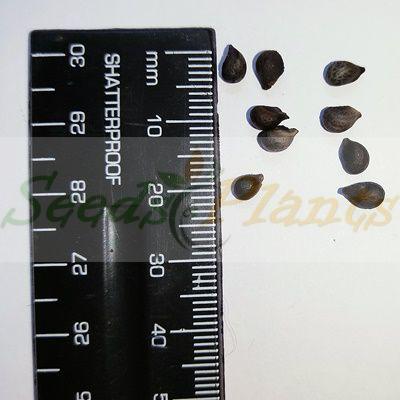
Seed Type: Organic- Harvested from our own plants.
Indoor Sowing: Early Spring.
Direct Sowing: Spring and Summer.
In stock
🌿 Shrub Quick Facts
Shrub Info
- 🌍 Origin / Region: Central Africa, East Africa, Northeast Africa, Southern Africa
- 🌳 Shrub Features: Flowering, Fruiting (Non-Edible)
- 🌿 Foliage Type: Evergreen, Semi-Deciduous
- 📏 Mature Height: 2-3m
- 🌸 Flower Color: Purple, Violet
- ⓘ Plant Use: Insect Repellent, Medicinal
Medicinal Info
- 🌿 Medicinal Part: Bark, Leaf, Root bark, Stem
- 🍵 Herbal Preparation: Concoctions, Decoction, Infusion / Tea, Juice, Poultice, Powder
- ⚕️ Healing System: African Traditional Medicine
Growth Traits
- 🌱 Life Cycle: Perennial
- 🌾 Plant Type: Shrub
- 🔁 Fruiting Needs: Needs Only 1 Plant
- 🪴 Growth Habit: Sprawling, Upright
Growing Requirements
- 🌞 Sun Exposure: Full Sun, Partial Shade
- ☀️ Growing Conditions: Cold Tolerant, Frost Sensitive, Heat Tolerant, Humid Conditions, Moderately Drought Tolerant
- 🟤 Soil Preference: Compost Enriched, pH 5.0–6.5, Tolerant of most soils, Well-Drained
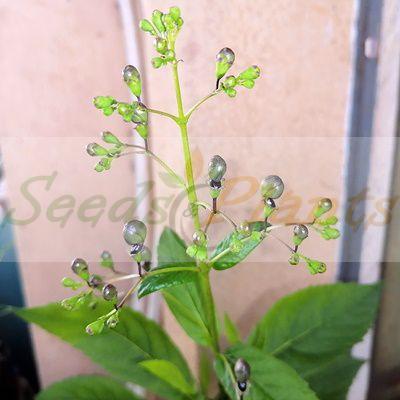
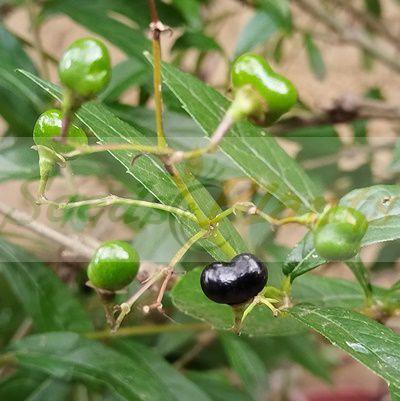
Blue Butterfly Bush (Rotheca myricoides) is a fast-growing, evergreen, or semi-deciduous shrub, typically reaching 2–3m in height, but can grow up to 4m in height. It has glossy green foliage and striking, two-toned butterfly-shaped violet-purple flowers with long, curved, violet anthers. Flowering takes place from spring to summer/autumn. This is followed by small, round green fruits that ripen to dark purple/black and are attractive to birds.
Excellent for small gardens, mixed shrub borders, container gardening, and informal, low-screening hedges. It is considered a weak-stemmed shrub that can act as a small tree if not pruned, but then the plant will need support due to its sprawling nature. It responds very well to regular pruning to encourage a bushy, dense, and flowering form. It thrives in hot, humid climates. In areas with extremely hot summers, it prefers some partial shade.
Common names: Blue Butterfly Bush, Blue Cat’s Whiskers, Blue Glory Bower, Bloutontelhout, Umbozwa, Blue Oxford/Cambridge Bush.
The plant has traditional uses and is a significant medicinal plant in various African traditional healing systems. It is widely used by communities in Kenya, Tanzania, Ethiopia, and other parts of Africa.
Safety Warning: It is generally recommended to keep the plant out of reach of pets and children.The fruit is considered safe for wildlife but not for people, and the plant should be treated as toxic if ingested.
Traditional Medicinal Uses:
- Powdered Bark: Extensively used in traditional medicine to treat snakebites, reduce bodily swellings, and relieve indigestion. It is also applied to treat colds, chest pains, headaches, and bleeding gums.
- Root Bark: Used to treat fevers in cattle and diarrhea in calves. It is also used as an antipyretic and analgesic.
- Leaves: Used in a decoction to treat epilepsy, arthritis, typhoid, coughs, eye problems, tonsillitis, rheumatism, gonorrhea, and as an aphrodisiac.
- Stem: Used to treat pneumonia, constipation, and malaria.
Insect Repellent Uses
- Leaves and Twigs: When crushed, the leaves and twigs emit a strong, pungent, or rank odor that acts as a deterrent to insects and pests.
- Application: The aromatic leaves can be rubbed on the skin (especially around ankles and arms) to repel mosquitoes. They are also used as a fragrant, natural pest-repellent spray in gardens to reduce the need for chemical spraying.
- Garden Use: It is highly valued as a pest-free, ornamental shrub that helps keep surrounding plants free from insect
Growing Blue Butterfly Bush
Indoor Sowing: Early Spring.
Direct Sowing: Spring and Summer.
- Use a well-drained, organically rich seed-sowing mix, such as a combination of compost and river sand (1:2 ratio).
- Sow seeds shallowly, about 1–3mm deep.
- Place in a warm, bright, and sheltered location.
- Keep the soil evenly moist but not waterlogged.
- Germination in about 60 days, although germination can be very erratic and it may take much longer, so patience is required.
- Transplant seedlings to the garden once they have their first true leaves and are large enough to handle.
Does this plant have medicinal uses?
Traditionally, Blue Butterfly Bush has a history of use in African Traditional Medicine. Seeds are sold for cultivation purposes only.
Disclaimer
Medicinal Information:
All medicinal information on this website is for educational and informational purposes only and may not be construed as medical advice. The information is not intended to replace medical advice or treatment offered by healthcare professionals.
Seeds, Plants, Plant Cuttings, Geophytes and Dried Herbs:
In some countries and provinces, certain plants are deemed as invasive and are not allowed to be planted at all, whilst some plants are allowed to be grown only in certain areas or provinces. The onus is on you as the buyer to familiarize yourself with the regulations pertaining to your location, before purchasing any of our seeds, plants, plant cuttings, geophytes or dried herbs. We will not be held liable, should you purchase any seeds, plants, plant cuttings, geophytes or dried herbs. from us which are prohibited in your country or province.
Related products