Gardening Tips
Seed Viability Myths
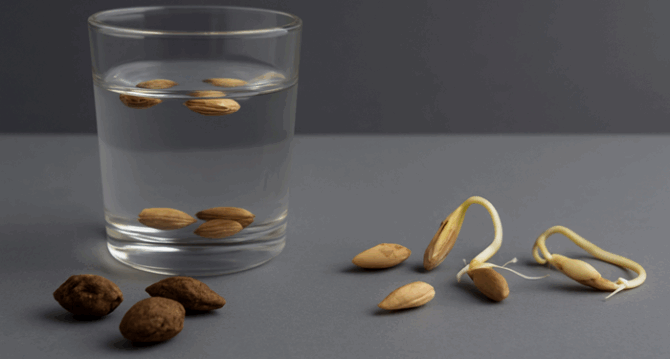
Many gardeners have heard this advice: drop your seeds in water, and you’ll instantly know if they’re “alive” or “dead.” Some people even believe a seed must look perfect to sprout. These ideas are everywhere online, but honestly, neither one stands up to closer inspection. Here’s why those shortcuts don’t really work and what professionals actually do to check seeds.
1. The Well-Known Water “Float Test” — Why It Falls Short
The float test works like this:
Sink = alive.
Float = dead.
It sounds simple, but seeds are more complex. Whether a seed floats or sinks depends on factors like density, trapped air, how much water it’s absorbed, and the seed’s outer covering — none of which actually tell you if the embryo inside is alive.
Why can good seeds float?
- Some types naturally have tiny air pockets inside.
- Seeds sometimes need time to absorb water, so they may float at first even if they’re healthy.
- Some low-density seeds just always float.
- And dead seeds sometimes sink. Water can get inside, making them drop — even if there’s nothing alive within. Or they might simply be heavy enough to sink, even when they’re no longer viable.
Bottom line: Floating or sinking doesn’t prove anything. Seed labs and agricultural experts agree — this test gives lots of false results and isn’t a reliable way to see if your seeds are good. Additionally, from personal experience over the years, we can attest to this fact.
2. What Really Matters for Seed Viability?
Viability means the embryo inside is alive and able to sprout. What affects this? Things like:
- The seed’s age
- How it was stored (moisture, temperature)
- How it was harvested and cleaned
- If it was damaged or mishandled
You can’t actually judge any of this by tossing seeds in water or just by looking at them.
3. How Professionals Test Seeds
Professional seed labs (like ISTA, AOSA, USDA, FAO, and others) rely on scientific tests:
- Germination Tests: This is the standard. They place seeds in proper conditions and count how many actually sprout. Simple, direct, and gives the real answer.
- Tetrazolium (TZ) Staining: A chemistry technique: living tissues turn red with a special stain, so you can see if the embryo’s alive. Fast and reliable.
- X-ray Imaging: Some labs scan seeds to check for empties, insect damage, or defective embryos.
And no, they don’t use the float test. It isn’t trusted or recognized in true seed science.
4. Don’t Judge Seeds by Their Shape or Appearance
Seeds come in all shapes and sizes. Some are flat, bumpy, pale, some are dark, some have spots or other quirks. They’re not supposed to look like identical factory-made beads. Most of these little imperfections don’t mean anything. Plenty of odd-looking seeds sprout just fine, and a perfect-looking seed can still be dead or dormant if it’s old or stored badly.
5. Why Refunds Aren’t Given for Floating Seeds or “Bad Looks”
Since float tests and seed appearance are not valid indicators (and are not accepted by scientific or agricultural standards), they aren’t considered grounds for a refund. Refunds can’t be given because:
- Your seeds floated in water.
- They looked flat, round, small, pale, or odd.
This isn’t just a store rule — it’s standard everywhere seeds are sold and tested.
6. Quick Recap
Myth: Floating seeds are dead.
Reality: Many healthy seeds float.
Myth: Sinking seeds are alive.
Reality: Some dead seeds sink.
Myth: Ugly seeds don’t grow.
Reality: Unusual-looking seeds are usually fine.
Myth: The float test is reliable.
Reality: Experts don’t recommend it.
Myth: Germination testing works.
Reality: True—you get real results.
Disclaimer
Medicinal Information:
All medicinal information on this website is for educational and informational purposes only and may not be construed as medical advice. The information is not intended to replace medical advice or treatment offered by healthcare professionals.
Seeds, Plants, Plant Cuttings, Geophytes and Dried Herbs:
In some countries and provinces, certain plants are deemed as invasive and are not allowed to be planted at all, whilst some plants are allowed to be grown only in certain areas or provinces. The onus is on you as the buyer to familiarize yourself with the regulations pertaining to your location, before purchasing any of our seeds, plants, plant cuttings, geophytes or dried herbs. We will not be held liable, should you purchase any seeds, plants, plant cuttings, geophytes or dried herbs. from us which are prohibited in your country or province.