Calendula Pacific Beauty Mixed – 50 Seeds
(Calendula officinalis'Pacific Beauty Mixed')
R30.00
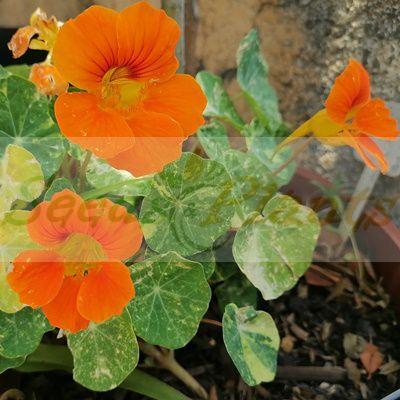
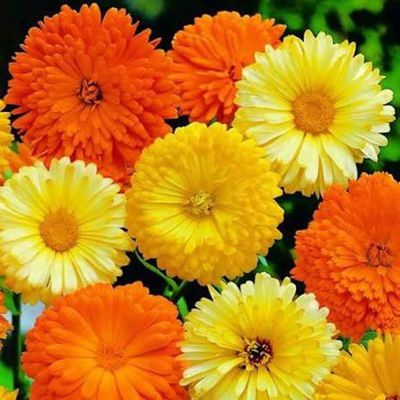
Calendula Pacific Beauty Mixed produces large, semi-double to fully double daisy-like blooms in bright shades of orange, yellow, apricot, and persimmon.
Indoor Sowing: Early Spring.
Direct Sowing: Autumn.
In stock
🌼 Flower Quick Facts
Flower Info
- 🌸 Flower Color: Apricot, Orange, Reddish-Orange, Yellow
- 🦋 Pollinator Method: Attracts Bees, Attracts Butterflies, Attracts Hoverflies, Attracts Hummingbirds, Attracts Lacewings, Attracts Ladybirds
Medicinal Info
- 🌿 Medicinal Part: Flower, Leaf, Stem
- 🥣 Herbal Preparation: Extract / Tincture, Infused Oil, Infusion / Tea, Ointments/Creams, Poultice, Powder
- ⚕️ Healing System: European Traditional Medicine
Culinary Info
- 🍽️ Culinary Use: Baking, Beverages/Teas, Coloring, Flavoring, Garnish, Salads, Savory dishes
- 🥗 Edible Part: Petals
- 😋 Flavor Profile: Peppery
Growth Traits
- 🌱 Life Cycle: Annual
- 🌾 Plant Type: Herbaceous Annual
- 🪴 Growth Habit: Bushy, Upright
Growing Requirements
- 🌞 Sun Exposure: Full Sun
- 💧 Water Needs: Avoid Overwatering, Moderate Water
- ☀️ Growing Conditions: Cold Tolerant, Cool Weather, Frost Tolerant, Moderately Drought Tolerant, Not Heat Tolerant
- 🟤 Soil Preference: Compost Enriched, Tolerant of most soils, Well-Drained
Calendula Pacific Beauty Mixed (Calendula officinalis’Pacific Beauty Mixed’), is a short-lived aromatic herbaceous perennial in colder climates. In South Africa it is grown as an annual. It can grow to a height of about 40 – 60 cm. It produces large, semi-double to fully double daisy-like blooms in bright shades of orange, yellow, apricot, and reddish-orange.
Calendula Culinary Uses
Pot marigold florets are edible. They are often used to add color to salads or added to dishes as a garnish and in lieu of saffron. The leaves are edible but are often not palatable. They have a history of use as a potherb and in salads.
Calendula Medicinal Benefits & other Uses
Flowers were used in ancient Greek, Roman, Middle Eastern, and Indian cultures as a medicinal herb, as well as a dye for fabrics, foods, and cosmetics. Many of these uses persist today. They are also used to make oil that protects the skin.
Marigold leaves can also be made into a poultice that helps scratches and shallow cuts to heal faster, and can help prevent infection.
Growing Calendula Pacific Beauty Mixed
Indoor Sowing: Early Spring.
Direct Sowing: Autumn.
- Sow Calendula seeds by spreading them over the soil surface.
- Gently press the seeds into the ground or cover them with a thin layer of soil.
- The seeds need some light to germinate, so don’t bury them too deeply.
- Keep the soil moist, but not waterlogged, as the seeds can rot in overly wet conditions.
- Ideal germination temperature is between 21-24°C.
Related products