
Natal Plum – 5 Seeds
(Carissa macrocarpa)
R30.00
Natal Plum makes a good garden hedge and the fruits can be eaten raw or made into delicious jams or jellies.
Common names: Natal plum, big num-num (Eng.); grootnoem-noem (Afr.); Amatungulu (Zulu).
Indoor Sowing: Spring and Early Summer.
Direct Sowing: Spring and Early Summer.
In stock
🍒 Fruit Quick Facts
Fruit Info
- 🍽️ Culinary Use: Chutneys, Jams and Jellies, Juices and Syrups, Pickling, Pies and tarts, Raw Eating
- 🥗 Edible Part: Fruit
- 😋 Flavor Profile: Sweet-tart
Growth Traits
- 🌱 Life Cycle: Perennial
- 🌾 Plant Type: Shrub
- 🔁 Fruiting Needs: Needs Only 1 Plant
- 🪴 Growth Habit: Bushy, Fast Growing, Rounded, Shrub-like, Spiny
- 🌸 Flower Color: White
- 🌿 Foliage Type: Evergreen
- 📏 Mature Height: 0.6-2.1m
- 🦋 Pollinator Method: Attracts Beetles, Attracts Hawkmoths, Self-pollinating
Growing Requirements
- 🌞 Sun Exposure: Full Sun, Partial Shade
- 💧 Water Needs: Avoid Overwatering, Moderate Water
- ☀️ Growing Conditions: Drought Tolerant, Heat Tolerant, Moderate Cold Tolerance, Moderate Frost Tolerance
- 🟤 Soil Preference: Sandy, Tolerant of most soils, Well-Drained
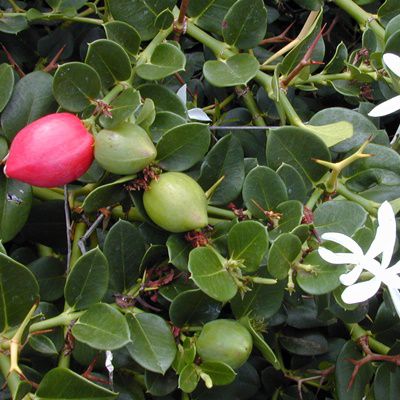
Natal Plum (Carissa macrocarpa) is a fast-growing, ornamental shrub that is wind resistant and can grow in coastal areas. It usually forms a dense thorny shrub but it can grow into a small tree up to 4 m high. This species has Y- shaped thorns; the young branches are green and all parts of the plant exude a white, milky, non-toxic latex. Leaves are leathery, a shiny dark green above and paler below, 20-60 x 15-35 mm, egg-shaped, oval or almost round. The tips of the leaves are sharply or bluntly pointed and usually with a thorn-like point.
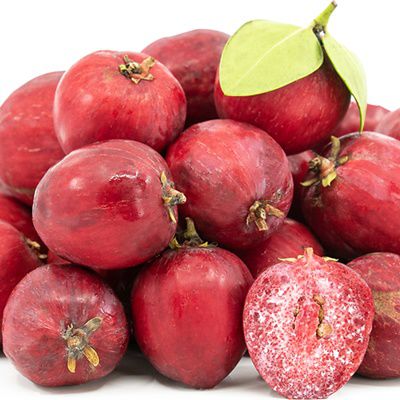
The flowers vary in size, up to 35 mm in diameter, are pure white and scented like orange blossom. The flower tube is hairy within. It flowers from spring to midsummer. The shrub makes a good garden hedge and the fruits can be eaten raw or made into delicious jams or jellies.The plant attracts birds and butterflies to the garden.The large, oval red fruit is edible and is rich in Vitamin C, magnesium and phosphorus.
Common names: Natal plum, big num-num (Eng.); grootnoem-noem (Afr.); Amatungulu (Zulu)
Growing Natal Plum
Indoor Sowing: Spring and Early Summer.
Direct Sowing: Spring and Early Summer.
- Use a tray or small pots filled with a well-draining seed-starting mix. A good ratio is 1 part compost to 2 parts fine river sand.
- Press the seeds into the mix and cover them with a thin layer of soil or compost.
- Water the tray well after sowing to ensure the soil is moist.
- Keep the soil consistently moist but not waterlogged. Overly wet conditions can cause the seeds to rot.
- Place the tray in a warm, bright area out of direct sunlight.
- For best results, keep the temperature between 21°C and 27°C. A wind-free location is also beneficial.
- Germination can take 4 weeks or longer. Seedlings will develop very slowly at first.
- Once the seedlings have their first true leaves and are sturdy enough to handle, transplant them into individual pots. Use well-composted soil for these pots.
- They grow best in full sun to semi-shade and are tolerant of coastal winds and salt spray.
- While they can tolerate poor soil, they thrive in good garden soil enriched with compost and with excellent drainage.
- If you are planting a hedge, space the plants about 1 meter apart.
- Once established, the plants are drought-tolerant but benefit from occasional watering.
- This plant is frost tender, but can survive a little frost if planted in a protected spot.
Related products