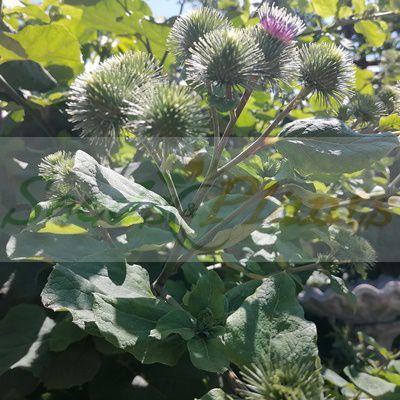
Burdock – 10 Seeds
(Arctium lappa)
R30.00
Burdock is cultivated for the edible root in Asia and is also used as a medicinal plant.
Common Names: Greater burdock, gobō, edible burdock, lappa, beggar’s buttons, thorny burr and happy major.
Seed Type: Organic – Harvested from our own plants.
Indoor Sowing: Cold Stratification and then direct sow in Spring.
Direct Sowing: Autumn.
In stock
🌿 Herbal Quick Facts
Uses
- ⓘ Plant Use: Culinary, Medicinal, Soil Aeration
Medicinal Info
- 🌿 Medicinal Part: Leaf, Root, Seed
- 🥣 Herbal Preparation: Decoction, Extract / Tincture, Infusion / Tea, Poultice
- ⚕️ Healing System: Chinese Traditional Medicine, European Traditional Medicine
Culinary Info
- 🍽️ Culinary Use: Beverages/Teas, Cooking, Roasting
- 😋 Flavor Profile: Bittersweet, Earthy
Growth Traits
- 🌱 Life Cycle: Biennial
- 🦋 Pollinator Method: Attracts Bees, Attracts Butterflies, Attracts Moths
- 🪴 Growth Habit: Upright
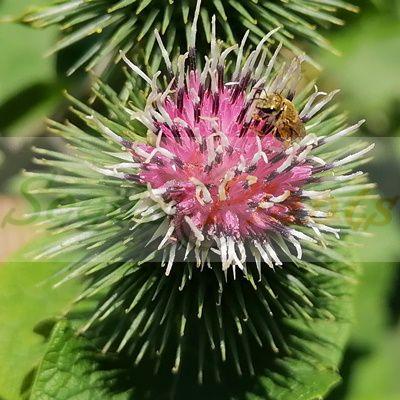
- 🌸 Flower Color: Purple
Growing Requirements
- 🌞 Sun Exposure: Full Sun
- 💧 Water Needs: Avoid Overwatering, Regular Water
- ☀️ Growing Conditions: Frost Tolerant
- 🟤 Soil Preference: Compost Enriched, Loam, Rich Organic, Sandy, Well-Drained
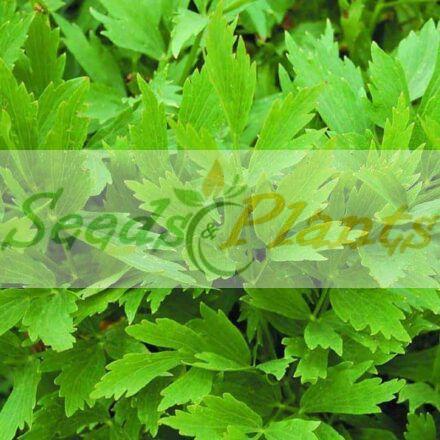
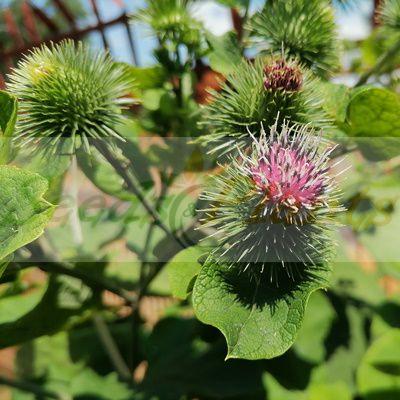
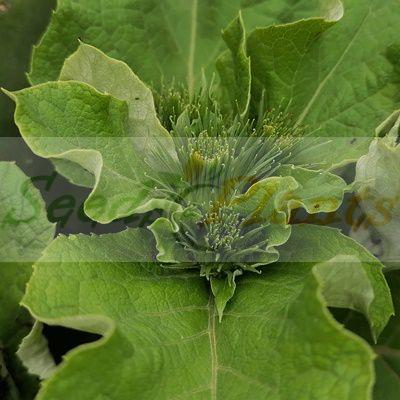
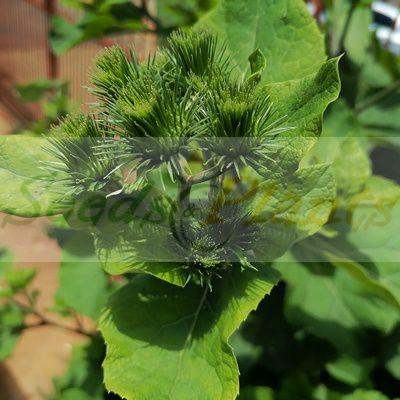
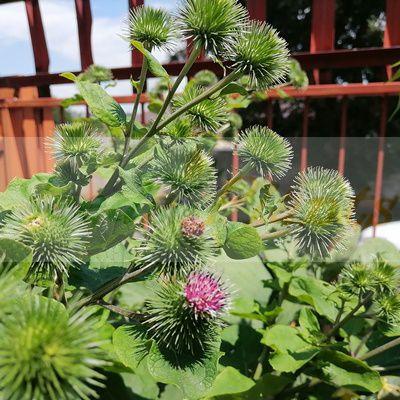
Burdock, (Arctium lappa), also spelled burrdock, is a genus of biennial plants in the Asteraceae family, bearing globular flower heads with prickly bracts (modified leaves). They are cultivated for their edible root in Asia and is also used as a medicinal plant. Their fruits are round burrs that stick to clothing and fur. This is an easy plant to grow either as an herbal medicine or as a vegetable.
Common Names: Greater burdock, gobō, edible burdock, lappa, beggar’s buttons, thorny burr and happy major.
Garden and Soil Benefits:
- Soil Aeration: Known as one of the most powerful “bio-drills” in the botanical world. Its massive taproot can reach up to 1 metre deep, punching through compacted subsoil layers that other plants cannot penetrate.
Burdock Culinary Uses
- Taproot (Most Popular): The long, brown, carrot-like root is the most commonly consumed part. It has a sweet, earthy, and nutty flavor and is used in
Kinpira Gobo which is a popular Japanese dish, as well as in stir-fries and soups. It can also be roasted/fried, mashed, pickled or made into a herbal tea. - Flower Stalks (The “Hidden” Gem): Harvested in late spring before the plant blooms, the inner core of the flower stalk is considered the best part of the plant by some, with a taste similar to artichoke hearts. It can be boiled, steamed, or used in soups.
- Young Leaves and Stems: Young leaves can be cooked as greens, though they are quite bitter and often require multiple boils.
- Petioles (Leaf Stems): When young and tender, they can be peeled and steamed or used like asparagus.
- Wrappers: Large, older leaves can be used to wrap foods for grilling or cooking.
- Seeds: The seeds can be sprouted and added to salads or used in soups.
- Root (Primary medicinal part): Used for detoxifying the liver, relieving chronic skin conditions (eczema, psoriasis), acting as a diuretic, reducing blood pressure, and as a prebiotic.
- Leaves: Applied topically as a poultice for skin issues, burns, wounds, and aching joints.
- Seeds: Used in traditional Chinese medicine for colds, coughs, and throat infections.
Indoor Sowing: Cold Stratification and then direct sow seeds in Spring.
Direct Sowing: Autumn.
- For indoor sowing, the seeds should be stratified first and then sown directly in spring after all danger of frost has passed. Alternatively the seeds can be direct sown in Autumn without cold stratification and germination will then take place the following Spring.
- For indoor sowing, first cold stratify the seeds in the fridge for 90 days. This mimics winter.
- After the cold treatment, take out the seeds and plant them directly in the garden as burdock does not transplant well, due to its taproot.
- Put seeds in the ground about 1-2 cm deep.
- Leave 10-15 cm between each seed to give them room to grow. If they’re too close, they might fight for food and water.
- Keep the soil evenly moist until germination.
- Once the seed has germinated, young plants grow quickly but it takes some time to establish a taproot of sufficient size to harvest.
Related products