
Cleavers – 20 Seeds
(Galium aparine)
R30.00
Cleavers is a culinary & medicinal herb found around the world in Europe, North America, Asia, Greenland, and Australia. .
Common Names: hitchhikers, clivers, bedstraw, catchweed, stickyweed, sticky bob, stickybud, stickyback, sticky molly, robin-run-the-hedge, sticky willy, sticky willow, stickyjack, stickeljack, grip grass, sticky grass, bobby buttons, whippysticks, and velcro plant.
Seed Type: Organic – Harvested from our own plants.
Indoor Sowing: Cold Stratification and then transplant once big enough.
Direct Sowing: Late Summer and Early Autumn
In stock
🌿 Herbal Quick Facts
Medicinal Info
- 🌿 Medicinal Part: Flower, Leaf, Stem
- 🥣 Herbal Preparation: Extract / Tincture, Infusion / Tea, Juice, Ointments/Creams, Poultice
- ⚕️ Healing System: American Traditional Medicine, Ayurvedic System of Medicine, Chinese Traditional Medicine, European Traditional Medicine, Unani System of Medicine
Culinary Info
- 🍽️ Culinary Use: Coffee Substitute, Cooking, Flavoring
Growth Traits
- 🌱 Life Cycle: Annual
- 🌾 Plant Type: Creeper
- 🦋 Pollinator Method: Attracts Bees, Attracts Beetles, Attracts Hoverflies, Attracts Moths
- 🪴 Growth Habit: Creeper, Sprawling
- 🌸 Flower Color: Greenish-white, White
Growing Requirements
- 🌞 Sun Exposure: Partial Shade
- 💧 Water Needs: Avoid Overwatering, Regular Water
- ☀️ Growing Conditions: Cold Tolerant, Cool Weather, Frost Tolerant, Not Drought Tolerant, Not Heat Tolerant
- 🟤 Soil Preference: Clay, Loam, Moist, Rich Organic, Sandy loam
Cleavers (Galium aparine) is a culinary and medicinal herb found around the world in Europe, North America, Asia, Greenland, and Australia. Cleavers is often considered an indicator of high soil fertility, particularly with above-average levels of nitrogen and phosphorus.
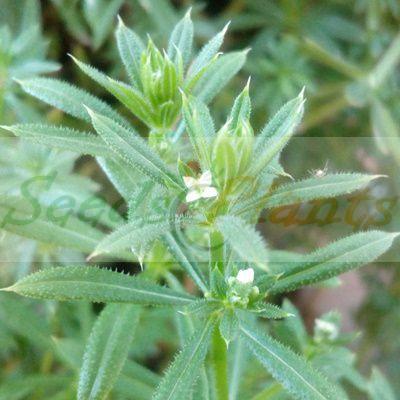
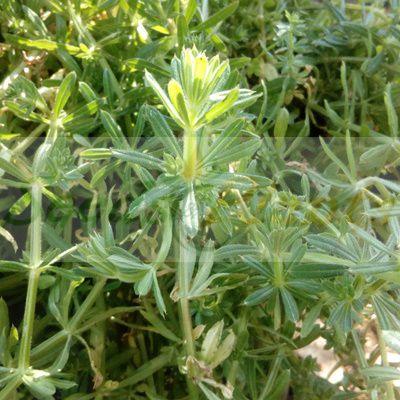
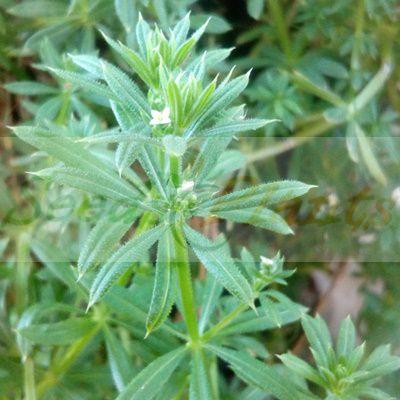
This species is a straggling climber, growing up to 3 m long, with slender 4-angled stems. Its narrow leaves can reach 7 cm long and are arranged in groups (whorls) of 6-8 (rarely 4) around the stem. The whole plant is covered in minute hooked hairs, and can cling to skin, fur and clothing. The flowers are tiny, white, 4-petalled tubes, developing into small round fruits, often borne in clusters of two or three. These fruits are also covered in hooked hairs which catch in the fur of passing animals or the clothes of humans.
Common Names: hitchhikers, clivers, bedstraw, catchweed, stickyweed, sticky bob, stickybud, stickyback, sticky molly, robin-run-the-hedge, sticky willy, sticky willow, stickyjack, stickeljack, grip grass, sticky grass, bobby buttons, whippysticks, and velcro plant.
Culinary Uses
- The leaves and stems of the plant can be cooked as a leaf vegetable if gathered before the fruits appear.
- Cleavers are in the same family as coffee. The fruits of cleavers have often been dried and roasted, and then used as a coffee substitute which contains less caffeine.
- Extracts from adult plants may be used as a flavoring for food or wine.
- Cleavers has long been used as a slimming aid, because of its diuretic properties.
- Cleavers most common use is as a cleansing herb for treating ailments from kidney and urinary disorders to infections and itching.
- It is excellent for skin conditions like eczema.
Growing Cleavers
Indoor Sowing: Cold Stratification and then transplant seedlings once big enough.
Direct Sowing: Late Summer and Early Autumn
- Prefers shade to part sun. Prefers a loose moist leafy soil but can tolerate some dry soil.
- For indoor sowing seeds should be cold stratified for 30 days before planting.
- Alternatively seeds can be direct sown in Late Summer to Early Autumn and germination will then take place the following Spring.
- Seeds should be sown in moist soil, preferably a rich loam, with above-average fertility and pH of 5.5-8.0.
- Seeds must be buried to germinate, ideally at a depth of 2-10 mm.
- Note that this plant can be invasive, so it is advisable to grow the plant in a container.
Related products