Green Malabar Spinach – 5 Seeds
(Basella alba)
R50.00
Even though it’s not a true spinach, it has the same taste.
Common Names: Malabar Spinach, Vine Spinach, Creeping Spinach, Ceylon Spinach and Indian spinach.
Indoor Sowing: Mid Winter and Late Winter.
Direct Sowing: Mid Spring.
In stock
🥕 Vegetable Quick Facts
Uses
- ⓘ Plant Use: Cosmetics/Skincare, Culinary, Dye / Ink, Medicinal
Vegetable Info
- 🥬 Vegetable Type: Leafy Green
- 🍽️ Culinary Use: Binding/Thickening, Boiled / Steamed, Curries, Raw Eating, Soups and Stews, Spinach substitute, Stir-frying
- 🥗 Edible Part: Leaf, Stem
- 😋 Flavor Profile: Mild, Slightly Peppery
Medicinal Info
- 🌿 Medicinal Part: Berry, Flower, Leaf, Root, Stem
- 🥣 Herbal Preparation: Decoction, Juice, Paste, Poultice
- ⚕️ Healing System: Ayurvedic System of Medicine, Chinese Traditional Medicine
Growth Traits
- 🌱 Life Cycle: Annual
- 🌾 Plant Type: Climber, Herbaceous Vine
- 🪴 Growth Habit: Climber, Scrambling, Twining
Growing Requirements
- 🌞 Sun Exposure: Full Sun, Partial Shade
- 💧 Water Needs: High Water
- ☀️ Growing Conditions: Frost Sensitive, Heat Tolerant, Humid Conditions, Low drought tolerance, Not Cold Tolerant
- 🟤 Soil Preference: Loam, Moist, pH 4.5–7.0, Sandy, Well-Drained
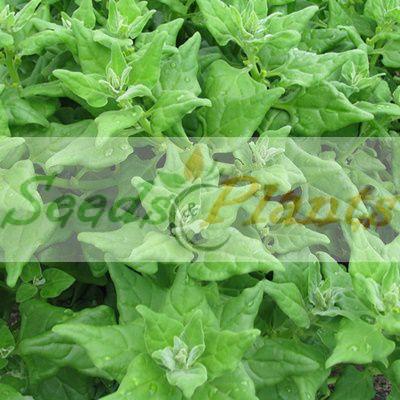
Green Malabar Spinach Seeds. Green Malabar Spinach (Basella alba) is not a true spinach but a different species. It is an edible vine in the family Basellaceae. It is found in tropical Asia and Africa where it is widely used as a leaf vegetable. Even though it’s not a true spinach, it has the same taste.
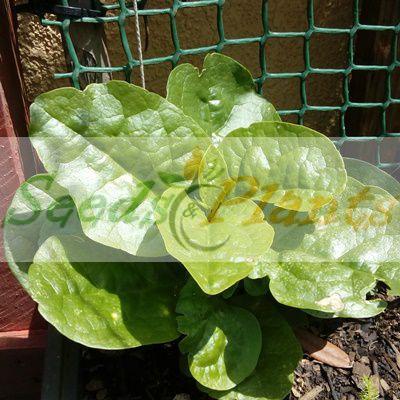
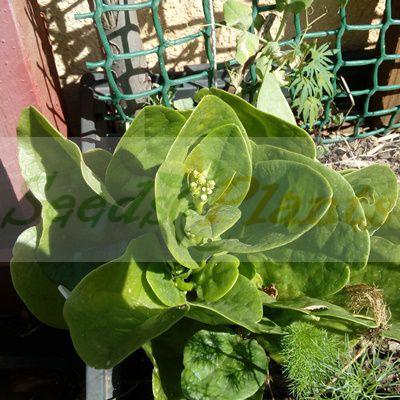
This fast-growing plant is a soft-stemmed, twining vine that can grow up to 10 feet long as an annual (longer as a perennial) but generally remains smaller in most gardens. The dark green, glossy, oval to heart-shaped leaves are thick and semi-succulent with a mucilaginous texture. A delicious green that can be grown as an annual in many areas or as a perennial in sub-tropical areas.
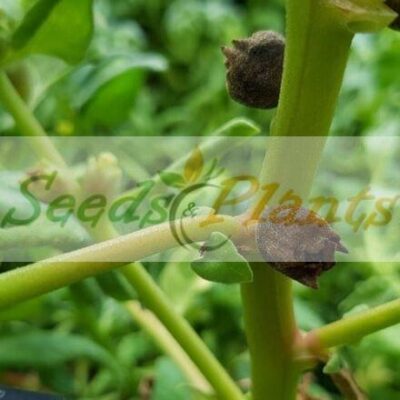
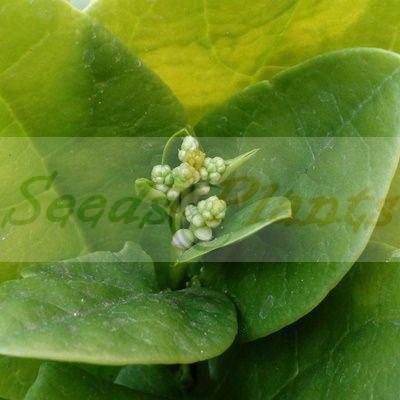
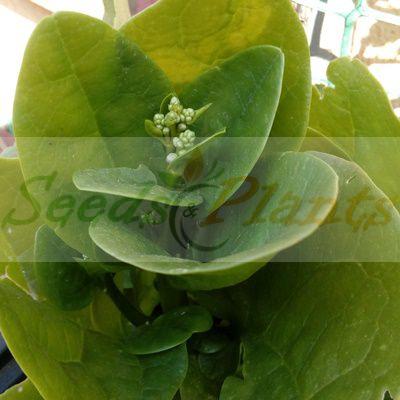
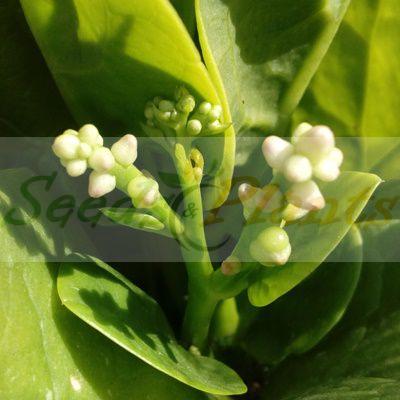
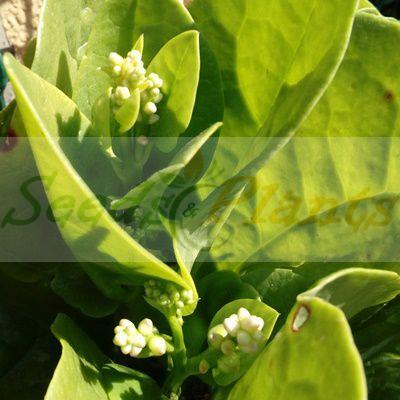
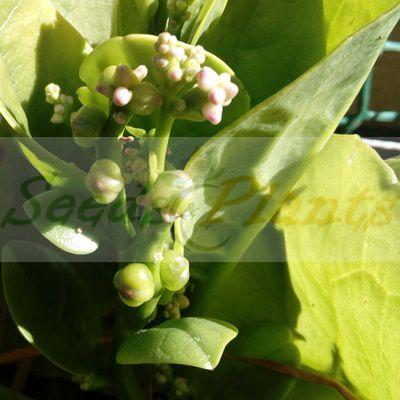
Green Malabar Spinach has white flowers and green vines. The leaves and stem contain mucilage, so it can appear slimy when broken off the vine. This mucilage is a great source of soluble fiber, much like pectin in apples.
The vine will grow rapidly in the heat of summer all the way through autumn.
Common Names: Malabar Spinach, Vine Spinach, Creeping Spinach, Ceylon Spinach and Indian spinach.
Green Malabar Spinach Culinary Uses
- The edible leaves (and shoots) of Basella alba resemble spinach with a mild, slightly peppery flavor with a hint of citrus and are used in the same way.
- The young leaves can be eaten raw mixed in a green salad, and steamed or boiled to be used like cooked spinach.
- Because of the mucilagenous nature, it can also be used to thicken soups and stews.
- The leaves can be eaten throughout the season, but once plants start flowering, the leaves become bitter.
- The succulent stems are peeled and cooked in curries.
- The deep red/purplish sap from the fruit is used as a food colorant for desserts.
Medicinal Uses:
- Digestive Health: Known for its mild laxative properties, it is used to alleviate constipation and soothe the gastrointestinal tract due to high fiber and mucilage content.
- Anti-inflammatory & Antioxidant: Contains betacyanin (antioxidant) and kampferol (immune modulator), used to reduce nerve inflammation and treat swelling.
- Skin Care: Leaves are used as a topical poultice to accelerate the healing of boils, sores, and burns.
- Kidney/Liver Health: Studies indicate potential hepatoprotective effects, reducing toxin-induced liver damage.
- Cardioprotective: Used to help lower blood pressure and protect against cardiac injury.
Other Uses
- Dye: The red berries have historically been used to make ink or red dye.
- Cosmetics: Used in formulations for skin moisturizing and reducing wrinkles.
Indoor Sowing: Mid Winter and Late Winter.
Direct Sowing: Mid Spring.
- Soak the Malabar Spinach Seeds in water overnight before planting or scarify the seed coat to speed up germination.
- Direct sow the seeds in Mid Spring.
- Indoor sowing can be done in mid winter and late winter, however the plants do not transplant well.
- It is a vine, so plant the seeds next to a trellis in full sun.
- Place the seeds about 15cm apart on top of fertile, moisture-retentive soils and cover with a layer of soil.
- Keep soil moist, but not soggy, until germination.
- Germination can take 1 month or longer, so patience is required.
- Optimum germination temperature of between 18-24 C.
- Tolerates light shade.
- Use a slow-release fertilizer.
Related products