Shasta Daisy – 20 Seeds
(Leucanthemum × superbum)
R30.00
Shasta daisies are terrific as cut flowers, as their blooms can last a week or more in arrangements.
Common Names: Shasta Daisy and Marguerite.
Indoor Sowing: Late Winter and Early Spring.
Direct Sowing: Spring and Autumn.
In stock
🌼 Flower Quick Facts
Flower Info
- 🌸 Flower Color: White
- 🦋 Pollinator Method: Attracts Bees, Attracts Beetles, Attracts Butterflies, Attracts Hoverflies
Growth Traits
- 🌱 Life Cycle: Perennial
- 🌾 Plant Type: Herbaceous Perennial
- 🪴 Growth Habit: Clumping, Upright
Growing Requirements
- 🌞 Sun Exposure: Full Sun, Partial Shade
- 💧 Water Needs: Avoid Overwatering, Moderate Water
- ☀️ Growing Conditions: Cold Tolerant, Frost Tolerant, Heat Tolerant, Moderately Drought Tolerant
- 🟤 Soil Preference: Tolerant of most soils, Well-Drained
Shasta Daisy Seeds. Originally it known as Chrysanthemum x superbum, the plant was renamed and is now known as Leucanthemum x superbum. It is a horticultural hybrid developed by American horticulturist Luther Burbank in Northern California in the 1890s. It does not have a single indigenous region because it is not a naturally occurring species.
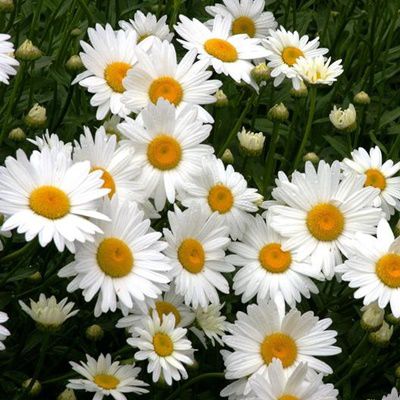
The cheerful Shasta daisy is a classic perennial. Shasta daisies tend to form clumps that are 2 to 3 feet tall and 1 to 2 feet wide. They bear all-white daisy petals, yellow disk florets, and contrasting glossy, dark green leaves. Shasta daisies are terrific as cut flowers, as their blooms can last a week or more in arrangements.
Common Names: Shasta Daisy and Marguerite.
Growing Shasta Daisies
Indoor Sowing: Late Winter and Early Spring.
Direct Sowing: Spring and Autumn.
- When planting Shasta daisies in the garden, take care to prepare the soil properly. Fertile soil is necessary for the best bloom on Shasta daisy flowers.
- Good drainage is important for the performance of the Shasta daisy as well. While Shasta daisies will take light shade, as opposed to a full sun location, the plants won’t tolerate soggy roots or standing water. Provide appropriate drainage several inches down in the soil.
- Sow Shasta Daisy Seeds in cell packs or flats, press into soil but do not cover. Needs light to germinate.
- Germination averages 14-21 days.
- Can also be direct sown (barely cover) in autumn or spring, in groups of 3-4 seeds spaced 12-24 in. apart.
- Thin to the strongest plant.
- Water during the summer only if rainfall is less than 1 inch per week. Daisies are generally tolerant of dry spells once they are established.
- As flowers fade, deadhead to extend the blooming season.
Related products

Dreadlocks Amaranth – Approx 200 Seeds
(Amaranthus caudatus gibbosus ‘Dreadlocks’)