Common Guarri – 5 Seeds
(Euclea undulata)
R30.00
Common Guarri is a valuable medicinal plant in Southern Africa, with nearly all parts utilized for treating various ailments.
Common names: small-leaved guarri, common guarri (Eng.); kleinblaarghwarrie, gewone ghwarrrie (Afr.); bergebenholzstrauch (Ger.); gwanxe, inkunzane, umshekizane, umbophanyamazane (Zulu)
Indoor Sowing: Spring and Summer
Direct Sowing: Spring and Summer
In stock
🌿 Herbal Quick Facts
Uses
- ⓘ Plant Use: Firewood/Charcoal, Fodder, Medicinal, Timber
Medicinal Info
- 🌿 Medicinal Part: Bark, Leaf, Root, Root bark, Stem, Twigs
- 🥣 Herbal Preparation: Chewing, Decoction, Infusion / Tea, Powder
- ⚕️ Healing System: African Traditional Medicine
Growth Traits
- 🌱 Life Cycle: Perennial
- 🌾 Plant Type: Shrub, Tree
- 🔁 Fruiting Needs: Needs Male & Female Plants
- 🦋 Pollinator Method: Attracts Bees, Attracts Birds, Attracts Butterflies
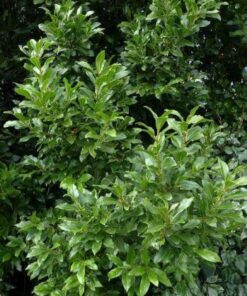
- 🪴 Growth Habit: Bushy, Dense, Multi-stemmed, Rounded
- 🌿 Foliage Type: Evergreen
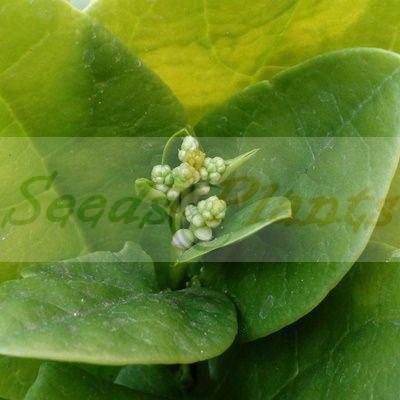
- 🌸 Flower Color: Cream, White
Growing Requirements
- 🌞 Sun Exposure: Full Sun, Partial Shade
- 💧 Water Needs: Moderate Water
- ☀️ Growing Conditions: Cold Tolerant, Drought Tolerant, Frost Tolerant, Heat Tolerant, Wind Tolerant
- 🟤 Soil Preference: Loam, Sandy, Well-Drained
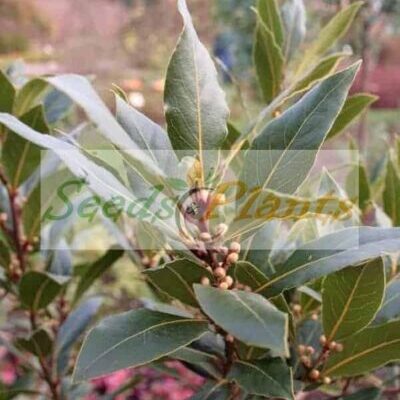
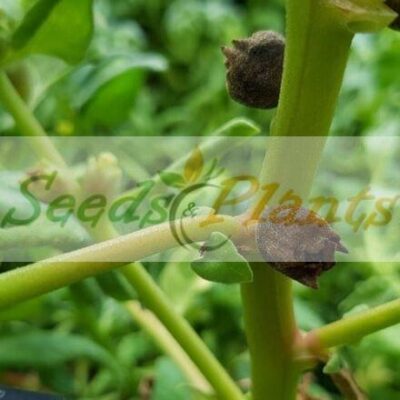
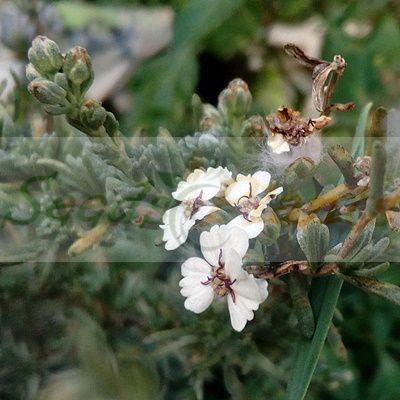
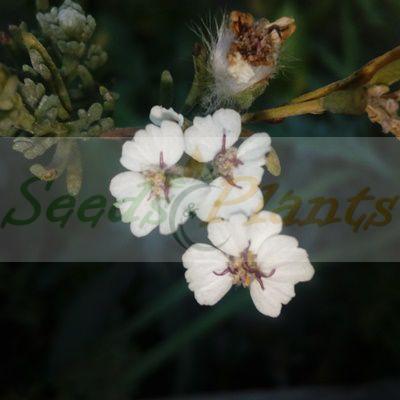
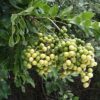
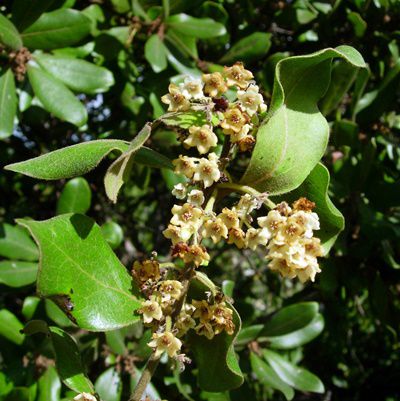
Common Guarri (Euclea undulata) is a valuable medicinal plant in southern Africa, with nearly all parts utilized for treating various ailments. It is a sturdy, evergreen, bushy shrub or small tree, with a height of 3–7m, often forming dense mounds. The leaves are small (2-7cm), stiff, leathery, dark green, with margins that can be flat or wavy. The bark is grey, scaly, with reddish-brown granules when young. It produces small, white to creamy, fragrant flowers, borne on short spikes, usually from late spring to autumn. This is followed by small, single-seeded rounded berries, which are fleshy, reddish brown becoming black when ripe. The berries are edible but not very tasty.
Common names: small-leaved guarri, common guarri (Eng.); kleinblaarghwarrie, gewone ghwarrrie (Afr.); bergebenholzstrauch (Ger.); gwanxe, inkunzane, umshekizane, umbophanyamazane (Zulu)
Traditional Medicinal Uses:
- Roots & Bark: Used for headaches, toothaches, body pains, heart ailments, and as purgatives or enemas, even during pregnancy. Root preparations can induce vomiting or have laxative effects.
- Leaves: Infused for diarrhea, stomach problems, and as gargles for tonsillitis, throat ailments, and even skin diseases.
- Whole Plant: Extracts show potential for diabetes, bronchitis, asthma, urinary tract infections, and venereal diseases.
Growing Common Guarri
Indoor Sowing: Spring and Summer
Direct Sowing: Spring and Summer
- Fill a tray or container with seed-raising mix or a mixture of coarse river sand, fine-milled bark and compost.
- Press the mixture down in the container and level it.
- Press the seeds lightly into the soil mixture and cover with a very thin layer of the medium.
- Keep the mix consistently moist but not waterlogged.
- Place the container in a bright spot, avoiding harsh, direct sun.
- Germination can take long, so patience is required.
Related products