
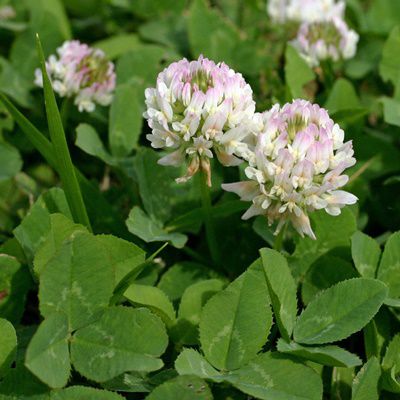
White Clover – 100 Seeds
(Trifolium repens 'Haifa')
R30.00
White Clover is a vigorous, large-leaved, early-maturing Mediterranean-type clover. It is a very versatile plant with multiple uses.
Indoor Sowing: Not Recommended.
Direct Sowing: Late Summer, Early Autumn and Spring.
Only 3 left in stock
🌿 Plant Quick Facts
Uses
- ⓘ Plant Use: Culinary, Fodder, Medicinal, Nitrogen Fixer, Pasture Mixes, Soil Improvement
Plant Info
- 🌸 Flower Color: Pale Pink, White
- 🦋 Pollinator Method: Attracts Bees, Attracts Butterflies, Attracts Moths
Medicinal Info
- 🌿 Medicinal Part: Flower, Leaf, Root
- 🥣 Herbal Preparation: Extract / Tincture, Infusion / Tea, Ointments/Creams, Poultice
- ⚕️ Healing System: American Traditional Medicine, European Traditional Medicine
Culinary Info
- 🍽️ Culinary Use: Beverages/Teas, Cooked greens, Garnish, Salads, Stir-frying
- 🥗 Edible Part: Flower, Leaf, Root, Seed Pods
- 😋 Flavor Profile: Bean-like, Grassy
Growth Traits
- 🌱 Life Cycle: Perennial
- 🌾 Plant Type: Perennial legume
- 🪴 Growth Habit: Mat-Forming, Prostrate
Growing Requirements
- 🌞 Sun Exposure: Full Sun, Shade
- 💧 Water Needs: Regular Water
- ☀️ Growing Conditions: Cold Tolerant, Frost Tolerant, Heat Tolerant, Moist Conditions, Not Drought Tolerant
- 🟤 Soil Preference: Clay loam, Fertile, Loam, Well-Drained
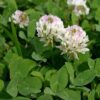
White Clover (Trifolium repens ‘Haifa’) is a vigorous, large-leaved, early-maturing Mediterranean-type clover, often selected for high forage production, rapid establishment, and strong nitrogen fixation. It is a prostrate, mat-forming perennial with creeping stems (stolons) that root at the nodes. The leaves are trifoliate (three leaflets), smooth, and often marked with a light or dark “V”. The plant produces white or pale pink, globe-shaped flowers in dense clusters on long stalks.
General Use:
- Pasture & Forage: Widely used in mixes with grasses (ryegrass, fescue) for grazing sheep, cattle, and horses.
- Cover Crop: Used to improve soil quality and nitrogen levels.
- Lawns: Useful for nitrogen fixation and covering bare soil.
Culinary Use
- Leaves: Young leaves are best eaten raw in salads, sandwiches, or smoothies. Older leaves should be boiled for 5–10 minutes to improve digestibility and reduce bitterness.
- Flowers: The white or pinkish blossoms have a sweet, mild flavor and can be eaten raw, used as a garnish, or dried to make tea.
- Roots: While edible, roots are generally consumed only in survival situations and should be boiled to remove bitterness.
- Seed Pods: Can be dried and ground into a nutritious flour.
Medicinal and Nutritional Uses:
- Respiratory & Fever Support: Infusions of flowers and leaves are used to treat coughs, colds, fever, and bronchial issues.
- Anti-inflammatory & Pain Relief: Used to treat rheumatic pain and gout.
- Skin Care: Applied in salves for wounds, burns, and sores due to antiseptic properties.
- Nutritional Content: Rich in vitamins A, C, E, and K, as well as minerals like calcium, magnesium, and potassium.
- Women’s Health: Contains phytoestrogens (genistein), which may help with menopausal symptoms
Cautionary Notes:
- Coumarin Content: Contains coumarin, which is an anticoagulant, so it should be avoided by individuals with bleeding disorders.
- Pregnancy/Medication: Not recommended during pregnancy or for those using oral contraceptives or hormone therapy.
- Safety: Do not consume browned flowers.
Growing White Clover
Indoor Sowing: Not Recommended.
Direct Sowing: Late Summer, Early Autumn and Spring.
- Prefers well-drained, fertile, loam or clay-loam soils.
- It is highly adaptable but needs good, consistent moisture during germination.
- Prepare a fine, firm seedbed.
- Seeds should be planted shallowly, about 5–15 mm deep.
- Lightly cover seeds with soil to ensure good seed-to-soil contact.
- Keep the soil consistently moist during the germination period, which usually takes 7–10 days.
Related products