Ginger Bush – 10 Seeds
(Tetradenia riparia)
R30.00
Ginger Bush is a fast-growing, aromatic, deciduous semi-succulent shrub. It is a widely used in traditional African medicine.
Common Names: Ginger bush, misty plume bush, incense bush, musk bush, wild ginger, Gemmerbos, watersalie, vleisalie, Iboza, ibozane, Tshiololo.
Indoor Sowing: Spring.
Direct Sowing: Not Recommended.
In stock
🌿 Herbal Quick Facts
Uses
- ⓘ Plant Use: Culinary, Erosion Control, Medicinal
Medicinal Info
- 🌿 Medicinal Part: Flower Buds, Leaf, Stem
- 🥣 Herbal Preparation: Infusion / Tea, Inhalation, Juice, Poultice
- ⚕️ Healing System: African Traditional Medicine
Culinary Info
- 🍽️ Culinary Use: Flavoring, Marinades/Dressings, Preservation, Spice
- 🥗 Edible Part: Buds, Leaf
- 😋 Flavor Profile: Bitter, Peppery-ginger
Growth Traits
- 🌱 Life Cycle: Perennial
- 🌾 Plant Type: Semi-Succulent, Shrub
- 🦋 Pollinator Method: Attracts Bees, Attracts Butterflies, Attracts Moths
- 🔁 Pollination Needs: Needs Male & Female Plants
- 🪴 Growth Habit: Bushy, Fast Growing, Scrambling
- 🌿 Foliage Type: Deciduous
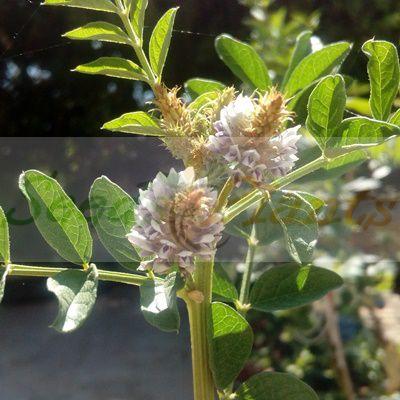
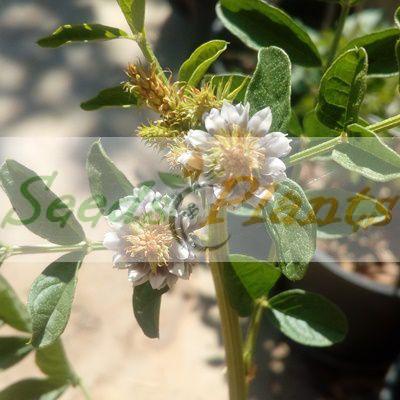
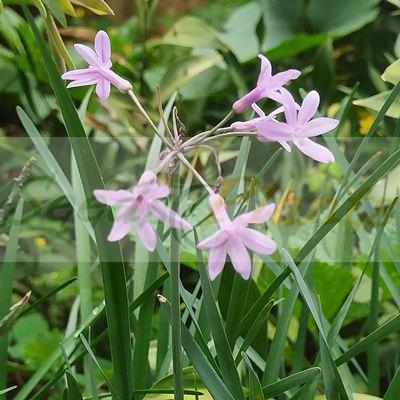
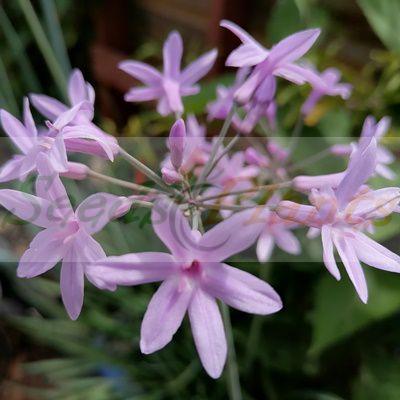
- 🌸 Flower Color: Pale lilac
Growing Requirements
- 🌞 Sun Exposure: Full Sun, Partial Shade
- 💧 Water Needs: Avoid Overwatering, Moderate Water
- ☀️ Growing Conditions: Frost Sensitive, Heat Tolerant, Low Cold Tolerance, Moderately Drought Tolerant
- 🟤 Soil Preference: Compost Enriched, Light, Loam, pH 7.0, Sandy, Well-Drained
Ginger Bush (Tetradenia riparia) is a fast-growing, aromatic, deciduous semi-succulent shrub in the mint family (Lamiaceae) native to southern and eastern Africa. It is a widely used in traditional African medicine. It thrives along riverbanks, moist stream-sides, forest margins, and dry wooded valleys or hillsides.
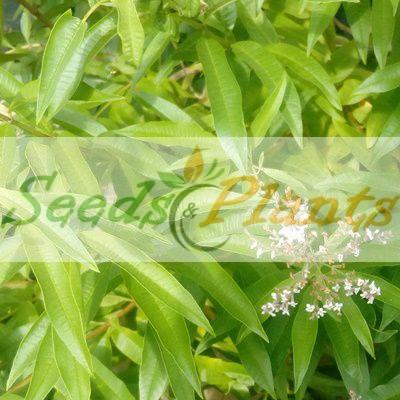
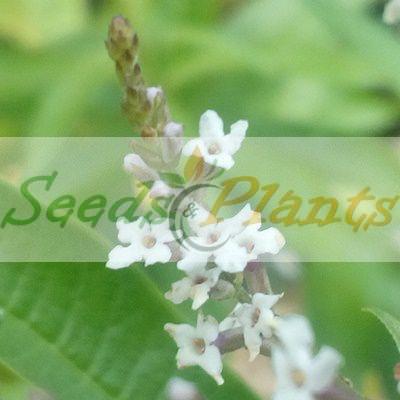
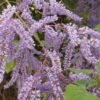
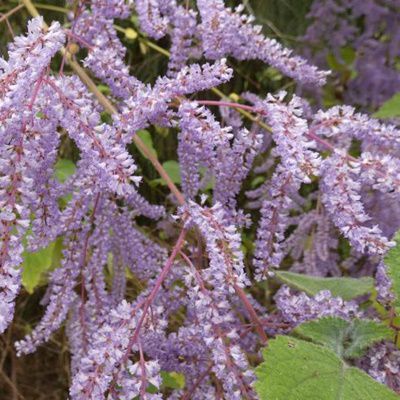
It reaches roughly 2 – 5m in height and features a multi-stemmed, sprawling or rounded habit with brittle, semi-succulent, four-angled stems. The leaves are soft, velvety, heart-shaped (ovate) to rounded with scalloped or serrated margins. They emit a strong ginger, camphor, or peppermint scent when crushed. The shrub is dioecious and produces spikes of tiny pale lilac flowers during autumn and winter. Male and female flowers grow on separate plants. Male plants generally put on a much denser, cloud-like floral display, while only female plants produce small dry seed capsules.
Common Names: Ginger bush, misty plume bush, incense bush, musk bush, wild ginger, Gemmerbos, watersalie, vleisalie, Iboza, ibozane, Tshiololo.
Traditional and Medicinal Uses
- Respiratory Ailments: Used in folk medicine (such as by the Zulu and other regional traditional healers) as an infusion or inhalation to treat coughs, colds, sore throats, bronchitis, and chest complaints.
- Malaria & Fevers: Fresh or dried leaves and young shoots are widely brewed into teas or remedies to manage malaria, high fevers, and dengue fever. Laboratory studies show that plant extracts contain compounds that help inhibit the malaria parasite Plasmodium falciparum.
- Pain & Headaches: Inhaling the strong scent of crushed leaves or applying leaf compresses is a common remedy for headaches and toothaches.
- Digestive Issues: Utilized to soothe stomachaches, colic, and diarrhea.
- External & Joint Care: In some East African traditions (such as among the Kisii in Kenya), warmed leaves are used as a massage wrap for painful, swollen, or dislocated joints, while others use crushed leaves for eye care.
- Antimicrobial & Antibacterial: Extracts have shown activity against bacterial and fungal strains.
Culinary and Cultural Uses
- Flavoring / Meat Additive: Primarily used as a flavoring agent or spice due to its intensely aromatic, ginger-nutmeg scent. In cultures like the Maasai, the aromatic leaves are traditionally used to marinate meat, add flavor, or preserve.
Gardening and Environmental Uses
- Ornamental Display: Grown extensively in frost-free or mild-temperate gardens for its prolific winter-blooming mauve clouds.
- Pollinator & Wildlife Attractor: The winter flowers draw in bees, nocturnal moths (like Trichoplusia molybdina), and other insects, which subsequently invite insect-eating birds into the garden.
- Soil Stabilization: In rocky or hilly terrain, its vigorous root system helps control soil erosion.
- Water-Wise Landscaping: Once established, it acts as a hardy, low-maintenance choice for summer-rainfall or warm-temperate regions (though it needs protection from severe frost).
Growing Ginger Bush
Indoor Sowing: Spring.
Direct Sowing: Not Recommended.
- Direct sowing is not recommended, as the seeds are very tiny.
- Fill pots or trays with a moist mixture of fine river sand or a sandy soil and compost.
- Sow the seeds lightly on the surface or cover them with a very thin layer of soil or sand.
- Place the pots or trays in a warm, bright area.
- Keep the soil moist, using bottom watering or using a spray bottle to gently mist the soil.
- Germination in about 4 weeks, but may take longer.
Related products