Peruvian Peppertree – 5 Seeds
(Schinus molle)
R50.00
Peruvian peppertree is a fast-growing, graceful dioecious evergreen tree in the sumac family. The tree has culinary, medicinal and other uses.
Common Names: Peruvian peppertree, California peppertree, American pepper, false pepper, weeping pepper, pink pepper tree, Peperboom, Karoowilgerboom, Rooipeperboom, Umpelempele, Pirul, Molle, Mollica, Pimiento boliviano.
Indoor Sowing: Mid Spring.
Direct Sowing: Not Recommended.
In stock
🌿 Herbal Quick Facts
Uses
- ⓘ Plant Use: Aromatic Resins, Culinary, Erosion Control, Firewood/Charcoal, Medicinal, Tanning Leather, Textile Dyes
Medicinal Info
- 🌿 Medicinal Part: Bark, Leaf, Root, Sap
- 🥣 Herbal Preparation: Decoction, Essential Oil, Infusion / Tea, Poultice
- ⚕️ Healing System: South American Traditional Medicine
Culinary Info
- 🍽️ Culinary Use: Beverages / Drinks, Spice
- 🥗 Edible Part: Fruit, Fruit pulp
- 😋 Flavor Profile: Peppery, Sweet
Growth Traits
- 🌱 Life Cycle: Perennial
- 🌾 Plant Type: Tree
- 🔁 Fruiting Needs: Needs Male & Female Plants
- 🦋 Pollinator Method: Attracts Bees, Attracts Beetles
- 🪴 Growth Habit: Broad / Spreading Crown, Low-branching
- 🌿 Foliage Type: Evergreen
- 🌸 Flower Color: Yellow-white
Growing Requirements
- 🌞 Sun Exposure: Full Sun
- 💧 Water Needs: Avoid Overwatering, Low Water
- ☀️ Growing Conditions: Cold Tolerant, Drought Tolerant, Frost Tolerant, Heat Tolerant
- 🟤 Soil Preference: Clay, Loam, pH 6.0 - 8.5, Poor Soil Tolerant, Sandy, Well-Drained
Peruvian peppertree (Schinus molle) is a fast-growing, graceful dioecious evergreen tree in the sumac family (Anacardiaceae) native to the Andes mountains of South America. The tree has culinary, medicinal and other uses.
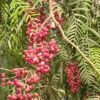
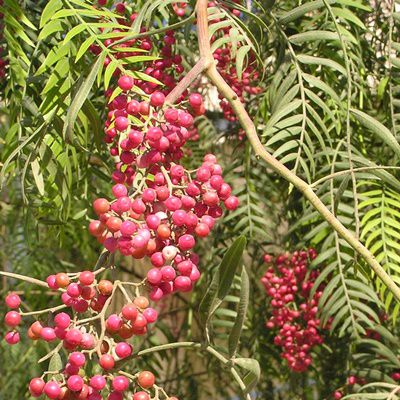
It has a short trunk with dark brown, deeply fissured, and flaking bark that exudes a sticky, aromatic resin or latex when damaged. The tree can reach a mature height of 8 – 15m, featuring a broad crown and weeping, willow-like branches. Pinnately compound leaves made of 19 to 41 narrow leaflets release a strong peppery scent when crushed. It features large, hanging panicles of tiny, pale yellow-white flowers. Female trees produce abundant fruit clusters. Round, berry-like drupes that start green, turn bright pink or red, and eventually darken; commonly known as “pink peppercorns”.
Common Names: Peruvian peppertree, California peppertree, American pepper, false pepper, weeping pepper, pink pepper tree, Peperboom, Karoowilgerboom, Rooipeperboom, Umpelempele, Pirul, Molle, Mollica, Pimiento boliviano.
Culinary and Beverage Uses
- Spice: Dried pink fruits are harvested and sold as pink peppercorns for a mild, sweet-peppery flavor.
- Drinks: The sweet outer layer of the berries is peeled and infused into refreshing drinks or fermented to make traditional beverages like Andean chicha.
Traditional and Medicinal Uses
- Wounds and Infections: Leaf and bark extracts are used as washes or poultices for skin infections, cuts, and sores due to natural antibacterial and antiseptic properties.
- Aches and Relief: Used traditionally to help manage rheumatism, toothaches, and respiratory or digestive complaints.
- Aromatherapy: Essential oils extracted from the leaves and berries are studied for antimicrobial and antifungal qualities.
Environmental and Practical Uses
- Landscaping and Shade: Widely planted as an ornamental street tree or shade tree in dry, warm regions.
- Erosion Control: Used as a windbreak and for stabilizing dry, stony slopes due to its high drought tolerance.
- Wood and Fuel: The wood is termite-resistant and dense, making it useful for rustic posts, fuel, and charcoal.
- Dyes and Resins: Historically utilized for natural textile dyes, tanning leather (using the bark), and aromatic resins.
Safety and Hazards
- Toxicity: Consuming large quantities of the berries can cause gastrointestinal irritation or toxicity in humans and animals. The berries are toxic to poultry and pigs.
- Allergies: Sap, leaves, and pollen can trigger contact dermatitis or skin irritation in sensitive individuals.
- Aggressive root system: Its aggressive, shallow root system can lift paving or damage nearby structures.
Growing Peruvian Peppertree
Indoor Sowing: Mid Spring.
Direct Sowing: Not Recommended.
- Soak the clean seeds in warm water for 24 to 48 hours to soften the seed coat.
- Some growers also recommend a short cold stratification period (refrigerating in a damp paper towel for 2 to 4 weeks) to improve uniformity, but it is not required..
- Use a well-draining sandy or loamy potting mix enriched with a little fine compost or perlite.
- Press or sow the seeds about 0.6 cm deep into seed trays or small pots.
- Lightly cover the seeds with soil mix and keep the medium consistently damp (not waterlogged).
- Place the trays in a warm, bright spot with temperatures around 18°C to 25°C.
- Germination typically takes about 6 – 8 weeks.
- Once the seedlings develop their first true leaves, gently transplant them into individual containers.
- Grow them on until they are sturdy enough to plant into a permanent outdoor location in full sun.
- PLEASE NOTE: The tree has an aggressive, shallow root system that can lift paving or damage nearby structures, therefore keep this in mind when planting the tree into its permanent position. Growing the tree in large containers is a great alternative if you want to control its size, protect it from cold, or prevent its destructive habits.
Related products