Mountain Cabbage Tree – 10 Seeds
(Cussonia paniculata)
R30.00
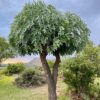
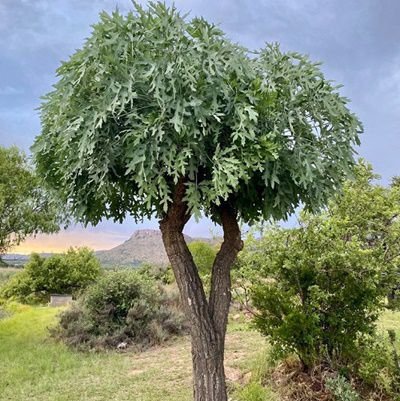
Mountain Cabbage Tree is a short, thick-set tree, growing to about 5m in height. The tree is frost-tolerant and drought resistant.
Common names: Karoo cabbage tree (Eng.), bergkiepersol (Afr.), umsenge (X, Sw) umsengembuzi (Z).
Indoor Sowing: Summer.
Direct Sowing: Winter and Summer.
In stock
🌳 Tree Quick Facts
Tree Info
- 🌍 Origin / Region: Southern Africa
- 🌲 Tree Features: Flowering, Fruiting (Edible)
- 🌿 Foliage Type: Evergreen
- 📏 Mature Height: 3–6m
- 🌸 Flower Color: Cream, Greenish yellow
- ⓘ Plant Use: Fodder, Medicinal, Woodwork
Medicinal Info
- 🌿 Medicinal Part: Bark, Leaf, Root
- 🍵 Herbal Preparation: Concoctions, Extract / Tincture, Infusion / Tea, Mashed
- ⚕️ Healing System: African Traditional Medicine
Culinary Info
- 🍽️ Culinary Use: Raw Eating
- 🥗 Edible Part: Root
Growth Traits
- 🌱 Life Cycle: Perennial
- 🌾 Plant Type: Tree
- 🔁 Fruiting Needs: Needs Only 1 Plant
- 🪴 Growth Habit: Upright
Growing Requirements
- 🌞 Sun Exposure: Full Sun
- 💧 Water Needs: Avoid Overwatering, Low Water
- ☀️ Growing Conditions: Cold Tolerant, Drought Tolerant, Frost Tolerant, Heat Tolerant
- 🟤 Soil Preference: Gravel, Loam, pH 6.5–7.0, Rocky, Sandy, Well-Drained
Mountain Cabbage Tree (Cussonia paniculata) is a beautiful short, thick-set evergreen tree, growing to about 5m in height. The tree is frost-tolerant and drought resistant. It is sparsely branched with grey bark and a thick stem. It is known for its succulent roots and medicinal uses.
The large cabbage blue leaves are one of its most distinctive features. The leaves are composed of 7-9, but sometimes up to 13 leaflets, springing from the end of a long stalk. The leaflets are up to 30 cm in length and the overall leaf can reach 60 cm. The leaflets of some forms are deeply lobed. New leaves are brighter green and emerge in a spring flush at the ends of branches. In late Summer to Early Autumn the tree produces small, green stalked flowers in short dense spikes. The flowers are followed by fleshy and purple-maroon fruits.
Common names: Karoo cabbage tree (Eng.), bergkiepersol (Afr.), umsenge (X, Sw) umsengembuzi (Z)
Culinary Use
- Roots are typically peeled and eaten raw as a source of food and water, especially during droughts or emergencies.
- The purple fruits are also reported to be edible, though they are primarily favored by birds.
Medicinal Benefits
- Used to treat malaria, intestinal parasites, and shingles.
- Employed for indigestion, stomach complaints, and as an emetic.
- Acts as an immune booster and is used for mental health issues, boils, and wounds.
Other Uses:
- Fodder: Leaves are excellent food for livestock (especially goats) and game like black rhino.
- Woodwork: The soft, light wood was historically used to make brake blocks for ox-wagons and mole traps.
Growing Mountain Cabbage Tree
Indoor Sowing: Summer.
Direct Sowing: Winter and Summer.
- Use a well-draining soil mix, such as potting soil mixed with perlite or sand.
- Sow seed in trays that are at least 15cm in depth.
- Press the seeds gently into the soil, but don’t bury them too deeply.
- Keep the soil consistently moist, but do not allow seed to become waterlogged or dry out.
- Place the trays in a semi-shaded area and keep in a semi-shaded area after germination.
- Germination in about 1 -2 months.
- Seedlings can be transplanted at about 4 months. Be careful not to damage the fleshy roots when transplanting.
Can this plant be used for culinary purposes?
Mountain Cabbage Tree is traditionally used for culinary purposes such as raw eating.
Does this plant have medicinal uses?
Traditionally, Mountain Cabbage Tree has a history of use in African Traditional Medicine. Seeds are sold for cultivation purposes only.
Disclaimer
Medicinal Information:
All medicinal information on this website is for educational and informational purposes only and may not be construed as medical advice. The information is not intended to replace medical advice or treatment offered by healthcare professionals.
Seeds, Plants, Plant Cuttings, Geophytes and Dried Herbs:
In some countries and provinces, certain plants are deemed as invasive and are not allowed to be planted at all, whilst some plants are allowed to be grown only in certain areas or provinces. The onus is on you as the buyer to familiarize yourself with the regulations pertaining to your location, before purchasing any of our seeds, plants, plant cuttings, geophytes or dried herbs. We will not be held liable, should you purchase any seeds, plants, plant cuttings, geophytes or dried herbs. from us which are prohibited in your country or province.
Related products