Dune Waxberry – 10 Seeds
(Morella cordifolia)
R30.00
The Dune Waxberry plant was a valuable plant in the domestic life of the early colonists and the Khoi people.
Common Names: Waxberry, Candle Berry, Waxbush (Eng.); Duin-wasbessie and Glashout (Afr.); ilethi (Zulu).
Indoor Sowing: Spring.
Direct Sowing: Spring and Autumn.
Out of Stock
Email me when the product is back in stock.
🌿 Shrub Quick Facts
Shrub Info
- 🌳 Shrub Features: Flowering, Fruiting (Edible)
- 🌿 Foliage Type: Evergreen
- 🌸 Flower Color: Yellow-brown
Medicinal Info
- 🌿 Medicinal Part: Bark, Berry
- 🥣 Herbal Preparation: Decoction, Infusion / Tea, Ointments/Creams
- ⚕️ Healing System: African Traditional Medicine
Growth Traits
- 🌾 Plant Type: Shrub
- 🔁 Fruiting Needs: Needs Male & Female Plants
- 🪴 Growth Habit: Bushy, Low-Growing, Slow Growing, Sprawling
Growing Requirements
- 🌞 Sun Exposure: Full Sun, Partial Shade
- 💧 Water Needs: Avoid Overwatering, Regular Water
- ☀️ Growing Conditions: Cold Tolerant, Drought Tolerant, Heat Tolerant, Moderate Frost Tolerance
- 🟤 Soil Preference: Poor Soil Tolerant, Rocky, Sandy
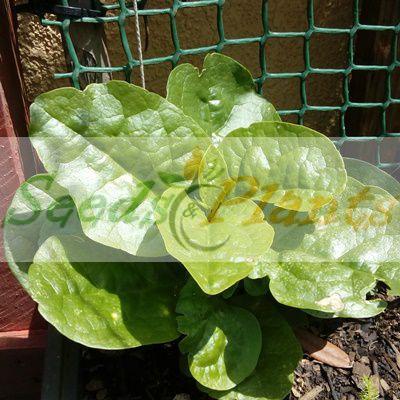
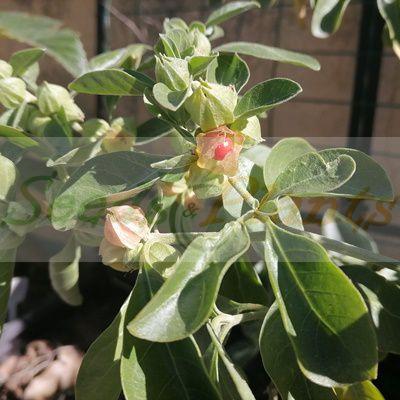
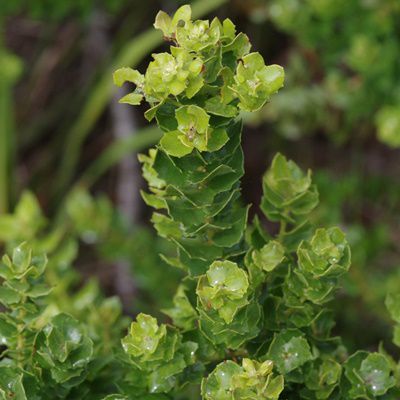
Dune Waxberry (Morella cordifolia) is a low-growing, evergreen, spreading shrub. The plant was a valuable plant in the domestic life of the early colonists and the Khoi people.
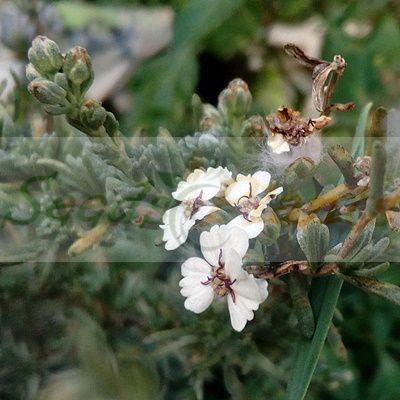
It sends out slender branches horizontally that lie along the ground, with upright-growing shoots that can reach up to 2 or 3 m in height. The leaves are small, shiny, heart-shaped, toothed and gland-dotted. They have no stalk and are arranged densely and neatly along the branches. Crushed leaves have a faint, sweet scent. Flowering takes place in Mid Autumn to Early Winter.
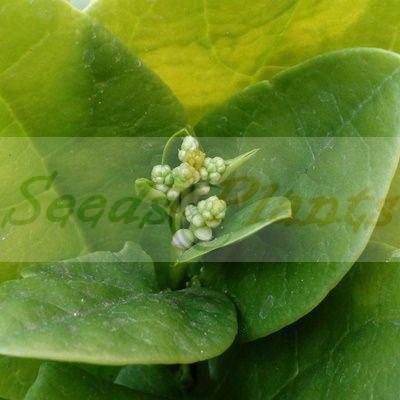
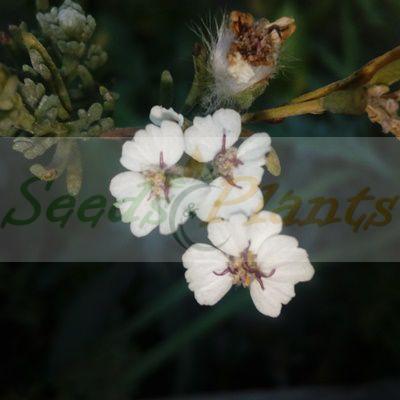
Male plants produce many solitary catkin-like flowers in the axils of the leaves. Red-tinged buds open and elongate to yellow-brown spikes, 2-5 mm long. The female flowers are densely clustered around the stem and develop into 5-8 mm diameter, purple-blue, round berries covered with a warty layer of wax that gives them a silvery sheen.
Common Names: Waxberry, Candle Berry, Waxbush (Eng.); Duin-wasbessie and Glashout (Afr.); ilethi (Zulu)
Uses
- The wax can be used as a polish, as an ointment for dressing wounds, to make candles and to make soap.
- The berry wax has also been eaten as a food since early times, in particular by the Khoi. The wax is actually not wax, but a true fat.
- The bark of the roots and stems is used for tanning skins.
- The bark from stems and rhizomes is used medicinally as an astringent.
Growing Dune Waxberry
Indoor Sowing: Spring.
Direct Sowing: Spring and Autumn.
- Surface sow the seed into a tray that contains a soil mixture of sand and coco peat.
- Cover the seed with a thin layer of the soil mixture.
- Place the tray in a sunny area and water regularly.
- Germination in about 2 – 3 months, so patience is required.
- It grows well in sun or semi-shade, in well-drained soil and will tolerate poor soils.
- This shrub tends to spread and sends out sideways-growing shoots in odd directions. Prune to keep low or tidy.
Related products