

Buffalo Thorn – 5 Seeds
(Ziziphus mucronata)
R30.00
Buffalo Thorn is a valuable fodder tree, that also has culinary and medicinal uses.
Common names: buffalo thorn (Eng.); blinkblaar-wag-‘n-bietjie (Afr.); umphafa, umlahlankosi, isilahla (isiZulu); umphafa (isiXhosa); umlahlabantu (Swazi); mokgalo (Tswana); mutshetshete (Venda); mphasamhala (Tsonga); mokgalô, moonaona (N Sotho).
Indoor Sowing: Spring and Summer.
Direct Sowing: Summer.
Only 4 left in stock
🌳 Tree Quick Facts
Tree Info
- 🌲 Tree Features: Flowering, Fruiting (Edible)
- 🌿 Foliage Type: Deciduous
- 📏 Mature Height: 3-10m
- 🌸 Flower Color: Greenish yellow
Medicinal Info
- 🌿 Medicinal Part: Bark, Leaf, Root
- 🥣 Herbal Preparation: Decoction, Extract / Tincture, Infusion / Tea, Paste, Poultice
- ⚕️ Healing System: African Traditional Medicine
Culinary Info
- 🍽️ Culinary Use: Beer / Wine, Beverages/Teas, Chutneys, Cooked / Baked / Dried fruit, Cooked greens, Raw Eating
- 🥗 Edible Part: Berry, Leaf
- 😋 Flavor Profile: Slightly sweet
Growth Traits
- 🌱 Life Cycle: Perennial
- 🌾 Plant Type: Tree
- 🔁 Fruiting Needs: Needs Another Plant
- 🪴 Growth Habit: Spreading, Upright
Growing Requirements
- 🌞 Sun Exposure: Full Sun, Partial Shade
- 💧 Water Needs: Low Water
- ☀️ Growing Conditions: Drought Tolerant, Frost Tolerant, Heat Tolerant
- 🟤 Soil Preference: Alluvial, Clay, Loam, Sandy, Well-Drained
Buffalo Thorn (Ziziphus mucronata) is a small to medium-sized deciduous tree, growing 3 -17m high with a spreading canopy. The Buffalo Thorn is a valuable fodder tree. It plays an important role ecologically. Established plants are drought-tolerant, but they reach their largest size on deep, alluvial soils near water. Its presence is often considered an indicator of underground water.
The main stem is green and hairy when young and year old branches often zigzag. The bark is reddish brown or roughly mottled grey, cracked into small rectangular blocks, revealing a red and stringy under-surface. Young stems are reddish brown.
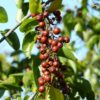
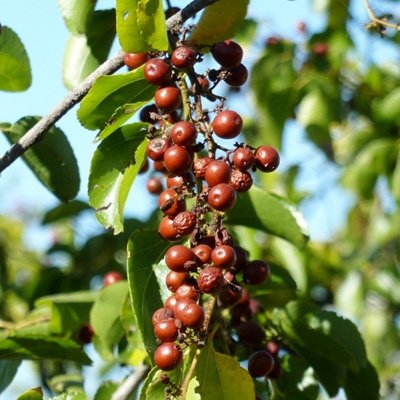
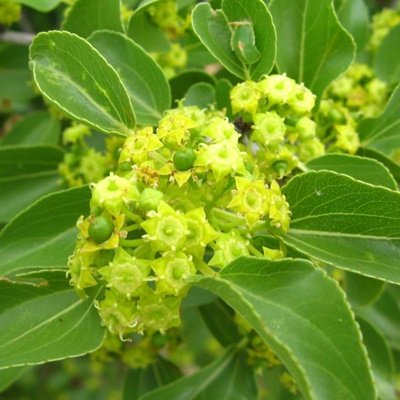
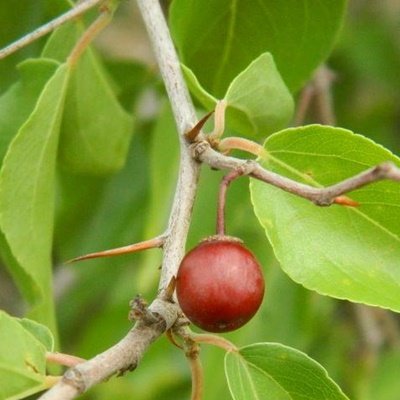
The stipules, when present, take the form of small thorns at the nodes, one straight and one hooked. Flowers are ± 4mm in diameter, green to yellow and borne in dense clusters in leaf axils. The fruit is a smooth, shiny, leathery, spherical drupe, 12-20 mm in diameter, reddish-brown or deep red when ripe, slightly sweet, the pulp is dry. The fruits are edible and the tree has medicinal uses.
Common names: buffalo thorn (Eng.); blinkblaar-wag-‘n-bietjie (Afr.); umphafa, umlahlankosi, isilahla (isiZulu); umphafa (isiXhosa); umlahlabantu (Swazi); mokgalo (Tswana); mutshetshete (Venda); mphasamhala (Tsonga); mokgalô, moonaona (N Sotho)
Buffalo Thorn Culinary Uses
- The seeds are used as a coffee substitute. The seeds are prepared by being roasted and ground before hot water is added to create a coffee-like beverage.
- The fruit pulp itself is edible, slightly sweet but not very palatable on its own, and can also be used for making porridge or fermented into beer.
- The leaves are edible and can be cooked as a spinach alternative.
Buffalo Thorn Traditional Uses
- Medicinal uses include using it to relieve pain, treat skin infections, as an expectorant and to treat stomach ailments.
Growing Buffalo Thorn
Indoor Sowing: Spring and Summer.
Direct Sowing: Summer.
- A slow growing tree with growth of between 300 and 500 mm per year.
- Tolerates most soil types and prefers full sun, but can be grown in semi-shade.
- Soak the seeds in water for 24 hours.
- Sow the seeds in a mixture of fine river sand and compost.
- Place the container in a warm, bright area and keep moist.
- Transplant the seedlings once they have 2 leaves.
Related products







Royal Crown French Lavender – 50 Seeds
(Lavandula Dentata var. Royal Crown)