Common Coral Tree – 10 Seeds
(Erythrina lysistemon)
R30.00
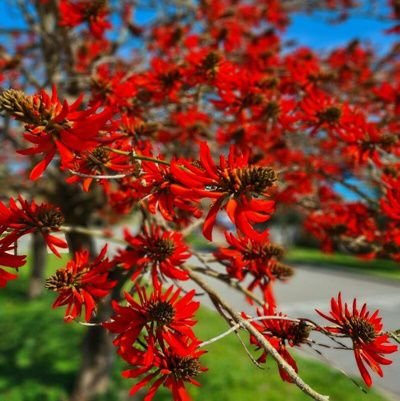
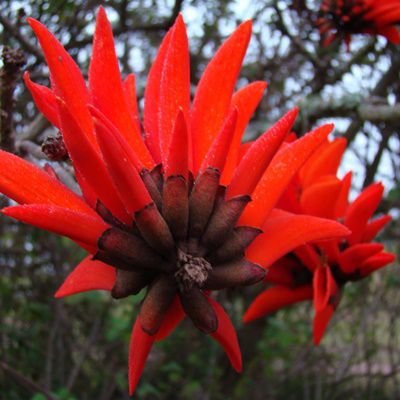
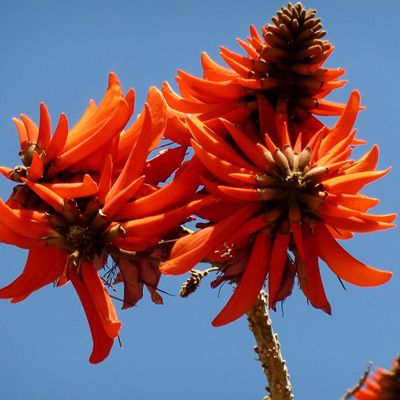
Common Coral Tree is a small to medium-sized, deciduous tree with a spreading crown and brilliant red flowers.
Common names: common coral tree, lucky bean tree (E), gewone koraalboom, kanniedood (A), umsintsi (X), muvhale (V), mophete (Tsw), mokhungwane (Sotho), umsinsi (Z) Fabaceae/Leguminosae (Pea & bean family).
Indoor Sowing: Early Spring.
Direct Sowing: Spring and Summer.
In stock
🌳 Tree Quick Facts
Tree Info
- 🌿 Foliage Type: Deciduous
- 📏 Mature Height: 7.6–12.2m
Growth Traits
- 🪴 Growth Habit: Tree
Growing Requirements
- 🌞 Sun Exposure: Full Sun, Partial Shade
- ☀️ Growing Conditions: Drought Tolerant
Common Coral Tree (Erythrina lysistemon) is a small to medium-sized, deciduous tree with a spreading crown and brilliant red flowers. Short, hooked prickles are sparsely and randomly scattered on the trunk and branches. The tree blooms in early spring and it produces its flowers before its new leaves or just as the leaves begin to show. The flowers produce abundant nectar that attracts many nectar-feeding birds and insects, which attract the insect-feeding birds as well.
Common names: common coral tree, lucky bean tree (E), gewone koraalboom, kanniedood (A), umsintsi (X), muvhale (V), mophete (Tsw), mokhungwane (Sotho), umsinsi (Z) Fabaceae/Leguminosae (Pea & bean family).
Caution: The leaves, bark and seeds are poisonous. The seeds are particularly toxic for children and can cause shortness of breath, cyanosis, weakness and light-headedness.
Growing Common Coral Tree
Indoor Sowing: Early Spring.
Direct Sowing: Spring and Summer.
- It grows best in fertile, well draining soils.
- It is drought-tolerant, but grows better if given water during summer.
- Prefers dry winters and is sensitive to cold, so it grows best in frost free gardens, but will survive in regions with a winter minimum of -7 to -1 °C, provided it is planted in a sheltered position, and protected from frost when young.
- Soak the seeds overnight in warm water.
- Then sow seeds 3cm apart in a well-drained, general-purpose potting soil or two parts fine river sand and one-part compost.
- Cover with a thin layer of soil.
- Place in a warm, but shaded spot and keep the medium moist but not wet, until germination.
Related products