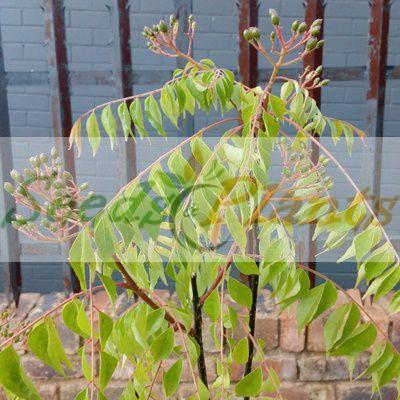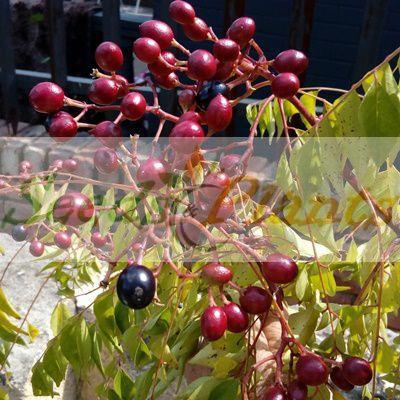


Persian Silk Tree – 5 Seeds
(Albizia julibrissin)
R30.00
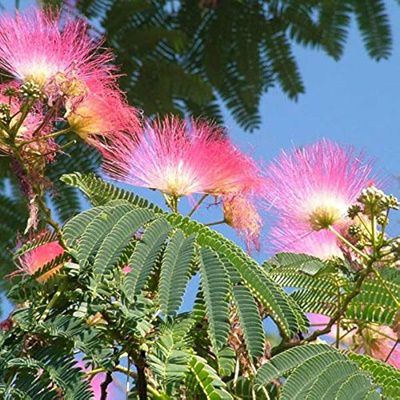
Persian silk tree is a highly ornamental tree with beautiful pink flowers. The leaves are fern-like in appearance and are very sensitive.
Common Names: Mimosa, Persian Silk Tree, Pink Silk Tree, Pink siris, Silk Tree.
Indoor Sowing: Spring and Summer.
Direct Sowing: Not Recommended.
In stock
🌳 Tree Quick Facts
Tree Info
- 🌿 Foliage Type: Deciduous
- 📏 Mature Height: 4–7.6m, 7.6–12.2m
Growth Traits
- 🪴 Growth Habit: Tree
Growing Requirements
- 🌞 Sun Exposure: Full Sun
- ☀️ Growing Conditions: Drought Tolerant
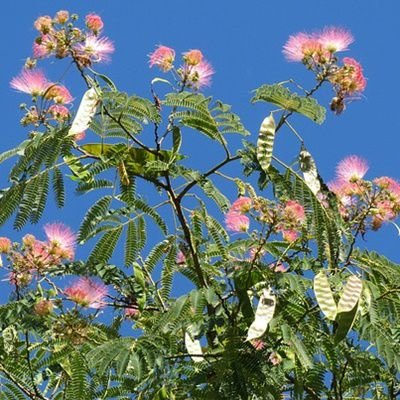
Persian silk tree (Albizia julibrissin) is a species of tree in the Fabaceae family, native to Asia. It is a small to medium deciduous tree with a broad crown of level or arching branches, growing to 5–16 m. The leaves are fern-like in appearance and are very sensitive. The leaflets will close when touched, at nighttime or when exposed to extreme temperatures.
The fragrant flowers appear as pompom-like clusters of silky pink threads and measure about 1.5 inches long. Bees, butterflies, and hummingbirds are attracted to this flowering tree. The fruits are flattened legumes and contain 5 to 16 seeds. The tree is drought tolerant, tolerates summer heat, and it prefers full sun. The tree can tolerate a variety of soils and moisture conditions. It can be grown in containers.
Common Names: Mimosa, Persian Silk Tree, Pink Silk Tree, Pink siris, Silk Tree.
Growing Persian Silk Tree
Indoor Sowing: Spring and Summer.
Direct Sowing: Not Recommended.
- Scarify each seed gently with a file or rasp until the hard outer coating is slightly breached.
- Place the seeds in an insulated container and pour hot, but not boiling water, over the seeds.
- Seal the container and allow them to sit in the hot water for 24 hours.
- Dry the seeds and gently press them into the middle of a small pot filled with compost and perlite in equal amounts.
- Place the pots in a sunny window or outdoors in direct sunlight.
- Keep the soil mixture moist.
- Seeds can take anywhere from seven days to several months to germinate.
- Transplant the seedlings into a bigger pot once it becomes root bound and place the pot in full sunlight.
- Water weekly while young and getting established.
- Young plants are frost-tender and will not survive hard winters, so for the 1st year or two, it is best to provide protection against the cold.
Related products