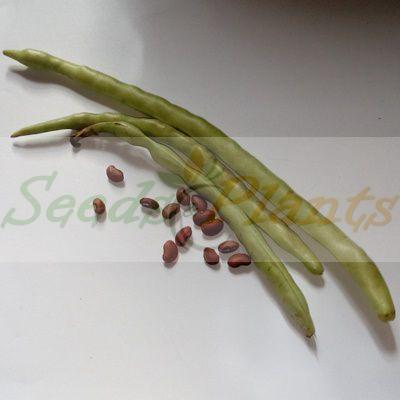

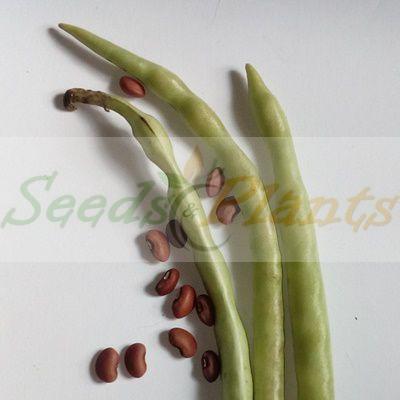
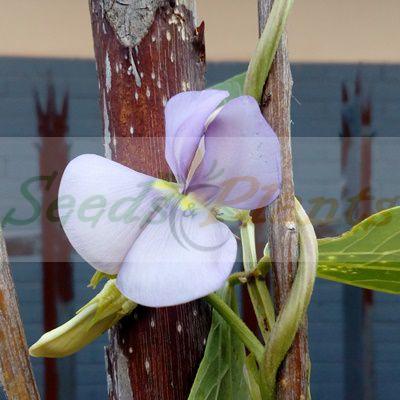
Cowpea – 10 Seeds
(Vigna unguiculata)
R30.00
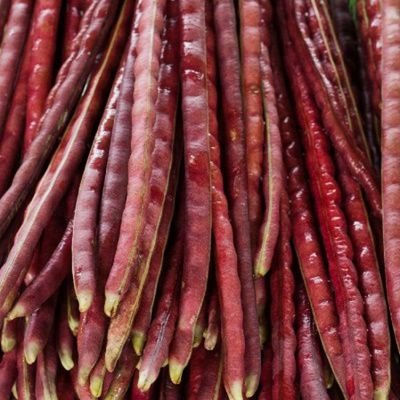
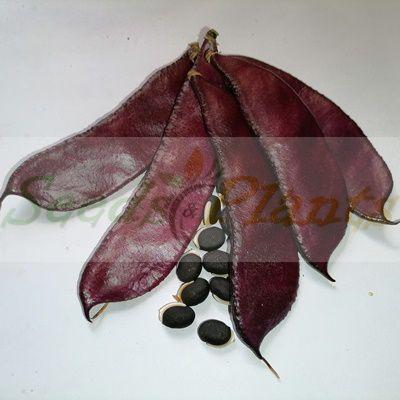
Cowpea, popularly known as blackeye pea, is an important grain legume in South Africa and many parts of Sub-Saharan Africa.
Indoor Sowing: Not Recommended.
Direct Sowing: Spring and Summer.
Only 3 left in stock
🥕 Vegetable Quick Facts
The cowpea (Vigna unguiculata) is an annual herbaceous legume from the genus Vigna. Due to its tolerance for sandy soil and low rainfall, it is an important crop in the semiarid regions across Africa and Asia. It requires very few inputs, as the plant’s root nodules are able to fix atmospheric nitrogen, making it a valuable crop for resource-poor farmers and well-suited to inter-cropping with other crops.
Common names: Arikaans: akkerboon, swartbekboon, boontjie, koertjie, dopboontjie; English: cowpea, bachapin bean, black-eye bean or pea, catjang, china pea, cowgram, southern pea; Sepedi: dinawa (plural), monawa, nawa; Shangaan: dinaba, munaoa, tinyawa; Setswana: dinawa, nawa-ea-setswana; Tshivenda: munawa (plant), nawa (fruit); isiZulu: imbumba, indumba, isihlumaya
Black-eyed peas are cultivated in many regions across the globe, and are so-called for the small black ‘eye’ where the bean is adjoined to the pod within the shell. Despite the name, they are more similar to beans than peas and share many of the same culture requirements as other legumes.
Cowpea Culinary Uses
- Cowpeas are grown mostly for their edible beans, although the leaves, green seeds and pods can also be consumed. Like other legumes, the peas are cooked to make them edible, usually by boiling.
- It can be prepared in stews, soups, purees, casseroles and curries.
- They can also be processed into a paste or flour.
- They can be eaten raw or cooked, but as they easily become waterlogged, they are usually sautéed, stir-fried, or deep-fried.
- A common snack in Africa is koki or moin-moin, where the cowpeas are mashed into a paste, mixed with spices and steamed in banana leaves.
- In India it is used to make curry and gravy to be eaten along with rice or roti.
Growing Cowpea
Indoor Sowing: Not Recommended.
Direct Sowing: Spring and Summer.
- All types of beans should be sown after the danger of frost has passed and the soil has warmed to at least 10 C.
- Sow all beans except cowpea, yard-long and lima beans 2.5 cm deep in heavy soil or 4 cm deep in light soil.
- The other three types of beans (cowpea, yard-long and lima) should be planted 1 cm deep in heavy soil and 2.5 cm deep in light soil.
- Cover the seeds with sand, peat, vermiculite or aged compost to prevent soil crusting.
- Plant bush bean seeds 5-10 cm apart in rows that are 61-91 cm apart.
- Plant pole beans in either rows or hills with seeds 15-25 cm apart in rows that approximately 1m apart. Provide support for pole beans as well.
- Growing beans, regardless of type, do not need supplemental fertilizer but they do need consistent irrigation, especially while budding and on into setting pods.
- Water bean plants with an inch of water per week depending upon weather conditions. Water in the morning so the plants can dry rapidly and avoid fungal disease
Related products
Clemson Spineless Okra – 20 Seeds
(Abelmoschus esculentus “Clemson Spineless”)