Red Malabar Spinach – 5 Seeds
(Basella ruba)
R50.00
Heat-loving Asian vine that has lovely red stems and delicious, succulent leaves that are great in salads and stir-fries.
Common Names: Malabar Spinach, Vine Spinach, Creeping Spinach, Ceylon Spinach and Indian spinach.
Indoor Sowing: Mid Winter and Late Winter.
Direct Sowing: Mid Spring.
Only 4 left in stock
🥕 Vegetable Quick Facts
Uses
- ⓘ Plant Use: Cosmetics/Skincare, Culinary, Dye / Ink, Medicinal
Vegetable Info
- 🥬 Vegetable Type: Leafy Green
- 🍽️ Culinary Use: Binding/Thickening, Boiled / Steamed, Curries, Raw Eating, Soups and Stews, Spinach substitute, Stir-frying
- 🥗 Edible Part: Leaf, Stem
- 😋 Flavor Profile: Mild, Slightly Peppery
Medicinal Info
- 🌿 Medicinal Part: Berry, Flower, Leaf, Root, Stem
- 🥣 Herbal Preparation: Decoction, Juice, Paste, Poultice
- ⚕️ Healing System: Ayurvedic System of Medicine, Chinese Traditional Medicine
Growth Traits
- 🌱 Life Cycle: Annual
- 🌾 Plant Type: Climber, Herbaceous Vine
- 🪴 Growth Habit: Climber, Sprawling, Twining
Growing Requirements
- 🌞 Sun Exposure: Full Sun, Partial Shade
- 💧 Water Needs: High Water
- ☀️ Growing Conditions: Frost Sensitive, Heat Tolerant, Humid Conditions, Low drought tolerance, Not Cold Tolerant
- 🟤 Soil Preference: Loam, Moist, pH 4.5–7.0, Sandy, Well-Drained
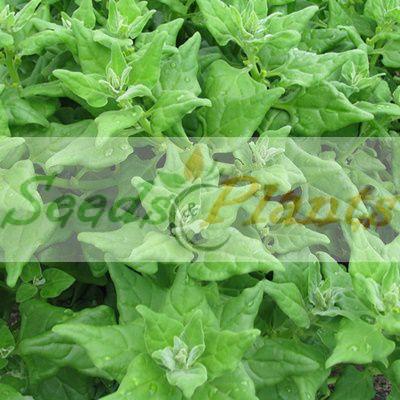
Red Malabar Spinach Seeds. Red Malabar Spinach (Basella rubra) is not a true spinach but a different species. It is an edible vine in the family Basellaceae. It is found in tropical Asia and Africa where it is widely used as a leaf vegetable. Even though it’s not a true spinach, it has the same taste.
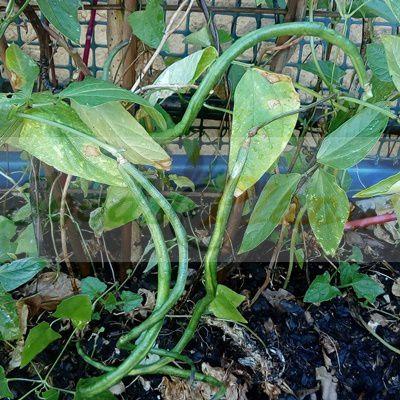
This heat-loving Asian vine has lovely red stems and delicious, succulent leaves that are great in salads and stir-fries. A delicious green that can be grown as an annual in many areas or as a perennial in sub-tropical areas.
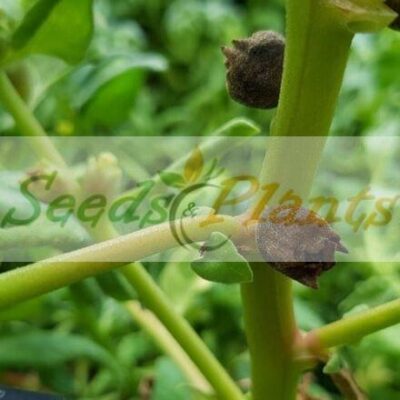
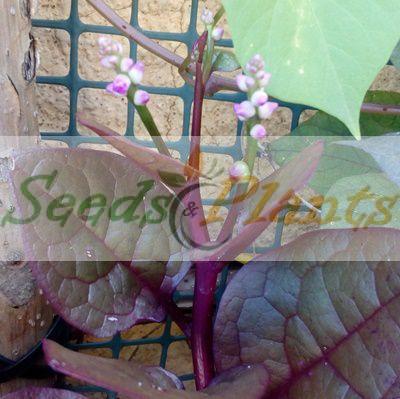
Red Malabar Spinach has pinkish flowers and purplish red vines. The leaves and stem contain mucilage, so it can appear slimy when broken off the vine. This mucilage is a great source of soluble fiber, much like pectin in apples.
The vine will grow rapidly in the heat of summer all the way through autumn.
Common Names: Malabar Spinach, Vine Spinach, Creeping Spinach, Ceylon Spinach and Indian spinach.
Red Malabar Spinach Culinary Uses
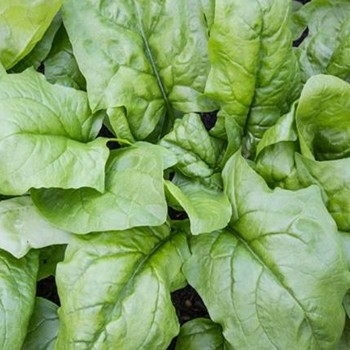
- The edible leaves (and shoots) of Basella ruba resemble spinach with a mild, slightly peppery flavor with a hint of citrus and are used in the same way.
- The young leaves can be eaten raw mixed in a green salad, and steamed or boiled to be used like cooked spinach.
- Because of the mucilagenous nature, it can also be used to thicken soups and stews.
- The leaves can be eaten throughout the season, but once plants start flowering, the leaves become bitter.
- The succulent stems are peeled and cooked in curries.
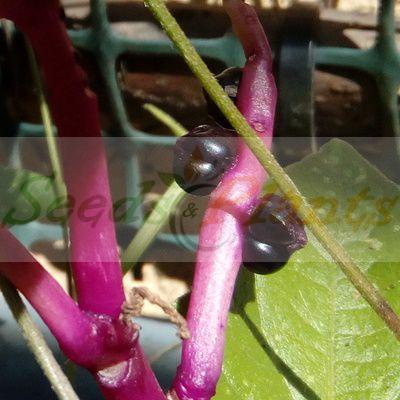
- The deep red/purplish sap from the fruit is used as a food colorant for desserts.
Medicinal Uses:
- Digestive Health: Known for its mild laxative properties, it is used to alleviate constipation and soothe the gastrointestinal tract due to high fiber and mucilage content.
- Anti-inflammatory & Antioxidant: Contains betacyanin (antioxidant) and kampferol (immune modulator), used to reduce nerve inflammation and treat swelling.
- Skin Care: Leaves are used as a topical poultice to accelerate the healing of boils, sores, and burns.
- Kidney/Liver Health: Studies indicate potential hepatoprotective effects, reducing toxin-induced liver damage.
- Cardioprotective: Used to help lower blood pressure and protect against cardiac injury.
Other Uses
- Dye: The red berries have historically been used to make ink or red dye.
- Cosmetics: Used in formulations for skin moisturizing and reducing wrinkles.
Indoor Sowing: Mid Winter and Late Winter.
Direct Sowing: Mid Spring.
- Soak the Malabar Spinach Seeds in water overnight before planting or scarify the seed coat to speed up germination.
- Direct sow the seeds in Mid Spring.
- Indoor sowing can be done in mid winter and late winter, however the plants do not transplant well.
- It is a vine, so plant the seeds next to a trellis in full sun.
- Place the seeds about 15cm apart on top of fertile, moisture-retentive soils and cover with a layer of soil.
- Keep soil moist, but not soggy, until germination.
- Germination can take 1 month or longer, so patience is required.
- Optimum germination temperature of between 18-24 C.
- Tolerates light shade.
- Use a slow-release fertilizer.
Related products