


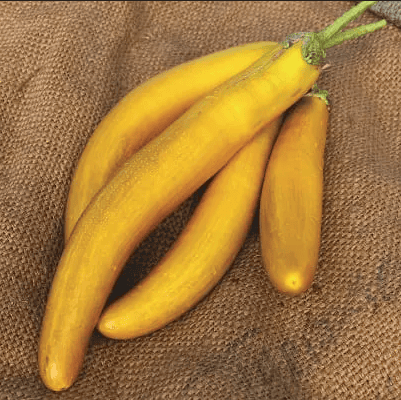
Yellow Finger Eggplant – 10 Seeds
(Solanum melongena)
R30.00
Yellow eggplants are commonly used in curry-based dishes or used as garnishes.
Indoor Sowing: Late Winter and Early Spring.
Direct Sowing: Spring and Early Summer.
Out of Stock
Email me when the product is back in stock.
🥕 Vegetable Quick Facts
Yellow finger eggplant, botanically classified as Solanum melongena, is a members of the Solanaceae, or nightshade family along with potatoes, tomatoes, and peppers. Yellow eggplants are commonly used in curry-based dishes or used as garnishes. These eggplants pair well lemongrass, red chilies, garlic, lime, coriander, meats such as chicken and beef, coconut milk, and Thai basil.
Growing Yellow Finger Eggplant
Indoor Sowing: Late Winter and Early Spring.
Direct Sowing: Spring and Early Summer.
- Eggplants grow fastest when temperatures are between 21 and 30°C and grow very slowly during cooler weather.
- Although usually grown as an annual, the plant can be grown as a perennial in areas with mild winters, by pruning the plant back in Late Autumn or Early Winter. In areas with very cold winters, potted plants can be placed indoors or in a greenhouse during winter.
- Direct Sow in Spring to Mid-Summer or start seeds indoors in Late Winter to Early Spring.
- Surface sow the Eggplant Seeds in 5 – 10cm pots and cover with a thin layer of soil or seed starter mix.
- Keep the soil evenly moist and place the pots in a sunny location protected from harsh rays.
- Germination takes about 14 days.
- Harden off the plants before transplanting them in a sunny location of the garden.
- Eggplants can also be successfully grown in containers. If you’re growing eggplant in pots, use a dark-colored container that will absorb more sunlight.
- Eggplant will fall over once loaded with fruit, so be sure to stake tall plants or use a cage to keep the plants upright.
- If growing eggplant in containers, stake the stems before the fruit forms.
Related products







Out of stock