
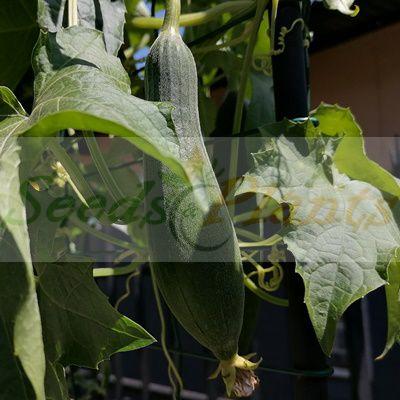
Loofah – 5 Seeds
(Luffa cylindrica)
R30.00
The dry fruit of the Loofah plant can be used as a sponge. Young green fruits can be boiled and eaten as a vegetable and the plant has medicinal and other uses.
Indoor Sowing: Late Winter and Early Spring.
Direct Sowing: Spring.
Only 4 left in stock
🥕 Vegetable Quick Facts
Vegetable Info
- 🍽️ Culinary Use: Boiled / Steamed, Curries, Raw Eating, Stir-frying
- 🥗 Edible Part: Buds, Flower, Leaf, Seed, shoot tips, Young Fruit
- 😋 Flavor Profile: Earthy, Mildly Sweet
- ⓘ Plant Use: Biomass Producer, Cosmetics/Skincare, Culinary, Industrial Applications, Medicinal
Medicinal Info
- 🌿 Medicinal Part: Fruit Pulp, Leaf, Root, Seed
- 🍵 Herbal Preparation: Decoction, Extract / Tincture, Infusion / Tea, Juice, Syrup
- ⚕️ Healing System: African Traditional Medicine, Ayurvedic System of Medicine, Chinese Traditional Medicine
Growth Traits
- 🌱 Life Cycle: Annual
- 🌾 Plant Type: Herbaceous Vine
- 🪴 Growth Habit: Climber
Growing Requirements
- 🌞 Sun Exposure: Full Sun
- 💧 Water Needs: Avoid Overwatering, High Water
- ☀️ Growing Conditions: Drought Tolerant, Frost Sensitive, Heat Tolerant, Not Cold Tolerant
- 🟤 Soil Preference: pH 6.0 - 6.8, Rich Organic, Sandy loam
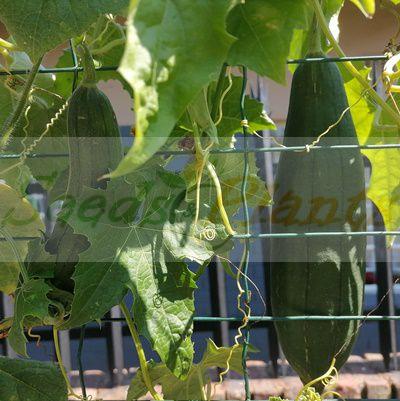
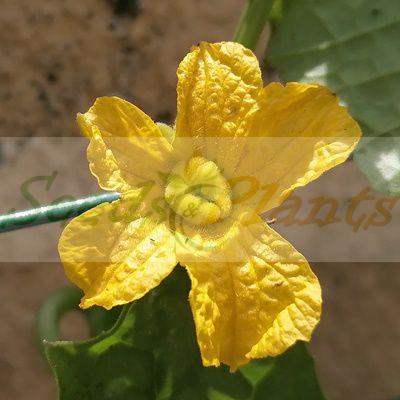
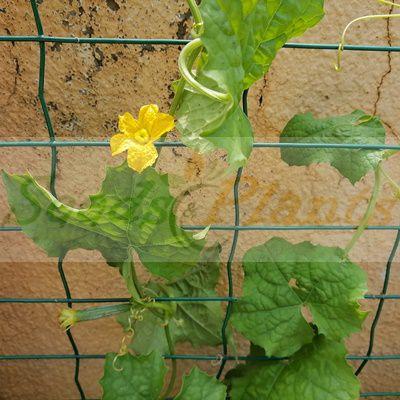
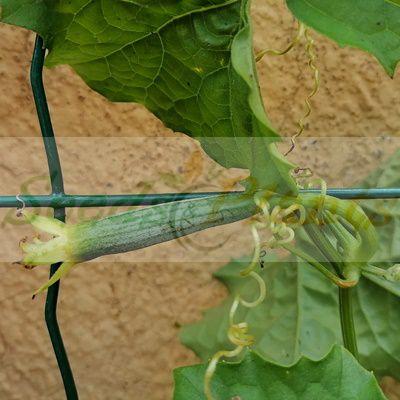
Loofah (Luffa cylindrica) is a very fast growing climber. Its leaves are 7 – 20 cm across and have three lobes. Flowers are bright yellow. The fruits which grow to about 60 cm in length are oblong or cylindrical, smooth and contain many seeds. It is a highly versatile plant where nearly every part is used for food, medicine, or industrial purposes. The dry fruit of Luffa cylindrica can be used as a sponge. Young green fruits can be boiled and eaten as a vegetable.
Common names: Smooth luffa, sponge luffa, vegetable sponge gourd, climbing okra, dishcloth gourd, Chinese okra
Culinary Use
- The young, tender fruit is widely used in Asian cuisine (India, China, Philippines) as a substitute for zucchini or cucumber in stir-fries, curries, and soups.
- Tender fruits can be eaten fresh in salads.
- Leaves, shoots, and flowers are lightly steamed or used in soups.
Edible Parts
- Young Fruit: The primary edible part, best harvested when 10–15 cm long, tender, and green.
- Flowers & Flower Buds: Can be eaten, often lightly steamed or added to salads.
- Leaves & Shoots: Young leaves and shoot tips are used as a vegetable.
- Seeds: Roasted as a snack or pressed for oil.
Medicinal Benefits
- Fruit Pulp: Used in traditional medicine for treating bronchitis, spleen diseases, fever, and as a diuretic.
- Leaves: Formulations (juices, decoctions) are used for treating malaria, amenorrhea, stomach pains, and as an aborticide.
- Seeds: Used as a purgative, emetic, and for treating leprosy or skin diseases.
- Root: Used in some traditional systems for treating nose cancer and as a muscle relaxant.
- Whole Plant: Used for treating skin diseases, rheumatism, hemorrhoids, and to induce lactation.
Other Uses
- Natural Sponge (Loofah): The matured, dried, and de-seeded fruit forms a dense fibrous, biodegradable sponge for bathing and household cleaning.
- Cosmetics/Skincare: The sponge is used for exfoliation, and the oil from the seeds is used in soaps, lotions, and sunscreens.
- Industrial/Household: Used for water filtration, filtering palm wine, or as a sound-absorbing material.
- Compost: The seed cake, rich in nitrogen and phosphorus, acts as fertilizer.
Growing Loofah
Indoor Sowing: Late Winter and Early Spring.
Direct Sowing: Spring.
- Soak the seeds in lukewarm water for a few hours to 24 hours before planting.
- You can direct sow in Spring once all danger of frost has passed and soil temperatures are consistently warm, ideally between 20-30°C
- Choose a spot with full sun and provide a sturdy trellis or support system for the vines to climb on.
- Make a small hole, plant 1 – 2 seeds per hole, and cover them with about 1.5-2 cm of soil.
- Keep the soil consistently moist but not saturated to encourage germination.
- Alternatively you can start the seeds indoors in Late Winter or Early Spring.
- For indoor sowing, fill small pots with compost and plant the seeds about 1.5 to 2 cm deep.
- Keep the pots in a warm location with a sunny window, as loofah seeds need warm temperatures of around 25-30°C to germinate.
- Cover with plastic wrap or a seeding dome.
- Keep the soil consistently moist but not saturated to encourage germination.
- Average germination time is 7 to 14 days.
- Once the seeds have germinated remove the plastic wrap or dome to promote good air flow. Keep the soil lightly moist but not wet.
- In Spring after the risk of frost has passed, it’s time to harden off loofah seedlings.
- After a week of hardening off, plant the seedlings in an area that gets full sun.
- Provide the seedlings with a strong trellis.
- Loofah plants need regular watering.
- Can also be grown in large containers.
Can this plant be used for culinary purposes?
Loofah is traditionally used for culinary purposes such as boiled / steamed and curries.
Does this plant have medicinal uses?
Traditionally, Loofah has a history of use in various healing systems, including African Traditional Medicine and Ayurvedic System of Medicine. Seeds are sold for cultivation purposes only.
Disclaimer
Medicinal Information:
All medicinal information on this website is for educational and informational purposes only and may not be construed as medical advice. The information is not intended to replace medical advice or treatment offered by healthcare professionals.
Seeds, Plants, Plant Cuttings, Geophytes and Dried Herbs:
In some countries and provinces, certain plants are deemed as invasive and are not allowed to be planted at all, whilst some plants are allowed to be grown only in certain areas or provinces. The onus is on you as the buyer to familiarize yourself with the regulations pertaining to your location, before purchasing any of our seeds, plants, plant cuttings, geophytes or dried herbs. We will not be held liable, should you purchase any seeds, plants, plant cuttings, geophytes or dried herbs. from us which are prohibited in your country or province.
Related products