Wild Garlic – 5 Seeds
(Tulbachia violancea)
R30.00
Both the Wild Garlic leaves and flowers can be used in salads and other dishes. The plant also has many medicinal and other uses.
Common Names: Wild garlic, society garlic (Eng.); wildeknoffel, wildeknoflok (Afr.); utswelane (Xho.); isihaqa, incinsini, (Zul.)
Indoor Sowing: Spring and Summer.
Direct Sowing: Spring and Summer.
Out of Stock
Email me when the product is back in stock.
🍃 Culinary Quick Facts
Culinary Info
- 🍽️ Culinary Use: Cooking, Flavoring, Garlic Substitute, Garnish, Salads, Sauces, Seasoning, Soups and Stews, Stir-frying
- 🥗 Edible Part: Bulb, Flower, Leaf, Stem
- 😋 Flavor Profile: Garlic-like
Medicinal Info
- 🌿 Medicinal Part: Bulb, Flower, Leaf, Rhizome
- 🍵 Herbal Preparation: Decoction, Infusion / Tea, Paste
- ⚕️ Healing System: African Traditional Medicine
Growth Traits
- 🌱 Life Cycle: Perennial
- 🦋 Pollinator Method: Attracts Bees, Attracts Butterflies
- 🪴 Growth Habit: Clumping
- 🌸 Flower Color: Pink
Growing Requirements
- 🌞 Sun Exposure: Full Sun
- 💧 Water Needs: Low Water
- ☀️ Growing Conditions: Cold Tolerant, Drought Tolerant, Frost Tolerant, Heat Tolerant
- 🟤 Soil Preference: Clay, Light, Loam, Moderately Fertile, Poor Soil Tolerant, Rocky, Sandy, Well-Drained
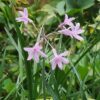
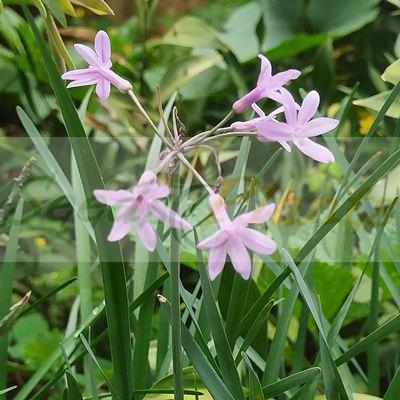
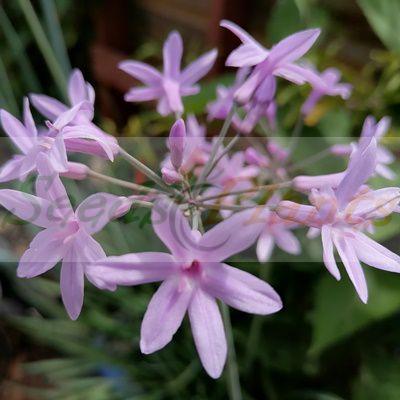
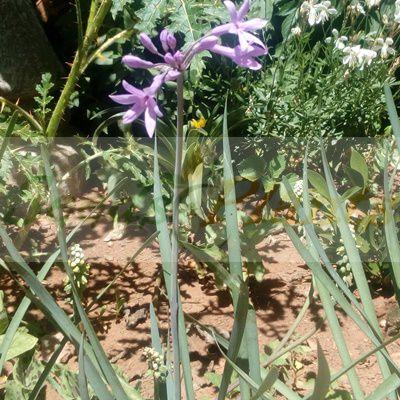
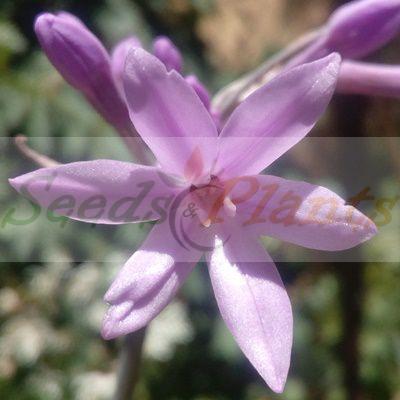
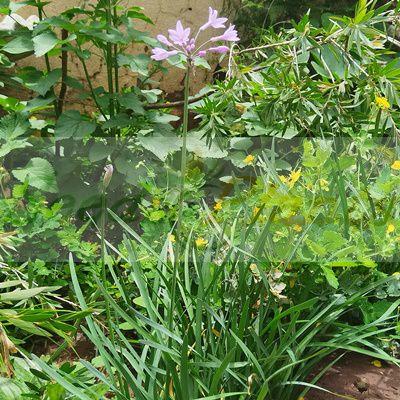
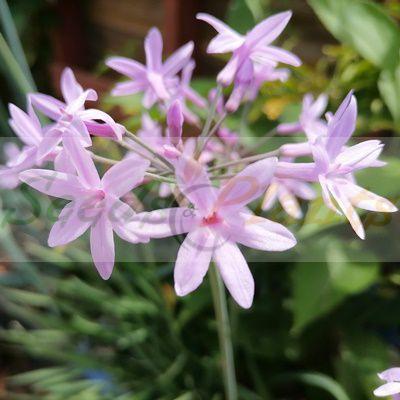
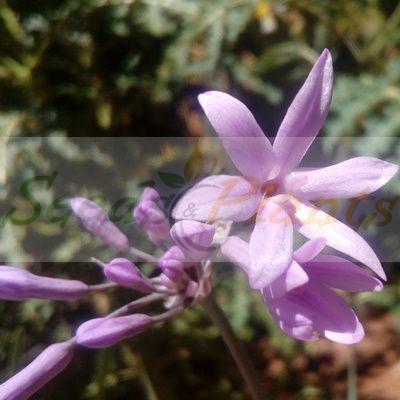
Wild Garlic Seeds. Wild Garlic (Tulbaghia violacea) is a fast-growing, bulbous plant that reaches a height of 0.5 m. The leaves are long, narrow, strap-like, slightly fleshy and smell strongly of garlic when bruised. They grow from fat, tuberous roots which spread to form clumps of plants. The pinkish-mauve tubular flowers, clustered into umbels of up to 20 flowers, are held above the leaves on a tall flower stalk, and appear over a long period in summer (January to April). They too smell of garlic when picked. The fruit, triangular capsules, are grouped into a head, and when ripe they split to release the flattened, hard black seeds.
Wild Garlic Culinary Uses
- This attractive plant is ideal for the herb garden, as both the leaves and flowers can be used in salads and other dishes.
- Zulu people use the leaves and flowers as spinach and as a hot, peppery seasoning with meat and potatoes.
Wild Garlic Other Uses
- The smell repels fleas, ticks and mosquitoes when crushed on the skin.
- The crushed leaves may be used to discourage moles from the garden (by their strong smell)
- Wild garlic is a very good snake repellent.
Wild Garlic Medicinal Benefits
- The crushed leaves may be used to help cure sinus headaches.
- The fresh bulbs are boiled in water and the decoctions are taken orally to clear up coughs and colds.
- The bulb has been used as a remedy for pulmonary tuberculosis and to destroy intestinal worms.
- Wild garlic may prove to have the same or similar antibacterial and anti-fungal activities as has been scientifically verified for real garlic.
- The leaves are used to treat cancer of the esophagus.
- In Zulu traditional medicine they use the bulb to make an aphrodisiac medicine.
Growing Wild Garlic
Indoor Sowing: Spring and Summer.
Direct Sowing: Spring and Summer.
- The hard black seeds are best sown in spring in deep seed trays and can be planted out during their second year.
- Use a well-drained seedling mix.
- Cover the seeds lightly with the sowing mix, clean coarse sand, or milled bark.
- Keep the soil consistently moist.
- Place the trays in a warm but shaded position.
- Germination in about 30 days, but can take longer.
- Transplant the seedlings to their permanent location once they are a few inches tall.
- Water well for the first few weeks to help the plant settle.
- Mulch with a good quality compost.
- First flowering can generally be expected in the second or third year.
- It thrives in full sun, but can tolerate partial shade.
- It prefers loamy soil with an acidic, neutral, or alkaline pH.
- It can also be mass planted to form a ground-cover in sunny or partially shaded positions.
- It thrives in well-drained soil containing plenty of compost.
Related products