White Borage -10 Seeds
(Borago officinalis ‘Alba’)
R30.00
The plant usually blooms slightly later in the season than its blue cousin. It is a medicinal and culinary herb with edible leaves and flowers.
Common Names: Starflower, bee bush, bee bread, and bugloss.
Seed Type: Organic – Harvested from our own plants.
Indoor Sowing: Late Winter / Early Spring.
Direct Sowing: Autumn, Spring and Summer.
Out of Stock
Email me when the product is back in stock.
🌼 Flower Quick Facts
Uses
- ⓘ Plant Use: Biomass Producer, Culinary, Dynamic Accumulator, Medicinal, Soil Aeration, Soil Improvement
Flower Info
- 🌸 Flower Color: White
- 🦋 Pollinator Method: Attracts Bees, Attracts Hoverflies
Medicinal Info
- 🌿 Medicinal Part: Flower, Leaf, Seed, Stem
- 🍵 Herbal Preparation: Infusion / Tea, Juice, Ointments/Creams, Poultice, Syrup
- ⚕️ Healing System: European Traditional Medicine
Culinary Info
- 🍽️ Culinary Use: Beverages/Teas, Garnish, Salads
- 😋 Flavor Profile: Cucumber-like
Growth Traits
- 🌱 Life Cycle: Annual
- 🪴 Growth Habit: Sprawling
Growing Requirements
- 🌞 Sun Exposure: Full Sun, Partial Shade
- 💧 Water Needs: Avoid Overwatering, Moderate Water
- ☀️ Growing Conditions: Drought Tolerant
- 🟤 Soil Preference: Clay, Loam, Poor Soil Tolerant, Sandy
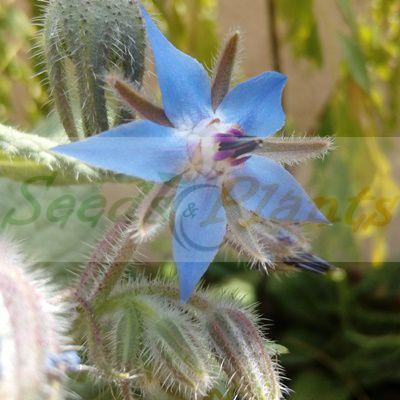
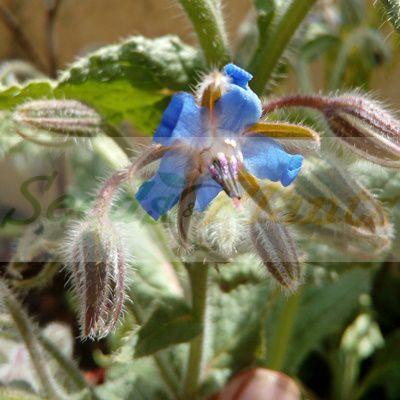
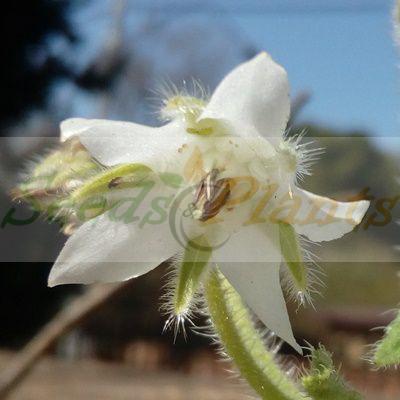
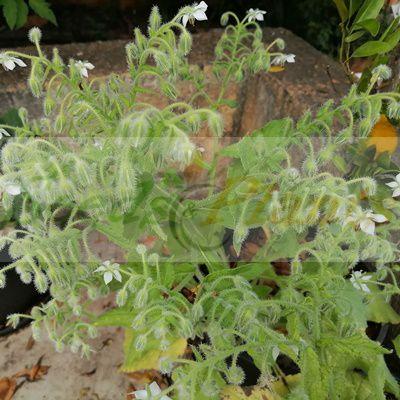
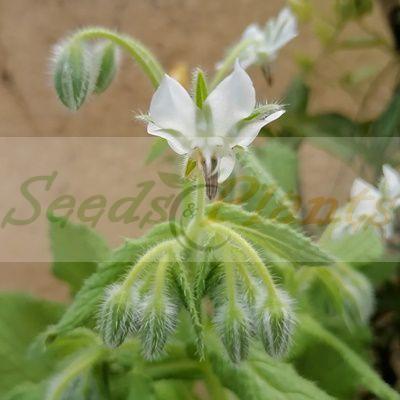
White Borage (Borago officinalis ‘Alba’) is a robust variety that has bright green bristly leaves and striking white flowers which blooms throughout the summer. It is identical in growth habit to its blue counterpart, growing to a 2 to 3 foot tall bush that is slightly narrower in width. Stalks of white borage tend to be a bit sturdier, and the plant usually blooms slightly later in the season than its blue cousin. Both share the same large, fuzzy oval-shaped leaves. Their wrinkly, grey-green colored leaves are best described by the Arabic name ‘lisan atheur’, which aptly describes the shape and texture of the leaf as the ‘tongue of the bull.
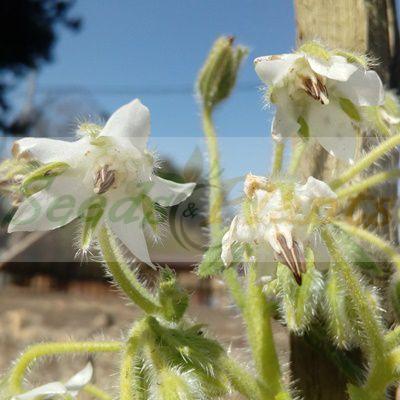
The tiny flowers are star-shaped with five ivory white colored petals. From the center of the flower protrudes blackish brown anthers that form a cone shape. Borage grows well in a position with full sun and will tolerate partial shade. The plants will happily grow in just about any soil type as long as it drains well and likes to be kept somewhat moist throughout the growing season.
Garden and Soil Benefits:
- Dynamic Accumulator: Borage has a deep taproot that “mines” nutrients—specifically potassium and calcium—from deep subsoil layers, bringing them to the surface where other plants can access them.
- Soil Aeration: Its strong root system effectively penetrates and breaks up compacted or heavy clay soils, improving drainage and oxygen flow.
- Rapid Biomass: It grows extremely fast, producing large amounts of soft green material that breaks down quickly when tilled under, adding valuable organic matter and a slow release of nitrogen to the soil.
- Living Mulch: Because it covers bare ground rapidly, it protects the soil’s surface from erosion and helps retain moisture while suppressing weeds.
Borage Culinary Uses
With a taste comparable to that of cucumber, it has various culinary applications. The leaves can be used as a salad green and the flowers as edible decorations. This herb can also be used in soups, salads, borage-lemonade, strawberry-borage cocktails, preserves, borage jelly, various sauces, cooked as a stand-alone vegetable, or used in desserts in the form of fresh or candied flowers, to name a few.
How to grow White Borage
Indoor Sowing: Late Winter / Early Spring.
Direct Sowing: Autumn, Spring and Summer.
- Grown from seed, borage can be started indoors 3-4 weeks before the last frost or direct seeded just after the danger of frost has passed.
- Plant the small, black seeds just beneath the surface of the soil and thin seedlings to at least one foot apart.
- Trim back occasionally to keep plants tidy and upright.
- It is a good companion plant and mulch for most plants, being an excellent source of minerals, especially calcium and potassium.
Related products