
Vegetables
Growing Okra
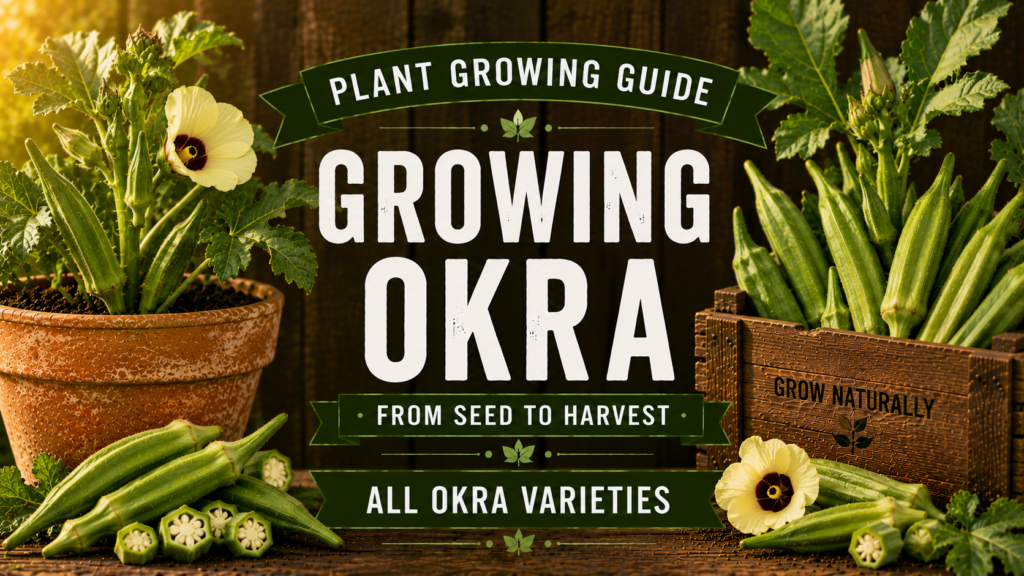
Growing Okra and Maintaining Okra Plants. Okra (Hibiscus esculentus) is a tall, upright plant with a hibiscus-like flowers. The immature, young seed pods are the most used edible part of this plant, but the leaves are also edible. This is a popular vegetable which originated from the hot climates of Africa. Okra adds body and flavor to soups, stews, and relishes, and can be grilled, braised, steamed, and sautéed.
Okra Types
- Clemson Spineless
- Burgundy
- Jing Orange Okra
- Cow Horn
Growing Okra from Seed
- Soak Okra seeds in warm water overnight to speed germination.
- Direct sow okra seeds in full sun after danger of frost has passed.
- Plant the seeds 2 to 5 cm deep.
- Recommended row spacing is 71 to 96 cm.
- Cover with 1 inch of fine soil.
- Seedlings should emerge in 14-21 days.
- Thin the seedlings to a spacing of 20 to 30 cm between plants.
Maintaining Okra Plants
- For good yields, okra must grow in full sunlight in fertile, well-drained soil.
- Mulch to keep out weeds and conserve moisture.
- Water during dry spells and side-dress with compost every three to four weeks.
- In areas with long, hot summers, cut the plants back almost to ground level in midsummer and fertilize to produce a second crop.
- Okra will do well under dry conditions, but produces more pods with adequate watering. Water often enough to prevent the soil from completely drying out, but avoid over watering , as this could cause root rot.
- After the first harvest, add fertilizer to the soil.
Harvesting Okra
- Okra plants will produce flowers about 60 days after planting. The okra pods will be ready to pick 3 to 4 days later.
- The younger the pod, the more tender it will be. Harvest the pods when they are 3 to 4 inches long. If the okra gets too large, it will be tough and stringy.
- Pick the okra every 1 to 2 days or yields will decrease. The more you pick okra pods, the more they produce new blossoms.
- When picking okra, you’ll need a sharp knife of pair of shears.
- Okra can be stored for 3 to 5 days in the refrigerator. It can also be pickled, canned or dried for later use.
Buy Okra Seeds
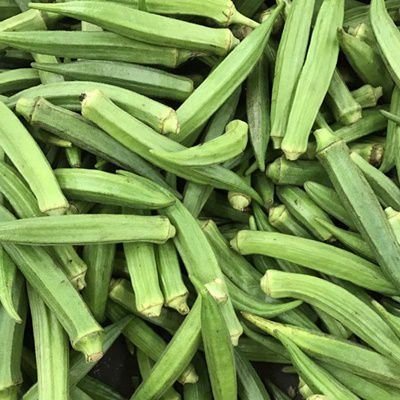
Clemson Spineless Okra – 20 Seeds
(Abelmoschus esculentus “Clemson Spineless”)
R30.00
Only 2 left in stock
Related Articles
Growing Burdock From Seed to Harvest
Read MoreGrowing Yacon
Read MoreGrowing Mustard Greens
Read MoreGrowing Rhubarb
Read MoreGrowing Asparagus
Read MoreGrowing Broccoli
Read MoreGrowing Globe Artichoke
Read MoreGrowing Eggplants
Read More