
Sand Ivory (Berchemia species nova) – 5 Seeds
(Phyllogeiton trachybasis)
R30.00
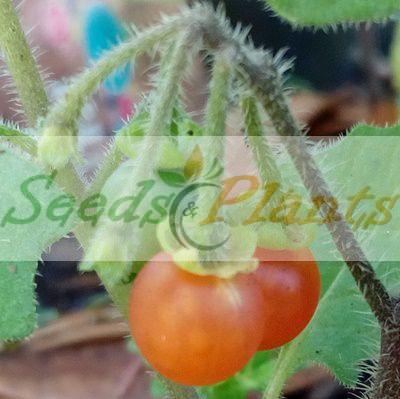
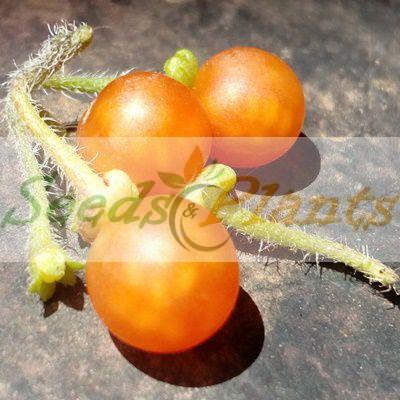
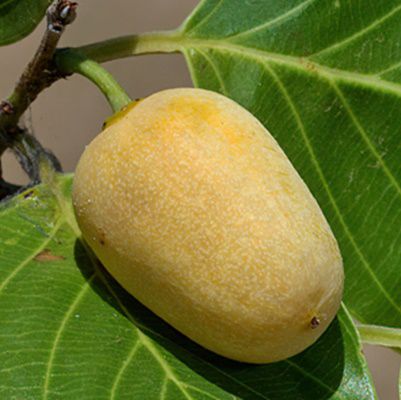
The edible fruits are bright orange-yellow to pinkish when ripe.
Common Names: Sand Ivory, Sandivoor, ubalatsheni, ubaletsheni, umuma, umumu, umbenduza, umadlozane, umhungu, umhungulo, umhlungulo, vukakwabafileyo, vukakwabafile, vusabafileyo.
Indoor Sowing: Spring.
Direct Sowing: Spring
In stock
🍒 Fruit Quick Facts
Growth Traits
- 🌾 Plant Type: Tree
- 🔁 Fruiting Needs: Needs Another Plant
- 🪴 Growth Habit: Upright
- 🌸 Flower Color: Pale Green, Yellow-green
- 🌿 Foliage Type: Semi-Deciduous
- 📏 Mature Height: > 12.2m
- 🦋 Pollinator Method: Attracts Bees, Attracts Beetles, Attracts Wasps
Growing Requirements
- 🟤 Soil Preference: Deep, Dry, Sandy, Well-Drained
Sand Ivory, Berchemia species nova (Phyllogeiton trachybasis) is a sub-canopy or canopy tree found mainly on well-drained, deep sandy soils at low elevations to about 100 m above sea level. It is a semi-deciduous, single stemmed erect tree that can grow up to 12m in height. The bark on the base of mature trees are almost black, very rough, exfoliating in large pieces. Flowering takes place in Spring. Flowers are pollinated by bees and the fruit attracts birds. The flowers are bisexual and pale green to yellow-green in color. The edible fruits are oblong-ellipsoid and turn bright orange-yellow when ripe.
Common Names: Sand Ivory, Sandivoor, ubalatsheni, ubaletsheni, umuma, umumu, umbenduza, umadlozane, umhungu, umhungulo, umhlungulo, vukakwabafileyo, vukakwabafile, vusabafileyo.
Growing Sand Ivory
Indoor Sowing: Spring.
Direct Sowing: Spring
- Soak the seeds in water for 24 hours.
- Use a seedling tray filled with a mixture of 5 parts river sand and 1 part compost.
- Sow the seeds about 1cm deep and cover with a layer of sand.
- Keep the sowing medium moist to encourage germination.
- Germination in about 2 – 4 weeks, but may take longer.
- Seedlings should only be transplanted in nursery bags after reaching the 2 leaf stage.
Related products