
Red Goji Berry – 20 Seeds
(Lycium Barbarum)
R30.00
Goji Berry is also known as Chinese Wolfberry. The berries are very nutritious. They can be eaten fresh, made into juice or wine.
Indoor Sowing: Late Winter, Spring and Summer.
Direct Sowing: Spring and Summer.
Only 1 left in stock
🍒 Fruit Quick Facts
Fruit Info
- 🍽️ Culinary Use: Beverages/Teas, Cooking, Garnish, Juices and Syrups, Liqueurs/Wines, Raw Eating
- 🥗 Edible Part: Berry, Leaf
- 😋 Flavor Profile: Licorice-like, Sweet
Medicinal Info
- 🌿 Medicinal Part: Berry, Leaf, Root bark
- 🥣 Herbal Preparation: Decoction, Extract / Tincture, Infusion / Tea, Juice, Powder
- ⚕️ Healing System: Chinese Traditional Medicine
Growth Traits
- 🌱 Life Cycle: Perennial
- 🌾 Plant Type: Shrub
- 🔁 Fruiting Needs: Needs Only 1 Plant
- 🪴 Growth Habit: Sprawling, Upright
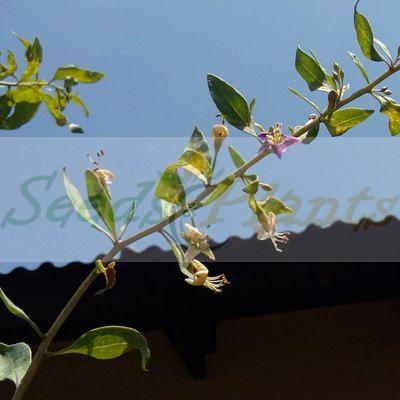
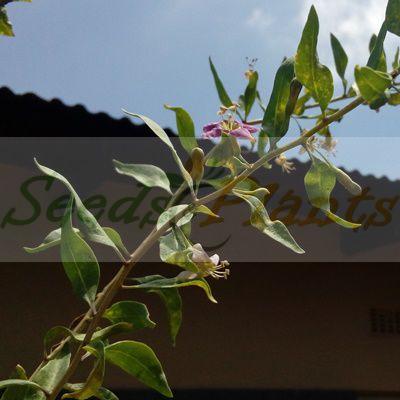
- 🌸 Flower Color: Lavender, Purple
- 🌿 Foliage Type: Deciduous
- 📏 Mature Height: 1-3m
- 🦋 Pollinator Method: Attracts Bees, Attracts Butterflies, Attracts Hummingbirds, Self-pollinating
Growing Requirements
- 🌞 Sun Exposure: Full Sun
- 💧 Water Needs: Avoid Overwatering, Moderate Water
- ☀️ Growing Conditions: Cold Tolerant, Drought Tolerant, Frost Tolerant, Heat Tolerant
- 🟤 Soil Preference: Fertile, Light, Tolerant of most soils, Well-Drained
Red Goji Berry (Lycium Barbarum) is also known as Chinese Wolfberry. This highly branched, deciduous shrub grows up to 3 meters tall and wide in its natural form. However, it can be restricted to 1 – 2 m tall, which makes it perfect hedging plant.
Red Goji Berry Culinary Uses
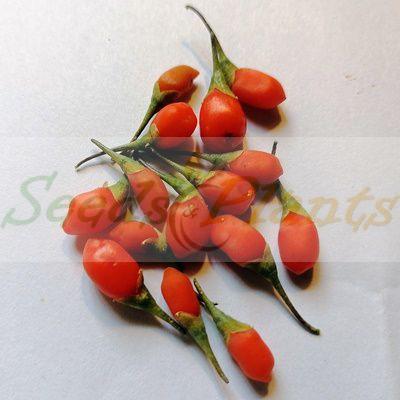
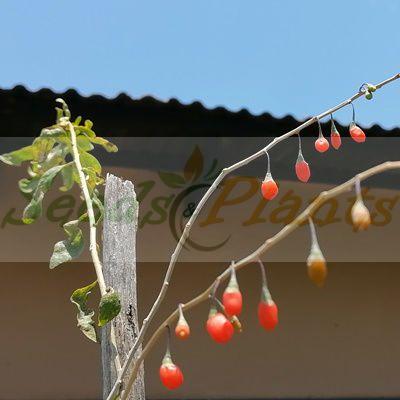
- The fruits appear as orange-red berries with a bright color in elongated shape, the size of 1-2 cm, with a slightly sour flavor.
- They can be eaten fresh, made into juice or wine and as a snack.
Red Goji Berry Medicinal Uses
- Bark of this plant can be used in teas and infusions.
- Used in traditional Chinese medicine, Goji Berry is very valuable and nutritious: contain carotenoids, beta carotene, vitamin C, B, E, as well as more than 30 trace elements, antioxidants and 19 amino acids.
- They are truly exceptional, improve the immune system and eyesight.
Growing Red Goji Berry
Indoor Sowing: Late Winter, Spring and Summer.
Direct Sowing: Spring and Summer.
- Soak the Goji Berry Seeds in warm water for 24 hours. This will increase their rate of germination.
- Sow the seeds in moist substrate and place the planted seeds in a warm place. The optimum germination temperature is around 20 C.
- Germination in about 14- 30 days.
- Transplant seedlings immediately after 2 weeks has passed, to avoid stressing the seedlings. Be careful not to damage the roots.
- Transplant into a pot or in the ground.
- Snip off the main stem just above third leaf when it appears. This will cause the plant to grow laterally as a bush rather than vertically as a tree. A bushy form will yield more berries than a taller plant.
- Growing goji berries in containers is possible. Use a pot that is large and deep enough to hold the plant.
- Plant it in a light potting mix.
- Repot it once in every 2-3 years or whenever you find it rootbound.
- Fertilize the plant with tomato feed twice in the month in the growing period.
Related products




Out of stock