Makataan – 5 Seeds
(Citrullus lanatus)
R30.00
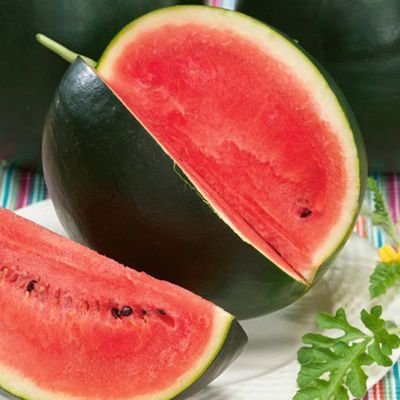
The Makataan is a heirloom wild watermelon, that has been cultivated in South Africa since pre-colonial times.
Common names: tsamma melon, wild watermelon (Eng.); bitterboela, bitterwaatlemoen, karkoer (Afr.); t’sama (Khoisan); makataan (Tswana).
Indoor Sowing: Not Recommended.
Direct Sowing: Spring and Early Summer.
Only 3 left in stock
🍒 Fruit Quick Facts
Fruit Info
- 🍽️ Culinary Use: Cooking, Jams and Jellies, Pickled Rind, Vegetable dishes
- 🥗 Edible Part: Fruit, Leaf, Rind, Seed
- 😋 Flavor Profile: Mildly Sweet
Growth Traits
- 🌱 Life Cycle: Annual
- 🌾 Plant Type: Herbaceous Vine
- 🔁 Fruiting Needs: Needs Only 1 Plant
- 🪴 Growth Habit: Spreading
- 🌸 Flower Color: Yellow
- 🦋 Pollinator Method: Attracts Bees
Growing Requirements
- 🌞 Sun Exposure: Full Sun
- 💧 Water Needs: Avoid Overwatering, Moderate Water, Water Deeply
- ☀️ Growing Conditions: Drought Tolerant, Frost Sensitive, Heat Tolerant, Not Cold Tolerant
- 🟤 Soil Preference: Fertile, Rich Organic, Sandy loam
Makataan (Citrullus lanatus, from the cucurbitaceae family) are edible wild watermelons indigenous to the Southern African region. The Makataan wild watermelon has been cultivated in South Africa since pre-colonial times. It grows wild in grassland and bushland, mostly in sandy soils of the Kgalagadi region of the Northern Cape, and under cultivation Mpumalanga, North West, Limpopo, KwaZulu-Natal, Free State, Western Cape and Eastern Cape.
Common names: tsamma melon, wild watermelon (Eng.); bitterboela, bitterwaatlemoen, karkoer (Afr.); t’sama (Khoisan); makataan (Tswana)
The plant is a creeping melon vine that can grow up to 10 m long. It has deeper roots than the more commonly known commercial watermelons, therefore can hold water for longer periods, and survive better in times of drought.
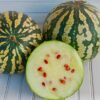
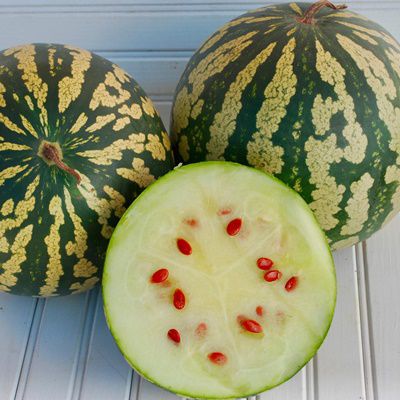
The fruits of wild plants can grow up to about 20 cm in diameter, they are usually greenish, mottled with darker green. The fruits of cultivated plants are usually bigger, rounded or oval with yellow to dark green skin that is mottled or striped.
The flesh is white to yellow, and juicy, and contains up to 90% water. The inner flesh can be cooked like squash and also served with maize meal or made into a smooth jam. The seeds are edible when roasted, ground into flour, or used in porridge. Young leaves can also be cooked like a green vegetable.
Growing Makataan from Seed
Indoor Sowing: Not Recommended.
Direct Sowing: Spring and Early Summer.
- You can direct sow the seeds from the beginning of Spring to the beginning of Summer.
- Watermelons grow best on sandy loam soils, with good drainage and a soil pH of between 6.0 and 6.8.
- Soil temperature should be at least 18°C for germination to take place.
- Seeds should be sown in an area that gets full sun.
- Direct sow the seeds 2.5cm deep and 50 – 75cm apart, in soil mounds or ridges.
- You need at least three months of reliably hot, sunny weather to grow and ripen a watermelon. During that time your average daily maximum temperature should be at least about 20-25°C
Related products