Sausage Tree – 2 Seeds
(Kigelia africana)
R50.00
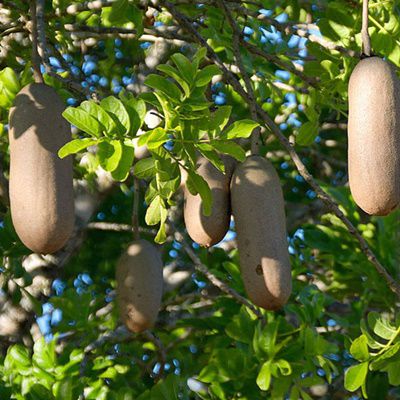
The Sausage Tree produces unique fruits that look like giant sausages and can weigh several kilograms. The fruits are used to flavor and ferment beer, for medicinal purposes and in the production of beauty products.
Common names: sausage tree (Eng.); worsboom (Afr.); umVunguta, umFongothi (Zulu); Modukguhlu (North Sotho); Muvevha (Venda).
Indoor Sowing: Early Spring.
Direct Sowing: Spring.
Out of Stock
Email me when the product is back in stock.
🌿 Herbal Quick Facts
Medicinal Info
- 🌿 Medicinal Part: Bark, Flower, Fruit, Leaf, Root, Seed, Stem
- 🥣 Herbal Preparation: Decoction, Extract / Tincture, Ointments/Creams, Poultice, Powder
- ⚕️ Healing System: African Traditional Medicine
Culinary Info
- 🍽️ Culinary Use: Beer flavoring, Cooked / Baked / Dried fruit, Roasted seeds
- 🥗 Edible Part: Fruit pulp, Leaf, Seed
- 😋 Flavor Profile: Bitter
Growth Traits
- 🌱 Life Cycle: Perennial
- 🌾 Plant Type: Tree
- 🦋 Pollinator Method: Attracts Bats, Attracts Birds
- 🪴 Growth Habit: Rounded crown, Upright
- 🌿 Foliage Type: Semi-Deciduous
- 🌸 Flower Color: Dark Red, Maroon
Growing Requirements
- 🌞 Sun Exposure: Full Sun
- 💧 Water Needs: Moderate Water
- ☀️ Growing Conditions: Drought Tolerant, Frost Sensitive, Heat Tolerant, Not Cold Tolerant
- 🟤 Soil Preference: Humus-rich, Tolerant of most soils, Well-Drained
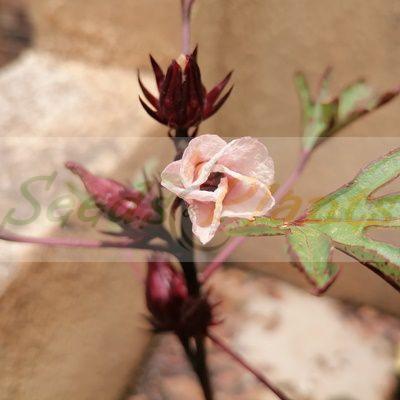
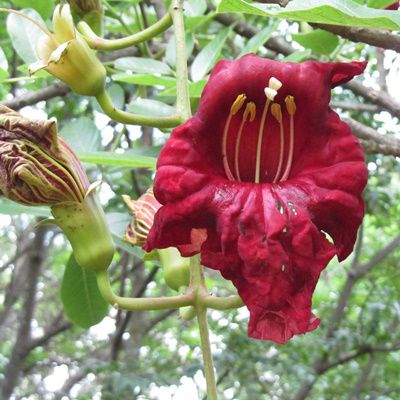
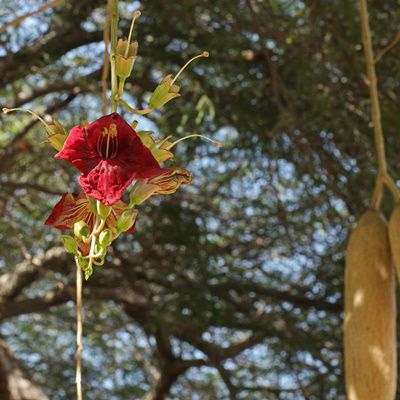
The Sausage Tree (Kigelia africana) boasts long, open sprays of large, wrinkled, maroon or dark red trumpet-shaped flowers that are velvety on the inside and that virtually overflow with nectar. The unique fruits look like giant sausages and can weigh several kilograms.
The tree is found on riverbanks, where it may reach 20 m, along streams and on floodplains, also in open woodland, from KwaZulu-Natal to Tanzania.
Common names: sausage tree (Eng.); worsboom (Afr.); umVunguta, umFongothi (Zulu); Modukguhlu (North Sotho); Muvevha (Venda)
CAUTION: Fresh fruit cannot be eaten – it is said to be a strong purgative, and causes blisters in the mouth and on the skin. Green fruits are said to be poisonous.
Sausage Tree Uses:
- In Malawi, roasted fruits are used to flavor beer and aid fermentation.
- Traditional remedies prepared from crushed, dried or fresh fruits are used to deal with ulcers, sores and syphilis – the fruit has antibacterial activity.
- Beauty products and skin ointments are prepared from fruit extracts.
Growing Sausage Tree
Indoor Sowing: Early Spring.
Direct Sowing: Spring.
- Sow seeds in Spring.
- Soak the seeds for 24 hours in warm water.
- Then sow the seeds in river sand.
- Protect young plants from frost.
- The tree has an invasive root system, so plant away from buildings.
- Plant in full sun, add lots of compost and mulch well.
- Water moderately.
- It tolerates temperatures ranging from about 4°C to 40°C.
Related products