
Organic Gardening
Benefits of Organic Gardening
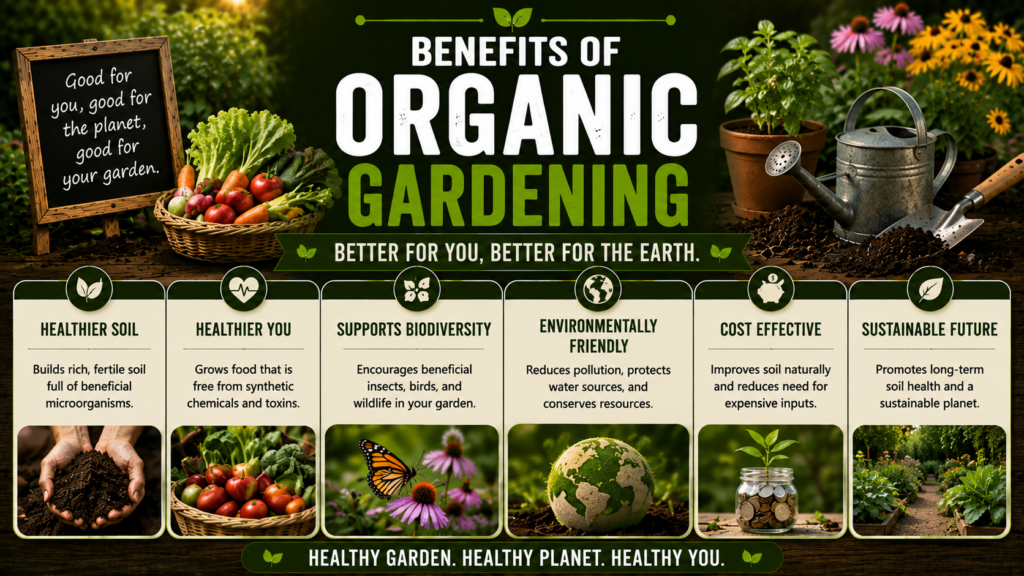
Organic gardening has become increasingly popular among home gardeners who want to grow vegetables, herbs, flowers and fruit in a more natural way.
But what exactly does organic gardening mean?
For a beginner, the word “organic” can sometimes make gardening sound more complicated than it really is. You may imagine that you need special equipment, expensive products or a completely different type of garden.
In reality, organic gardening is largely about working with natural processes rather than trying to control every part of the garden. It involves looking after the soil, encouraging beneficial organisms, choosing suitable plants and using gardening methods that reduce unnecessary reliance on synthetic chemicals.
You do not have to follow a complicated set of rules to start. Even a few simple changes can make your garden more environmentally friendly and healthier for the plants growing in it.
What Is Organic Gardening?
Organic gardening focuses on maintaining a healthy growing environment through natural processes and responsible gardening practices.
Rather than relying heavily on synthetic fertilisers and pesticides, organic gardeners often concentrate on:
- Building healthy soil
- Adding compost and other suitable organic matter
- Encouraging beneficial insects
- Using natural methods to manage pests
- Choosing plants suited to the local growing conditions
- Conserving water
- Reducing unnecessary chemical use
- Recycling suitable garden materials
Organic gardening does not mean that you simply leave your garden completely unattended.
It is still important to water, prune, weed, feed and protect your plants. The difference is that the gardener tries to understand the natural processes taking place and work with them.
Healthier Soil
One of the biggest benefits of organic gardening is the attention given to soil health.
Healthy soil is the foundation of a productive garden. It provides plants with support, water, nutrients and access to air around their roots.
Organic gardeners often improve soil by regularly adding suitable organic matter such as compost.
As organic matter breaks down, it contributes to soil structure and provides food for many organisms living in the soil.
Over time, soil that is cared for in this way can become easier to work and better able to support healthy plant growth.
Compost Is a Gardener’s Best Friend
Composting is one of the easiest ways to bring organic gardening principles into your own garden.
Kitchen and garden materials such as suitable vegetable scraps, leaves, grass clippings and other organic material can be composted under the right conditions.
Finished compost can then be added to garden beds to return organic matter to the soil.
Instead of seeing fallen leaves and some garden waste as something that needs to be thrown away, you can turn suitable materials into a useful resource for your garden.
Composting also reduces the amount of organic waste that ends up in rubbish bins.
Encouraging Beneficial Insects
Not all insects in the garden are pests.
Many insects are helpful because they pollinate flowers or feed on insects that damage plants.
Bees and other pollinators are important for many flowering plants and food crops. Ladybirds and lacewings, for example, can help control certain sap-feeding pests.
An organic garden can provide food and shelter for these beneficial insects by including a variety of flowering plants.
Avoiding unnecessary insecticide use can also help protect these valuable garden visitors.
Supporting Pollinators
Pollinators play an important role in the production of many fruits and vegetables.
Bees are perhaps the best-known pollinators, but butterflies, moths and other insects can also contribute to pollination.
A garden with a mixture of flowering plants can provide food for pollinators during different parts of the year.
Where possible, choose a range of flowers rather than planting only one type. Different flowers can provide different sources of nectar and pollen.
Even a small garden, balcony or collection of containers can provide useful resources for visiting pollinators.
Reducing Unnecessary Chemical Use
Organic gardening generally aims to reduce unnecessary reliance on synthetic chemical pesticides and fertilisers.
This does not mean that every product labelled as natural is automatically safe or harmless. Natural substances can also affect people, animals and beneficial insects.
The important principle is to identify the problem first and use the least disruptive appropriate solution.
For example, if you discover a few caterpillars on a plant, you may be able to remove them manually rather than treating the entire garden.
If a plant is struggling because it is planted in the wrong location, spraying it will not solve the underlying problem.
Good gardening starts with understanding the cause.
Natural Pest Management
Organic gardening often uses several methods together to manage pests.
This is sometimes called integrated pest management.
Instead of trying to eliminate every insect, the aim is to keep pest populations at manageable levels while protecting beneficial organisms.
Methods may include:
- Inspecting plants regularly
- Removing pests by hand
- Encouraging beneficial insects
- Using physical barriers
- Keeping plants healthy
- Removing badly damaged plant material
- Rotating crops
- Choosing pest-resistant or suitable varieties
These methods can be particularly useful for beginners because they encourage you to observe your garden rather than immediately reaching for a spray.
A More Diverse Garden
Organic gardening often encourages gardeners to grow a wider variety of plants.
Instead of having one large area containing a single crop, you might include vegetables, herbs, flowers, fruit trees and ground-cover plants.
Greater plant diversity can create a more varied habitat for insects and other organisms.
It can also make the garden more interesting and attractive.
Growing different types of plants can help spread your gardening risks too. If one crop struggles because of a particular pest or weather condition, other plants may continue growing successfully.
Better Use of Garden Waste
An organic garden can turn many types of garden waste into useful resources.
Fallen leaves can be used as mulch or added to compost.
Some grass clippings can be composted or used appropriately as mulch.
Pruned branches can sometimes be chipped or processed into useful garden material.
Plant material that is diseased or heavily infested should be handled carefully rather than automatically added to a home compost pile, because some pests and diseases can survive in unsuitable composting conditions.
The goal is to reduce waste while still protecting the health of the garden.
Conserving Water
Organic gardening often goes hand in hand with sensible water management.
Healthy soil containing organic matter can help retain moisture, while mulch can reduce moisture loss from the soil surface.
Watering deeply and appropriately can encourage plants to develop healthy root systems, depending on the crop.
It is also useful to water according to the weather and the needs of the plant rather than following a rigid schedule.
During South Africa’s hot and dry periods, good water management can be particularly important.
Mulching the Garden
Mulch is a simple but valuable gardening tool.
Organic mulches can include materials such as:
- Shredded leaves
- Straw
- Compost
- Wood-based mulch
- Grass clippings used appropriately
A layer of suitable mulch can help reduce evaporation, protect the soil surface and gradually contribute organic matter as it breaks down.
Keep mulch away from direct contact with plant stems and tree trunks. A small gap around the base helps reduce the risk of excessive moisture against the stem or trunk.
Healthier Plants Start With the Right Conditions
Organic gardening is not simply about what products you use.
One of the best ways to reduce plant problems is to grow plants in conditions that suit them.
A plant that requires full sun will usually struggle if planted in deep shade. A plant that prefers well-drained soil may struggle in a permanently wet garden bed.
Before planting, learn about the basic requirements of the crop.
Providing suitable sunlight, soil, water and space can help plants grow strongly and may make them less vulnerable to some forms of stress.
Organic Gardening Can Save Money
Organic gardening does not necessarily have to be expensive.
In fact, some organic practices can reduce gardening costs over time.
Composting your own suitable organic waste can reduce the need to buy as much soil improver.
Saving seeds from suitable plants can sometimes reduce the cost of future crops, provided the plant variety is suitable for seed saving.
Making your own leaf mould, using homemade compost and collecting suitable rainwater where practical can also make gardening more resource-efficient.
Of course, not everything needs to be homemade. Buying good-quality compost, growing medium or other gardening products when necessary is perfectly reasonable.
Organic Gardening Encourages Observation
One of the less obvious benefits of organic gardening is that it encourages you to pay attention to your garden.
Instead of immediately treating every unusual leaf or insect, you learn to ask questions.
What caused the problem?
Is the insect actually harmful?
Has the weather changed?
Is the soil too wet or too dry?
Is the plant receiving enough sunlight?
Are there beneficial insects nearby?
This kind of observation is one of the most valuable skills a gardener can develop.
Organic Gardening and Children
Gardening can be a wonderful way for children to learn about nature.
Growing vegetables, herbs or flowers gives them the opportunity to see how plants develop from seeds and how insects interact with the garden.
Composting can also demonstrate how organic material breaks down and becomes part of a new growing cycle.
If children are involved in gardening, always supervise them around gardening products, tools, composting materials and plants that may be unsuitable for handling or eating.
Does Organic Gardening Mean You Will Never Have Pests?
No.
An organic garden can still have aphids, caterpillars, snails, fungal diseases and other problems.
The goal is not necessarily to create a garden where nothing ever eats a plant.
In a healthy ecosystem, some insects and other organisms are expected.
Instead, organic gardening aims to manage problems sensibly and avoid unnecessary disruption to the wider garden environment.
If a pest population becomes large enough to damage a crop significantly, action may still be necessary.
Does Organic Mean Completely Chemical-Free?
Not necessarily.
Everything around us is made up of chemicals, including water and the natural substances found in plants.
When gardeners use the phrase “chemical-free”, they are usually referring to synthetic chemical products.
It is more useful to focus on responsible product use rather than assuming that something is safe simply because it is natural.
Organic gardening is about using sensible methods and reducing unnecessary inputs, not about believing that every natural substance is harmless.
Simple Ways to Start an Organic Garden
You do not need to change your entire garden overnight.
Start with a few simple steps.
1. Improve your soil
Add suitable compost or organic matter to your garden beds.
2. Add mulch
Use an appropriate organic mulch to protect the soil surface and conserve moisture.
3. Plant a variety of flowers
Include flowering plants that can provide food for pollinators and other beneficial insects.
4. Inspect plants regularly
Look for early signs of pests, disease or stress.
5. Avoid unnecessary spraying
Identify the problem before deciding whether treatment is needed.
6. Compost suitable garden waste
Turn appropriate organic material into a useful soil amendment.
7. Choose suitable plants
Select plants that are well suited to your climate, soil and available sunlight.
8. Learn from your garden
Keep notes about what grows well, what struggles and what changes you make.
Common Beginner Mistakes in Organic Gardening
Thinking organic means doing nothing
Plants still need care. Organic gardening involves active management, just with greater emphasis on natural processes.
Assuming every insect is harmful
Many insects are valuable members of the garden ecosystem.
Using too much fertiliser
Organic fertilisers can still be overused. Always follow application instructions.
Using homemade treatments without understanding them
Natural does not automatically mean harmless. Some homemade sprays or remedies can damage plants or harm beneficial organisms.
Expecting instant results
Improving soil and creating a healthier garden ecosystem takes time.
Trying to eliminate every pest
A few insects are not necessarily a problem. Focus on whether the pest population is actually causing significant damage.
Final Thoughts
Organic gardening is less about following a strict list of rules and more about developing a healthier relationship with your garden.
By caring for the soil, recycling suitable organic material, encouraging beneficial insects, conserving water and avoiding unnecessary chemical use, you can create a garden that works more closely with natural processes.
You do not have to become a completely organic gardener overnight.
Start with one change. Make some compost, add mulch, plant a few flowers for pollinators or simply spend a little more time observing what is happening among your plants.
As your understanding grows, so will your confidence.
And perhaps the greatest benefit of organic gardening is that it teaches us to see the garden as a living system rather than simply a collection of plants. Once you begin noticing the soil, insects, birds, weather and plants working together, gardening becomes an even more rewarding experience.
Related Articles
Composting for Beginners
Read MoreBenefits of Companion Planting
Read MoreD.I.Y Organic Pesticides
Read More