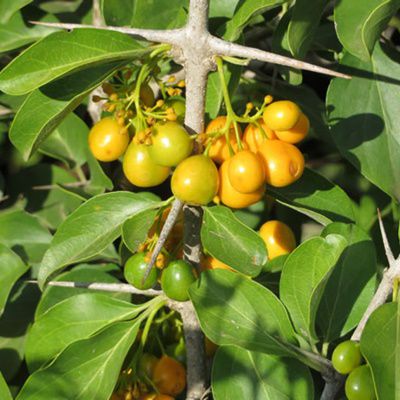
False Turkeyberry – 5 Seeds
(Plectroniella armata / Canthium armatum)
R30.00
People eat the fruits, which can also be used to make a jelly. The leaves are also edible and the sap is used to make beer in Eswatini.
Indoor Sowing: Spring.
Direct Sowing: Spring and Early Summer.
In stock
🍒 Fruit Quick Facts
Fruit Info
- 🍽️ Culinary Use: Beer / Wine, Cooked greens, Jams and Jellies, Raw Eating, Salads
- 🥗 Edible Part: Fruit, Leaf
- 😋 Flavor Profile: Peach-like
Growth Traits
- 🌱 Life Cycle: Perennial
- 🌾 Plant Type: Shrub, Tree
- 🔁 Fruiting Needs: Needs Male & Female Plants
- 🪴 Growth Habit: Scrambling, Spiny
- 🌸 Flower Color: Creamy White
- 🌿 Foliage Type: Deciduous
- 📏 Mature Height: 1-5m
- 🦋 Pollinator Method: Attracts Bees, Attracts Beetles, Attracts Sunbirds
Growing Requirements
- 🌞 Sun Exposure: Full Sun
- 💧 Water Needs: Moderate Water, Water Deeply
- ☀️ Growing Conditions: Drought Tolerant, Frost Sensitive, Heat Tolerant, Low Cold Tolerance
- 🟤 Soil Preference: Loam, Sandy, Well-Drained
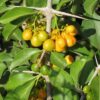
False Turkeyberry (Plectroniella armata / Canthium armatum) is a shrub or small tree with thorns and fragrant white flowers in summer followed by edible fruits, yellow or reddish when ripe, with a shape that varies based on the quantity of seeds.
People eat the fruits, which can also be used to make a jelly. The leaves are also edible and the sap is used to make beer in Eswatini. It makes a very good thorny barrier hedge, and can be trimmed to shape or left informal, and it is a good plant to grow to attract fruit-eating birds to the garden.
Common names: armed turkey-berry, false turkey-berry (Eng.); valsbokdrol, basterbokdrol (Afr.); umphembedu, umvuthwamini, isikhwakwane-inkomazi (isiZulu); mufhaladzi-tshitangu, mulivhadza-tshitangu (Tshivenda); insangonsango, sangongongo, umvutfwamini wemahlatsi (siSwati)
Growing False Turkeyberry
Indoor Sowing: Spring.
Direct Sowing: Spring and Early Summer.
- Sow the seeds in spring or early summer.
- Scarify the seed coat.
- Sow the seeds in a seed tray filled with a sandy soil mix.
- Put the tray in a warm spot and keep the soil mix moist.
- Germination in about 4 weeks.
- Leave the seedlings in the tray until the following spring and then transfer them into pots or potting bags.
- Grow in well-drained, sandy soil in sun or semi-shade.
- Plants will flower and fruit better in a sunny position.
Related products