Blue Vervain – 50 Seeds
(Verbena hastata)
R30.00
Blue Vervain is a short-lived perennial flowering plant that has a long history in traditional medicine.
Common Names: American vervain, blue vervain, simpler’s joy, swamp verbena, wild vervain, wild hyssop, and blue verbena.
Indoor Sowing: Cold Stratification and then transplant seedlings in Spring.
Direct Sowing: Autumn.
In stock
🌿 Herbal Quick Facts
Medicinal Info
- 🌿 Medicinal Part: Flower, Leaf, Root, Seed
- 🥣 Herbal Preparation: Decoction, Extract / Tincture, Infusion / Tea, Poultice, Powder
- ⚕️ Healing System: American Traditional Medicine
Growth Traits
- 🌱 Life Cycle: Perennial
- 🦋 Pollinator Method: Attracts Bees, Attracts Beetles, Attracts Butterflies, Attracts Moths, Attracts Wasps
- 🪴 Growth Habit: Clumping, Upright
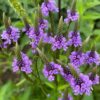
- 🌸 Flower Color: Blue-purple
Growing Requirements
- 🌞 Sun Exposure: Full Sun, Partial Shade
- 💧 Water Needs: Avoid Overwatering, Regular Water
- ☀️ Growing Conditions: Drought Tolerant, Frost Tolerant, Heat Tolerant
- 🟤 Soil Preference: Clay, Loam, Sandy, Tolerant of most soils, Well-Drained
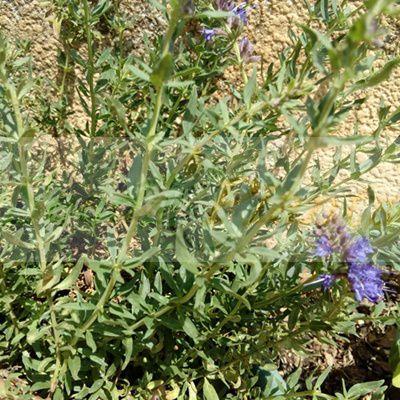
Blue Vervain (Verbena hastata) is a tall, upright growing, clump-forming, short-lived perennial flowering plant in the vervain family Verbenaceae. The plant has a long history in traditional medicine.
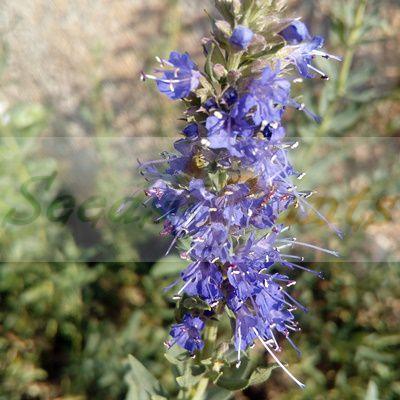
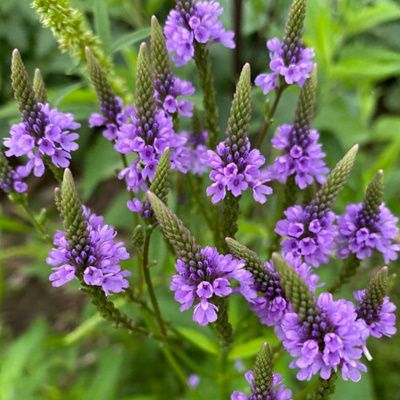
It produces numerous, pencil-like flower spikes branched upwards. Each flower spike has a ring of small, blue-purple flowers. The flowers at the bottom of the spike bloom first. The stiff, pencil-like spikes are at the top of a square, grooved stem and its branches.
This wildflower plant prefers full sunlight and moist, well-drained, moderately rich soil. It typically grows in wet meadows, stream banks, fields and waste areas.
Common Names: American vervain, blue vervain, simpler’s joy, swamp verbena, wild vervain, wild hyssop, and blue verbena.
Blue Vervain Medicinal Benefits:
- To promote emotional and mental calm, especially in times of hormonal fluctuation.
- The treatment of depression, anxiety, tension and headache.
- Treatment of jaundice, digestive issues and coughs.
- It is also used externally for healing skin conditions.
Growing Blue Vervain
Indoor Sowing: Cold Stratification and then transplant seedlings in Spring.
Direct Sowing: Autumn.
- Seeds need to be cold stratified for 30 days, before sowing indoors. To stratify, use a moist, but not soggy, medium like a damp paper towel, coffee filter, or a mixture of peat and vermiculite/sand. Place the seeds and the moist medium in a sealed plastic bag or container. Place the sealed container in the refrigerator for about 30 days.
- After cold stratification, sow the seeds indoors or alternatively direct sow the stratified seeds in Spring.
- You can also direct sow the seeds in autumn without prior cold stratification and germination will take in Spring – this is the easiest method.
- Use a well-draining, moist potting mix when planting the seeds.
- Place a few seeds on top of the growing medium.
- Cover the seeds with a thin layer of soil.
- Keep soil moist, but not soggy.
- Optimal germination temperature is 15-21°C.
- Germination is erratic and can take as little as 30 days or up to 3 months, depending on when the seeds were sown, so patience is required. Generally seeds direct sown in Autumn will germinate in Spring and seeds direct sown in Spring will germinate in Summer.
- Once germination takes place, wait until the first set of true leaves appears before thinning the plants out.
Related products