Italian Senna – 10 Seeds
(Senna italica)
R30.00
This plant has medicinal benefits and in many regions, this plant is cultivated commercially.
Common Names: Port Royal senna, Italian senna, Senegal senna, Eland’s Pea, Swartstorm, Wild Senna and Wilde Ertjies.
Indoor Sowing: Late Winter and Spring
Direct Sowing: Spring.
In stock
🌿 Herbal Quick Facts
Medicinal Info
- 🌿 Medicinal Part: Flower, Leaf, Root
- 🍵 Herbal Preparation: Decoction, Infusion / Tea, Inhalation, Juice, Paste, Poultice, Powder
- ⚕️ Healing System: African Traditional Medicine, Ayurvedic System of Medicine, Unani System of Medicine
Growth Traits
- 🌱 Life Cycle: Perennial
- 🌾 Plant Type: Herbaceous Perennial
- 🦋 Pollinator Method: Attracts Bees, Attracts Ladybirds, Attracts Parasitic Wasps
- 🪴 Growth Habit: Mat-Forming
- 🌿 Foliage Type: Deciduous
- 🌸 Flower Color: Yellow
Growing Requirements
- 🌞 Sun Exposure: Full Sun
- 💧 Water Needs: Avoid Overwatering, Moderate Water
- ☀️ Growing Conditions: Drought Tolerant, Frost Sensitive, Heat Tolerant, Not Cold Tolerant
- 🟤 Soil Preference: Gravel, Loam, Poor, Sandy, Well-Drained
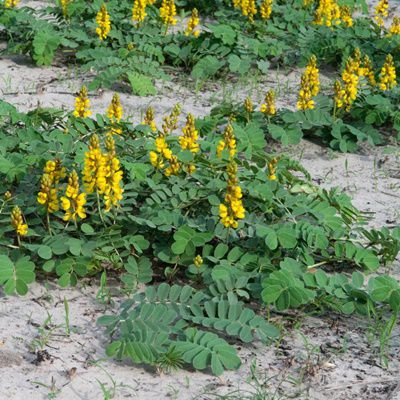
Italian Senna (Senna italica) is found in the drier regions of tropical Africa, from sea level up to 1850m altitude. Usually, it is found close to streams and in sandy and disturbed habitats.This plant is adapted to warm temperature and may grow throughout the year.In many regions. This plant has medicinal benefits and in many regions, this plant is cultivated commercially.
In India, it is used to produce a powder for treating hair-related diseases which is known as ‘neutral henna’ and in some parts of the world, this species is cultivated for the leaves which yield the drug senna, known commonly as Senna glycoside, which in turn is the base for a laxative.
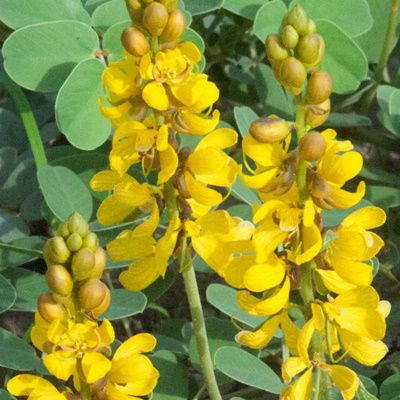
Individuals of this species are deciduous, perennial herbs, and shrubs up to 60 cm tall. The plant is woody throughout and the plant has taproots. Stems are solid, usually less than 2 m tall. This species has compound leaves and there are approximately 4-6 leaflets per leaf, which are arranged spirally and alternately. The leaflets are elliptical, and shortly hairy on both sides. Flowering usually takes place during rainy season, but flowers can appear throughout the year in moist conditions.Petals of these flowers are usually yellow or orange in color.
Common Names: Port Royal senna, Italian senna, Senegal senna, Eland’s Pea, Swartstorm, Wild Senna and Wilde Ertjies.
Growing Italian Senna
Indoor Sowing: Late Winter and Spring
Direct Sowing: Spring.
- The seeds need to be scarified or else can be soaked overnight in warm water before planting.
- If you start the seed indoors, use biodegradable peat pots to accommodate their taproots and reduce the risk of transplant shock.
- Press the seeds gently into the soil, without burying them completely, as light is a germination catalyst.
- Keep the soil moist but not waterlogged to prevent mold growth.
- Provide ample but not direct sunlight.
- Maintain a consistent temperature range of 21-24°C.
- Germination can take one week to three months.
- The plant needs well drained soil.
- It should be planted in full sun to flower and produce the most colorful blossoms, but can also grow in partial shade.
- Can be successfully grown in containers.
Related products