
Fruit Gardening
Growing Fruit Trees in Containers
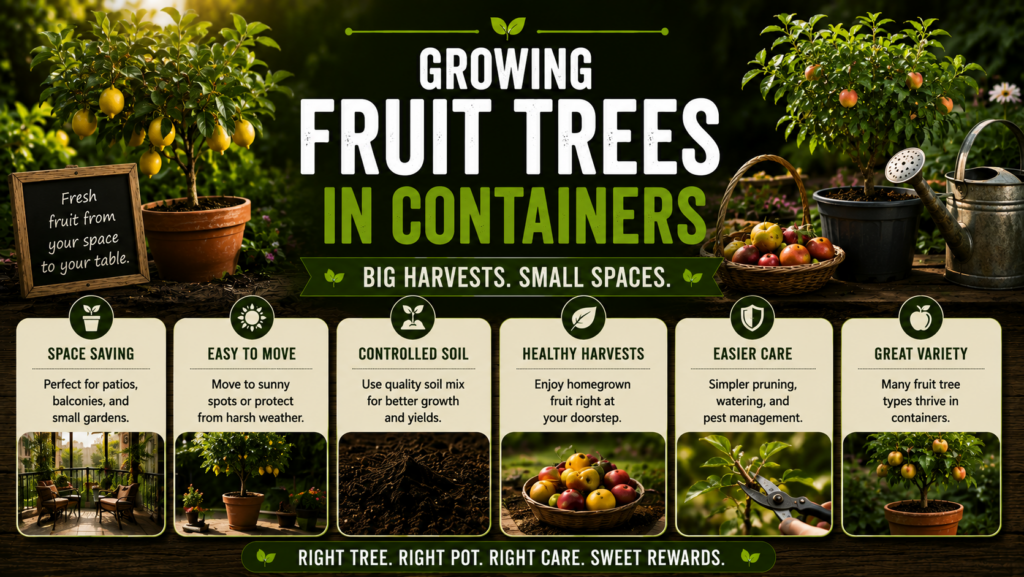
Growing your own fruit does not necessarily mean having a large garden. Many fruit trees can be grown successfully in containers, making them a practical choice for gardeners with limited space.
A container-grown fruit tree can add greenery to a patio, courtyard, balcony or small garden while also giving you the pleasure of harvesting your own fruit. With the right tree, a suitable container and a little regular care, even a beginner can enjoy growing fruit at home.
The key is to remember that a tree growing in a container has less room for its roots than one planted directly in the ground. This means it needs the right growing conditions and a little more attention to watering, feeding and repotting.
Can Fruit Trees Really Grow in Containers?
Yes. In fact, several types of fruit trees can do very well in containers when they are given suitable growing conditions.
The most important consideration is the size and growth habit of the tree. Some fruit trees naturally remain relatively small, while others can grow into large trees that will eventually become difficult to manage in a pot.
Dwarf and naturally compact varieties are generally the easiest choices for container growing. Some fruit trees can also be kept at a manageable size through careful pruning.
Examples of fruit trees that may be suitable for containers include:
- Dwarf citrus trees
- Guavas
- Lemons
- Limes
- Kumquats
- Dwarf peaches
- Nectarines
- Figs
- Some apple varieties
- Some pear varieties
- Pomegranates
- Tamarillo
The best choice will depend on your local climate, the amount of sunlight available and which varieties are suitable for your area.
Choose the Right Fruit Tree
Choosing the tree is one of the most important decisions you will make.
Before buying a tree, check its mature size rather than only looking at the size of the young plant. A small tree at the nursery can eventually become much larger.
Look for terms such as dwarf, compact, patio or container suitable when selecting a tree. Ask your local nursery which varieties perform well in your region.
It is also worth checking whether the tree requires a pollination partner. Some fruit trees are self-fertile, meaning one tree can produce fruit on its own, while others produce better crops when another compatible variety is nearby.
If you only have space for one tree, choosing a self-fertile variety can make things considerably easier.
Select a Large Enough Container
The container is just as important as the tree.
A fruit tree needs enough room for its roots to develop. A container that is too small can restrict root growth, dry out quickly and make it difficult for the tree to remain healthy.
Choose a sturdy container with plenty of drainage holes in the bottom. The container should also be heavy and stable enough to support the tree as it grows.
Plastic, terracotta, ceramic and other suitable gardening containers can all be used. Each has advantages and disadvantages.
Terracotta pots, for example, are attractive and allow some air movement through the sides, but they can dry out more quickly. Plastic containers are lighter and generally retain moisture for longer.
When selecting a container, think about the mature size of the tree rather than simply choosing the smallest pot that fits the young plant.
Make Sure the Container Drains Properly
Good drainage is essential.
Fruit trees do not enjoy sitting in permanently waterlogged soil. Poor drainage can prevent the roots from getting enough oxygen and can contribute to root problems.
Make sure the container has drainage holes and that they are not blocked.
You should also avoid placing a container directly where the drainage holes are sealed against a solid surface. If necessary, raise the container slightly so excess water can escape.
Adding a thick layer of stones or gravel to the bottom of a pot is not a substitute for proper drainage holes. It is better to use a suitable growing medium throughout the container and allow excess water to drain freely.
Use a Good Quality Growing Medium
Garden soil taken directly from the ground is usually not the best choice for container-grown fruit trees. It can become compacted inside a pot and may not provide the drainage and air movement that container roots need.
Instead, use a good-quality commercial potting or container-growing mix suitable for fruit trees.
The growing medium should provide a balance between moisture retention and drainage. It should also contain enough organic matter to support healthy root growth.
As the tree grows, the growing medium may gradually settle and break down. Check the level occasionally and top it up when necessary.
Give Your Fruit Tree Plenty of Sunlight
Most fruit trees need plenty of sunlight to grow well and produce fruit.
Choose a position that receives several hours of direct sunlight each day. A sunny patio, courtyard or open section of the garden may be suitable.
Remember that the position of the sun changes throughout the year. A spot that receives plenty of sunlight in summer may be shaded by a building or wall during another season.
If you are growing a fruit tree on a balcony, also consider how much direct sunlight actually reaches the plant rather than assuming that being outdoors automatically means it receives enough light.
Watering Container Fruit Trees
Watering is one of the most important parts of caring for fruit trees in containers.
A container has a limited amount of growing medium, so it can dry out much faster than the soil in a garden bed. This is particularly important during hot South African summers.
Check the growing medium regularly rather than watering according to a strict timetable.
Push your finger a few centimetres into the growing medium. If it feels dry at that depth, the tree may need watering.
When you water, water thoroughly until some water runs out through the drainage holes. This helps moisten the entire root area rather than just the surface.
However, avoid keeping the growing medium constantly saturated. The aim is to provide consistent moisture while still allowing excess water to drain away.
During very hot or windy weather, container plants may need to be checked more frequently.
Feed Your Fruit Tree Regularly
Fruit trees growing in containers have access to a limited supply of nutrients. Unlike trees planted in the ground, their roots cannot spread into a large area in search of additional nutrients.
Regular feeding can therefore be important for healthy growth.
Use a fertiliser suitable for fruit trees and follow the instructions on the product label. Avoid the temptation to use more fertiliser than recommended. More is not necessarily better, and excessive fertiliser can damage plants.
The nutritional needs of a tree can also change during the growing season, so follow the recommendations for the particular fruit tree you are growing.
A healthy growing medium containing organic matter can also help support good plant growth.
Pruning Helps Keep Container Trees Manageable
Pruning can be particularly useful when growing fruit trees in containers.
The goal is not simply to make the tree smaller. Good pruning can help maintain a manageable shape, remove dead or damaged growth and encourage healthy new growth.
The correct pruning method depends on the type of fruit tree. Apples, peaches, citrus and figs do not all respond to pruning in exactly the same way.
Before making major cuts, learn about the pruning requirements of your particular tree. It is much easier to prune a young tree gradually than to try to correct a badly overgrown tree later.
Protect Container Trees From Extreme Conditions
One advantage of growing a fruit tree in a container is that you can move it when necessary.
For example, a potted tree can potentially be moved to a more sheltered position during unusually strong winds or extreme weather.
However, large containers can become surprisingly heavy once filled with soil and a mature tree, so it is better to choose the final position carefully from the beginning.
Containers can also heat up considerably when exposed to intense sunlight, particularly dark-coloured containers. Keeping the roots from becoming excessively hot can help reduce stress during very hot weather.
When Should You Repot a Fruit Tree?
A fruit tree does not need to be repotted every year simply because it is growing.
Eventually, however, the roots may begin to fill the container and the tree may benefit from being moved into a larger pot or having its growing medium refreshed.
Signs that a tree may need attention include:
- Roots becoming tightly crowded.
- Water running through the container unusually quickly.
- The tree drying out very rapidly between watering.
- Noticeably reduced growth.
- The tree becoming unstable in its container.
Repotting is best done with care. Moving a tree into an unnecessarily large container can also create problems because the excess growing medium may remain wet for too long.
Increase the container size gradually where appropriate.
What About Fruit Production?
One of the most exciting parts of growing a fruit tree is seeing the first fruit develop.
However, be patient. A young tree may need time to become established before it produces a worthwhile crop.
The amount of fruit you can expect will depend on the type and variety of tree, its age, pollination, sunlight, nutrition, watering and general growing conditions.
A container-grown tree may also produce less fruit than a large mature tree planted in the ground. This does not mean it is unsuccessful. For many home gardeners, being able to pick even a small harvest of fruit grown in a pot is incredibly rewarding.
If your tree flowers but does not produce fruit, consider whether it needs another variety for pollination and whether it is receiving enough sunlight. Poor growing conditions can also affect fruit development.
Common Mistakes Beginners Make
Growing fruit trees in containers is relatively straightforward once you understand the basics, but a few common mistakes can cause problems.
Choosing a tree that will become too large
Not every fruit tree is suitable for long-term container growing. Always consider its eventual size before buying.
Using a container without drainage holes
Excess water needs somewhere to escape. Good drainage is essential.
Using ordinary garden soil
Garden soil can become compacted in containers. A suitable container-growing mix is generally a better option.
Underwatering during hot weather
Containers can dry out quickly, particularly in warm, windy conditions. Check the growing medium regularly.
Overwatering
Watering more frequently does not necessarily mean healthier plants. Allow excess water to drain away and avoid keeping the roots constantly saturated.
Overfeeding
Too much fertiliser can harm a tree. Always follow the recommended application rate.
Expecting fruit immediately
Fruit trees need time to establish themselves. Give your tree the care it needs and be patient.
A Simple Container Fruit Tree Care Routine
For a beginner, it can help to keep things simple.
Regularly:
- Check the moisture level of the growing medium.
- Water thoroughly when necessary.
- Check the leaves for signs of pests or disease.
- Remove dead or damaged growth.
- Check that drainage holes remain clear.
- Feed according to the requirements of the tree and the fertiliser being used.
- Watch for roots becoming overcrowded.
- Check that the tree is receiving enough sunlight.
These small tasks take only a few minutes but can make a significant difference to the health of your tree.
Final Thoughts
Growing fruit trees in containers is a wonderful option for gardeners who do not have enough space for a traditional orchard. With the right variety, a suitable container, good growing medium, plenty of sunlight and regular care, a patio or small garden can become a surprisingly productive growing space.
Start with one tree if you are new to container fruit growing. Learn how it responds to your conditions, become familiar with its watering and feeding needs, and then consider adding another tree if you have the space.
There is something especially satisfying about walking outside and picking fruit from a tree that you have cared for yourself. Whether it is a lemon for the kitchen or a handful of ripe fruit enjoyed straight from the tree, container gardening can bring a little taste of an orchard to almost any home.
Related Articles
Pruning Fruit Trees
Read MoreCommon Fruit Tree Problems
Read More