
Fruit Gardening, Gardening Tips
Common Fruit Tree Problems
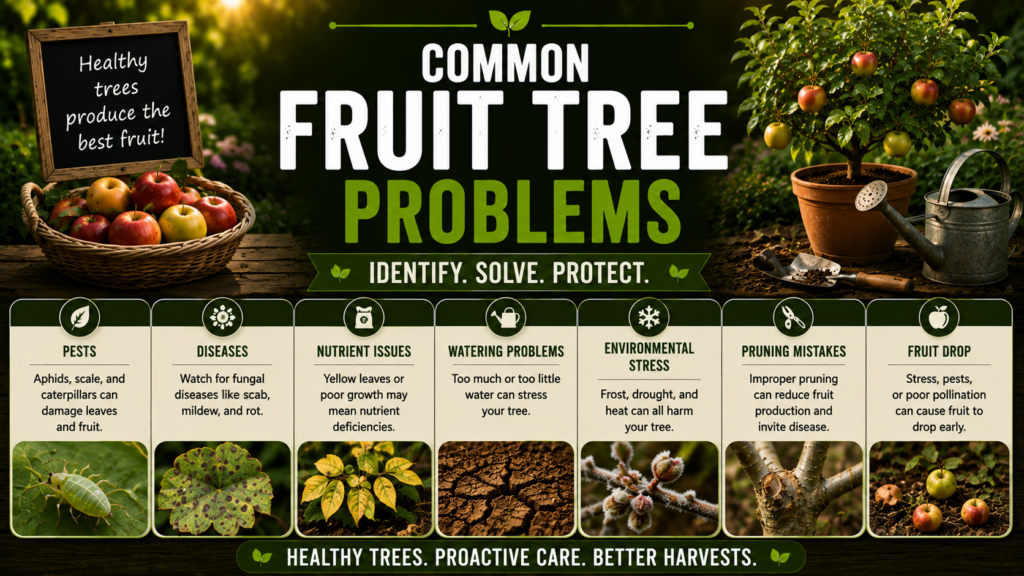
Growing fruit trees can be incredibly rewarding, especially when you finally get to harvest fruit from a tree that you have cared for yourself. However, fruit trees can sometimes develop problems, and knowing what to look for can make it much easier to keep them healthy.
Yellow leaves, damaged fruit, curling leaves, poor growth and a lack of fruit can all have different causes. Sometimes the problem is caused by insects or disease, while in other cases the tree may simply be receiving too much water, too little water or not enough sunlight.
The good news is that you do not need to be an expert gardener to spot many common problems. By regularly checking your fruit trees and learning what their normal growth looks like, you can often identify problems early.
Why Do Fruit Trees Develop Problems?
Fruit trees, like all plants, need the right combination of water, sunlight, nutrients, suitable soil and good growing conditions.
When one of these requirements is missing, the tree can become stressed. A stressed tree may then become more vulnerable to pests and diseases.
Problems can also be caused by environmental conditions. Strong winds, extreme heat, frost, heavy rain and sudden changes in weather can all affect fruit trees.
Another important point is that not every change in a tree means something is wrong. Some fruit trees naturally lose leaves at certain times of the year, while older leaves may turn yellow and fall as part of normal growth.
The first step is therefore to look carefully before taking action.
Yellow Leaves
Yellow leaves are one of the most common symptoms gardeners notice.
There are several possible causes, including:
- Too much water
- Too little water
- Poor drainage
- Nutrient deficiencies
- Root problems
- Insufficient sunlight
- Natural ageing of older leaves
- Pest or disease problems
If the leaves are yellow but the veins remain green, this can sometimes be associated with a nutrient problem. However, yellowing leaves alone are not enough to identify a specific deficiency.
Start by checking the growing conditions.
Is the soil constantly wet? Has the tree recently experienced very hot and dry weather? Does the container have adequate drainage? Is the tree receiving enough sunlight?
Looking at the whole plant rather than just one symptom can help you narrow down the possible cause.
Leaves Turning Brown or Dry
Brown, dry or crispy leaves can be a sign that the tree is under stress.
In hot weather, insufficient water is an obvious possibility, particularly for fruit trees growing in containers. Strong wind can also cause plants to lose moisture quickly.
However, overwatering and root problems can sometimes produce similar symptoms because damaged roots may not be able to take up water properly.
If you notice brown leaves, check the growing medium before watering again. If it is extremely dry, the tree may need water. If it is already wet and remains wet for long periods, poor drainage may be part of the problem.
Avoid automatically watering more simply because the leaves look dry.
Leaves Curling or Distorted
Curling leaves can have several causes.
Some pests feed on young leaves and cause them to become curled or distorted. Aphids are a common example. Environmental stress, including heat and water shortages, can also cause leaves to curl.
Inspect the undersides of the leaves as well as the new growth. Small insects can be surprisingly easy to miss.
Look for:
- Tiny insects
- Sticky residue
- Distorted new leaves
- Discolouration
- Fine webbing
- Ants moving around the tree
Ants are sometimes associated with sap-feeding insects because they may be attracted to the sugary substance produced by these pests.
Identifying the actual pest is preferable to immediately reaching for a pesticide.
Holes in the Leaves
Small holes, ragged edges or missing sections of leaves are often signs that something has been feeding on the tree.
Possible culprits include caterpillars, beetles, snails, slugs and other garden pests.
Inspect the tree regularly, particularly early in the morning or later in the afternoon when some pests are easier to spot.
Check both sides of the leaves and look around the branches and soil surface.
Not every insect is harmful, so try to identify what you have found before removing beneficial insects or applying a treatment.
Sticky Leaves
If the leaves of a fruit tree feel sticky, look closely for sap-feeding insects.
Aphids, scale insects, whiteflies and some other pests can produce a sugary substance known as honeydew. This can make leaves and nearby surfaces sticky.
Over time, a black fungal growth known as sooty mould may develop on the honeydew.
The presence of sooty mould does not necessarily mean that the fungus is the original problem. It can be a clue that sap-feeding insects are present.
Look carefully at the leaves, stems and young growth to find the underlying pest.
Flowers but No Fruit
It can be disappointing when a fruit tree produces plenty of flowers but very little fruit.
There are several possible reasons.
Some fruit trees need another compatible variety nearby for effective pollination, while others are self-fertile.
Poor weather during flowering can also affect pollination. Heavy rain, strong wind or very cold conditions may reduce insect activity and interfere with the normal pollination process.
A young tree may also flower before it is mature enough to produce a significant crop.
If your tree flowers without producing fruit, find out whether the particular variety requires cross-pollination and check whether the tree is receiving suitable growing conditions.
Fruit Falling Prematurely
Some fruit drop is perfectly normal.
Fruit trees may naturally shed some young fruit because they cannot support every fruit that begins developing.
However, excessive fruit drop can have other causes.
Possible reasons include:
- Water stress
- Poor pollination
- Nutrient problems
- Pest damage
- Disease
- Extreme temperatures
- Damage to young fruit
If fruit is dropping, inspect the fallen fruit as well as the tree. Look for holes, discolouration, mould or other signs that may provide clues.
Fruit Splitting
Fruit splitting can occur in several types of fruit, particularly when growing conditions change rapidly.
A common situation is when a period of dry weather is followed by heavy watering or rainfall. The fruit may take up water rapidly, causing the flesh to expand faster than the skin can accommodate.
Keeping soil moisture reasonably consistent can help reduce stress.
Mulching around a fruit tree can also help conserve soil moisture, although mulch should not be piled directly against the trunk.
Small or Poor-Quality Fruit
If your tree produces fruit but the fruit remains unusually small or does not develop well, several factors may be involved.
The tree may not be receiving enough sunlight, water or nutrients. Excessive fruiting can also mean that the tree is trying to support more fruit than it can adequately develop.
Pruning, feeding, watering and fruit thinning may all play a role depending on the particular type of fruit tree.
It is important not to assume that adding more fertiliser will solve the problem. Too much fertiliser can create its own problems.
Fruit With Spots or Damage
Spots, holes, discolouration and damaged fruit can be caused by insects, fungal diseases, bacteria or environmental conditions.
Inspect affected fruit carefully.
If only a few fruits are affected, remove damaged fruit where appropriate and dispose of it rather than leaving it underneath the tree.
Also inspect the leaves and branches. Problems that affect fruit often leave clues elsewhere on the tree.
Good garden hygiene can help reduce the spread of some problems. Remove fallen diseased leaves and damaged fruit when appropriate, particularly if they appear to be associated with a disease.
Fungal Diseases
Fruit trees can be affected by a variety of fungal diseases.
Depending on the tree and disease, symptoms may include:
- Leaf spots
- Powdery growth
- Discoloured leaves
- Premature leaf drop
- Damaged fruit
- Dieback of branches
Fungal problems are often encouraged by warm, humid or poorly ventilated conditions.
Good air circulation can help. Avoid planting trees too closely together and prune appropriately where necessary to prevent dense, overcrowded growth.
When watering, avoid unnecessarily wetting the foliage, particularly if the tree is already showing signs of fungal problems.
If you are unsure what disease is affecting your tree, take clear photographs of the leaves, fruit and affected branches and ask a knowledgeable local nursery, horticultural expert or plant specialist for assistance.
Problems With the Trunk or Branches
Do not concentrate only on the leaves and fruit. The trunk and branches can provide important clues about the health of a fruit tree.
Look for:
- Cracks
- Unusual swellings
- Discoloured bark
- Dead branches
- Holes
- Oozing or leaking areas
- Damage caused by pruning or garden tools
Dead or damaged branches can sometimes provide an entry point for pests and diseases.
If you need to prune, use clean, suitable pruning tools and make appropriate cuts for the type of tree.
Major damage to the trunk or main branches may require advice from an experienced horticulturist.
Poor Growth
A fruit tree that seems to have stopped growing may be experiencing stress.
First check the basics:
Sunlight: Is the tree receiving enough direct sunlight?
Water: Is the growing medium drying out too quickly, or is it staying wet?
Roots: Does the tree have enough space for its root system?
Nutrition: Is the tree receiving appropriate nutrients?
Pests: Are insects feeding on the leaves or new growth?
Disease: Are there unusual marks, spots or areas of dieback?
Poor growth can have more than one cause, so avoid assuming that a lack of fertiliser is automatically responsible.
Fruit Trees in Containers Need Extra Attention
Container-grown fruit trees can experience some of the same problems as trees planted in the ground, but their growing conditions are more restricted.
The growing medium in a container can dry out quickly, particularly during hot weather. Nutrients are also limited, and roots eventually have less space available.
If you are growing a fruit tree in a pot, check the moisture level regularly and make sure the container has good drainage.
For more information, see our guide on Growing Fruit Trees in Containers.
How to Prevent Many Fruit Tree Problems
Prevention is often easier than trying to correct a serious problem later.
A few simple habits can make a big difference.
Choose a suitable variety
Select a fruit tree that is suited to your climate and growing space.
Plant it in the right position
Most fruit trees need plenty of sunlight and sufficient room for healthy growth.
Water appropriately
Keep moisture reasonably consistent, but avoid keeping the roots permanently waterlogged.
Feed sensibly
Use a suitable fertiliser and follow the recommended application instructions.
Check your trees regularly
A quick inspection every few days can help you notice problems before they become severe.
Keep the area clean
Remove fallen leaves and fruit when appropriate, particularly when they show signs of disease or pest damage.
Encourage beneficial insects
Not every insect in your garden is a pest. Ladybirds, lacewings, bees and other beneficial insects can play important roles in the garden.
Avoid unnecessary spraying
Applying insecticides or other treatments without first identifying the problem can sometimes make matters worse by harming beneficial insects or failing to address the actual cause.
A Simple Fruit Tree Inspection
You do not need to spend hours inspecting your trees.
Once or twice a week, take a few minutes to look at the entire plant.
Start at the top and work your way down.
Check:
- Leaves – Look for spots, holes, curling, yellowing or unusual growth.
- New shoots – Look for insects or distorted growth.
- Flowers – Check whether they are developing normally.
- Fruit – Look for damage, spots, mould or premature fruit drop.
- Branches – Check for dead or damaged areas.
- Trunk – Look for cracks, holes or unusual growth.
- Growing medium or soil – Check moisture and general condition.
- Area around the tree – Look for fallen fruit, insects or other clues.
Taking photographs when you first notice a problem can also be helpful. Comparing photographs over several days can show whether the problem is getting worse or remaining stable.
Don’t Panic at the First Sign of a Problem
One of the most important lessons for a new gardener is not to panic when a plant looks slightly different.
A few yellow leaves do not necessarily mean that the tree is dying. Finding a few insects does not automatically mean that the entire tree needs to be sprayed. And losing a few young fruits can be a completely normal part of fruit development.
Take a moment to observe the tree and consider what has changed.
Has the weather been unusually hot? Has there been heavy rain? Have you recently moved the tree? Have you changed your watering routine? Are there insects present?
Looking at the bigger picture can help you make a much better decision than reacting to one symptom.
Final Thoughts
Fruit trees are living plants, and a few problems along the way are part of gardening. The important thing is to learn how to recognise the early warning signs and understand that the same symptom can sometimes have several different causes.
Regular observation is one of the best skills a beginner gardener can develop. The more time you spend looking at your trees, the easier it becomes to recognise what is normal and what is unusual.
Start with the basics: suitable sunlight, healthy soil or growing medium, appropriate watering, sensible feeding and regular inspections. If a problem does appear, identify it first and then choose the most appropriate solution.
With patience and a little experience, caring for fruit trees becomes much less intimidating—and there is no better reward than harvesting fruit from a tree you have grown yourself.
Related Articles
Pruning Fruit Trees
Read MoreBeneficial Insects vs Harmful Insects
Read MoreUnderstanding Soil Types
Read MoreGrowing Fruit Trees in Containers
Read MoreBenefits of Companion Planting
Read MoreSigns of Overwatering vs Underwatering
Read MoreCommon Seedling Diseases
Read MoreSuccession Planting Explained
Read More