
Gardening Tips, Plant Care
Signs of Overwatering vs Underwatering
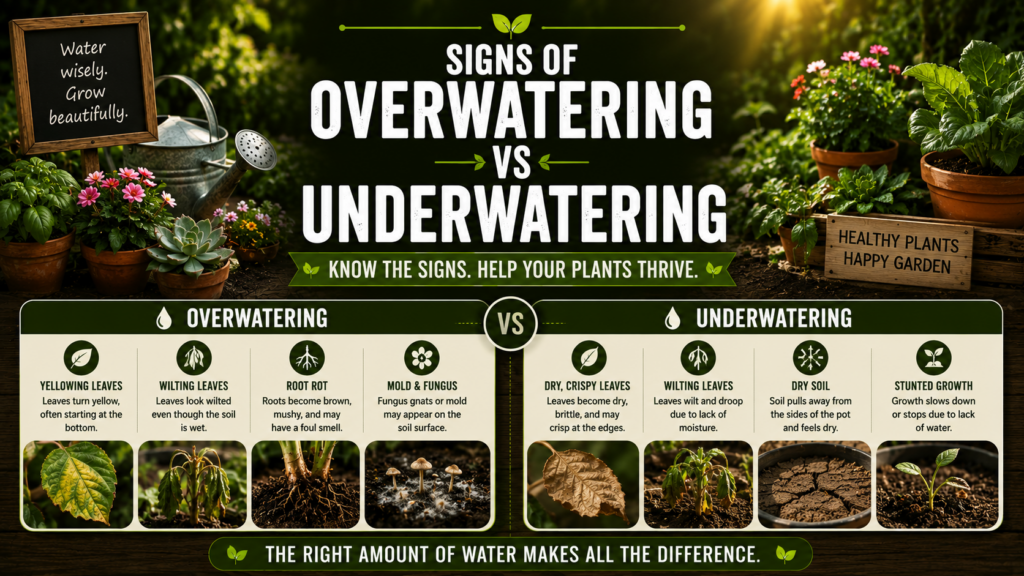
A wilting plant needs water. Or does it?
One of the most common watering mistakes in a home garden begins with a perfectly reasonable reaction: a plant looks limp, so the gardener reaches for the watering can. Sometimes that is exactly what the plant needs. At other times, the soil is already too wet and adding more water makes the problem worse.
Overwatering and underwatering can produce surprisingly similar symptoms. Both may cause wilting, yellowing leaves, brown leaf edges, poor growth and leaf drop. A plant suffering from damaged roots can look thirsty even while sitting in wet soil.
This is why the appearance of the leaves alone is rarely enough to diagnose a watering problem.
The most useful clues come from looking at the whole plant, checking the soil below the surface and considering recent weather, drainage, container size and how quickly the plant is actually using water.
Why Overwatering and Underwatering Can Look So Similar
Plants rely on roots to absorb water and move it through their tissues.
When the soil becomes too dry, roots cannot take up enough water to replace what the plant loses through its leaves. Cells lose pressure, and the plant wilts.
Overwatering creates a different problem but can lead to a similar result.
Roots need oxygen as well as moisture. In soil that remains saturated for too long, air spaces fill with water. Roots become stressed and may begin to die. Prolonged wet conditions can also favour root-rotting organisms.
Once roots are badly damaged, the plant may no longer absorb water effectively.
The result? Wilting.
This is the central reason watering problems are so often misdiagnosed. A wilted plant may need water, or it may be unable to use the water already surrounding its roots.
The First Thing to Check: The Soil
Before deciding what a plant needs, check the soil.
Do not judge only by the color of the surface. The top layer may look dry while the root zone remains wet, particularly in large containers or soil with a high water-holding capacity.
The opposite can also happen. A recently watered surface may hide a dry root ball below.
For small pots, a finger inserted into the growing medium can give a rough indication of moisture. For larger containers or garden beds, check deeper where practical.
You are trying to answer a simple question:
Is the root zone actually dry, moist or saturated?
That answer is usually more useful than any single leaf symptom.
Common Signs of Underwatering
Underwatering occurs when a plant loses water faster than its roots can replace it.
This may happen because watering is too infrequent, but that is not the only cause. Hot weather, strong wind, a small container, a restricted root system or water-repellent growing medium can all leave a plant short of moisture.
Wilting in Dry Soil
The most obvious sign is a limp or drooping plant combined with dry soil around the roots.
Leaves may hang down, soft stems may lose firmness and the whole plant can look tired.
If the plant is not too severely stressed, it may recover relatively quickly after thorough watering.
That recovery is an important clue. A plant that perks up after the root zone is properly moistened was likely suffering from water shortage.
Dry, Crisp Leaf Edges
Leaves may develop brown, dry margins or tips.
The damaged tissue often feels crisp rather than soft.
However, brown leaf edges are not proof of underwatering. Salt build-up, fertiliser damage, hot wind, root problems and other stresses can produce similar symptoms.
Again, check the soil and recent conditions.
Leaves Becoming Dry and Brittle
With prolonged water shortage, leaves may become increasingly dry, curled or brittle.
Older leaves may die and fall.
A severely dehydrated plant may not recover fully even after watering, particularly if fine roots have died or growing points have been damaged.
Dry Soil Pulling Away From the Container
In pots, very dry growing medium may shrink away from the sides of the container.
This creates a frustrating problem. When water is applied, it may run down the gap between the root ball and the pot wall, then drain out of the bottom without properly wetting the roots.
The gardener sees water leaving the drainage holes and assumes the plant has been thoroughly watered.
In reality, much of the root ball may still be dry.
Very Light Containers
A dry pot is usually much lighter than a well-watered one.
With experience, lifting smaller containers can become one of the quickest ways to judge whether they need water.
This method is especially useful for seedlings, hanging baskets and container vegetables, although it becomes less practical with large or heavy pots.
Slow Growth
Chronic underwatering does not always cause dramatic collapse.
A plant may simply grow poorly. New leaves remain small, flowering is reduced, fruit development suffers or the plant repeatedly wilts during the hottest part of the day.
If this cycle continues, overall growth can be severely limited.
Common Signs of Overwatering
Overwatering is not simply “giving a plant a lot of water”.
A plant can receive a large amount of water and still be perfectly healthy if the excess drains away and the soil regains enough air.
The real problem is when the root zone remains too wet for too long.
Wilting in Wet Soil
This is one of the strongest warning signs.
If a plant is wilting but the soil around its roots is still wet, do not automatically add more water.
Check drainage and consider whether the roots may be stressed.
A plant with severely damaged roots can continue wilting even though moisture is abundant.
Yellowing Leaves
Overwatered plants often develop yellow leaves, particularly when root function has been impaired.
However, yellowing is a very general symptom. Nutrient deficiencies, natural ageing, disease, low light and other problems can all cause it.
Yellow leaves become more suggestive of overwatering when they occur together with consistently wet soil, poor growth and other signs of root stress.
Soft, Limp Growth
Overwatered plants may look limp rather than dry.
Leaves can feel soft, and damaged tissue may become water-soaked or weak.
This differs from the dry, crisp texture often associated with prolonged drought stress, although the distinction is not always clear.
Leaf Drop
Plants with stressed roots may shed leaves.
Both old and newer leaves can be affected, depending on the plant and severity of the problem.
Once again, leaf drop alone does not diagnose overwatering. The condition of the root zone matters.
Fungus or Algae on the Soil Surface
Persistent moisture may encourage algae, moss-like growth or fungal growth on the surface of potting mix.
These are not always directly harming the plant, but they can indicate that the surface is remaining damp for long periods.
A green layer on seedling mix, for example, is often a sign that moisture and growing conditions need attention.
A Sour or Unpleasant Smell
Healthy potting mix should smell earthy.
A stagnant, sour or unpleasant smell can indicate prolonged waterlogging and decomposition under poorly aerated conditions.
If a container smells bad and the plant is declining, inspect the roots.
Root Rot
Advanced overwatering can contribute to conditions that favour root rot.
Affected roots may become:
- brown or dark
- soft
- mushy
- fragile
- poorly developed
Healthy roots vary between plant species, but they are generally firm rather than decayed.
Once a large proportion of the root system has rotted, recovery becomes much more difficult.
A Quick Comparison: Overwatering vs Underwatering
Because symptoms overlap, no comparison chart can diagnose every plant correctly. Still, the following patterns can help.
More Suggestive of Underwatering
- soil is dry through the root zone
- container feels unusually light
- leaves are limp and may become dry or crisp
- growing medium has pulled away from the pot sides
- plant improves after thorough watering
- wilting repeatedly occurs as the soil dries
More Suggestive of Overwatering
- soil remains wet for long periods
- plant wilts despite wet soil
- leaves yellow while the root zone stays damp
- growth is weak or stalled
- potting mix smells sour or stagnant
- roots are brown, soft or decaying
- container drains poorly
- algae or persistent surface growth is present
The key word is suggestive. Several other problems can create the same symptoms.
Morning Wilt, Afternoon Wilt and Temporary Heat Stress
Not every wilted plant has a watering problem.
On very hot days, some plants lose water through their leaves faster than their roots can temporarily replace it. They may wilt during the hottest part of the afternoon even when the soil contains adequate moisture.
If the plant recovers as temperatures cool, repeatedly adding extra water may not be necessary.
This is particularly important in hot South African summers. A gardener may see afternoon wilt and begin watering several times a day, eventually creating a constantly saturated root zone.
Before watering, check the soil.
If it is still adequately moist below the surface, heat stress rather than dry soil may be the immediate cause.
Seedlings: Where Watering Mistakes Happen Quickly
Seedlings are especially sensitive because they have small root systems and limited reserves.
A shallow seed tray can dry rapidly in warm weather. At the same time, keeping seedling mix constantly saturated can encourage root problems and diseases such as damping off.
Signs Seedlings May Be Too Dry
- fine seedlings suddenly wilt
- the surface and root zone dry rapidly
- trays become very light
- leaf edges dry out
- seedlings recover after careful watering
Signs Seedlings May Be Too Wet
- mix remains saturated
- seedlings grow slowly
- leaves become pale or yellow
- stems weaken near the soil line
- roots become unhealthy
- seedlings collapse
- algae develops on the surface
Young seedlings can deteriorate quickly, so frequent observation is more useful than following a fixed watering schedule.
Container Plants Need Different Watering Judgement
Containers behave differently from garden soil.
A small black plastic pot in full summer sun may dry extremely quickly. A large glazed container in shade may remain wet for days.
Several factors affect how fast a pot dries:
- container size
- container material
- number and size of drainage holes
- type of growing medium
- root density
- plant size
- sunlight
- wind
- temperature
This is why advice such as “water container plants every second day” is unreliable.
Two pots standing a few metres apart may have completely different watering needs.
Pot Size Matters
A small pot contains less growing medium and usually dries faster.
A very large pot can hold moisture for much longer, especially if occupied by a small plant with a limited root system.
This creates a common overwatering situation: a small plant is placed in an oversized container, and the large volume of growing medium remains wet because the young root system uses very little water.
Drainage Holes Matter
A container without adequate drainage can remain saturated even if watering is not especially frequent.
Always check whether excess water can escape.
Decorative outer pots can also create hidden problems. Water drains from the inner nursery pot but collects inside the outer container, leaving the plant standing in water.
Plants in the Ground Behave Differently
Garden soil usually changes moisture more slowly than a small container, but conditions vary enormously.
Sandy soil may drain rapidly and require more frequent watering. Heavy clay soil can hold water for long periods and become poorly aerated when saturated.
Raised beds may drain differently from surrounding ground. Slopes dry differently from low areas. Soil near walls can behave differently from soil in open beds.
Even within one garden, there may be no single correct watering schedule.
The goal is to understand how water moves through your particular soil.
The Problem With Frequent Shallow Watering
A quick splash on the soil surface may make the garden look watered without moistening the deeper root zone.
Frequent shallow watering can encourage roots to remain close to the surface, where they are more vulnerable to heat and rapid drying.
For many established garden plants, a more thorough watering followed by an appropriate interval is better than constant light sprinkling.
However, this principle must be adapted for:
- newly sown seeds
- very young seedlings
- shallow-rooted crops
- small containers
- extreme weather
There is no one watering method for every stage of plant growth.
The Problem With Watering by Calendar
“Water every day.”
“Water twice a week.”
“Water every three days.”
These instructions sound helpful because they are simple. Unfortunately, plants do not use water according to a calendar.
A container may dry in one day during hot, windy weather and remain wet for several days during cool, cloudy conditions.
Rainfall changes the picture. So does plant growth. A mature tomato plant with a large leaf canopy may use far more water than it did a month earlier.
A better habit is to check conditions and water according to need.
What to Do if a Plant Is Underwatered
If the root zone is genuinely dry, water thoroughly.
The aim is to moisten the root ball rather than merely wet the surface.
For container plants:
- Apply water slowly.
- Allow it to soak into the growing medium.
- Repeat if water initially runs through too quickly.
- Check whether the centre of the root ball is actually becoming moist.
Severely dried potting mix can become difficult to rewet. In some cases, slow repeated watering is more effective than pouring on a large amount at once.
Move severely stressed container plants out of harsh conditions temporarily where appropriate, but avoid making several dramatic changes at the same time.
Do not assume a badly wilted plant needs fertiliser. Rehydrate it first and allow it to recover.
What to Do if a Plant Is Overwatered
First, stop adding water automatically.
Then investigate why the root zone is staying wet.
Check:
- drainage holes
- blocked drainage
- standing water in saucers or outer pots
- compacted growing medium
- container size
- recent rainfall
- whether irrigation is running too frequently
If the soil is only mildly too wet and the plant is otherwise healthy, allowing the root zone to drain and dry appropriately may be enough.
If the plant is seriously declining, inspect the roots where practical.
Badly rotted roots may need to be removed, and a container plant may require repotting into fresh, suitable growing medium. However, severe root loss can make recovery uncertain.
Do not respond to overwatering by placing a stressed shade-loving plant in harsh sun simply to “dry it out”. Sudden heat and light stress can add another problem.
Can You Fix Overwatering by Adding More Drainage Material?
A common piece of advice is to add stones or gravel to the bottom of a pot.
This is often presented as a guaranteed way to improve drainage, but it does not solve the underlying problem of unsuitable growing medium or inadequate drainage holes.
What matters is that:
- the container has functional drainage openings
- the growing medium has appropriate structure
- excess water can leave the root zone
- watering frequency matches actual conditions
A layer of stones cannot compensate for a pot with no drainage hole or a dense, compacted mix that remains saturated.
Mulch Changes Watering Needs
Mulch can reduce evaporation from the soil surface and help moderate soil temperature.
This is often beneficial, particularly in hot or dry conditions.
But it also means the soil may stay moist longer.
A gardener who adds mulch but continues watering on the old schedule may unintentionally keep the root zone wetter than before.
After any major change to the garden, including mulching, reassess how quickly the soil dries.
Weather Changes Everything
Watering needs can shift dramatically from one week to the next.
Hot Weather
Plants generally lose more water during hot conditions, particularly when combined with strong sun and wind.
Containers can dry rapidly.
Cool Weather
Evaporation slows, and many plants use less water.
A watering schedule that worked in summer may cause waterlogging in cooler weather.
Wind
Wind can increase moisture loss from leaves and dry containers surprisingly quickly.
Humidity
High humidity reduces evaporation and can keep foliage and growing areas damp for longer.
Rain
After rainfall, do not assume every plant received enough water. Dense foliage may shed rain away from the root zone, and containers under roof overhangs may remain dry.
At the same time, heavy rain can saturate poorly drained beds and pots.
Check rather than assume.
How to Water More Accurately
Better watering is less about memorising rules and more about observation.
Check Below the Surface
Surface appearance can be misleading.
Learn the Weight of Your Pots
For manageable containers, compare how they feel when well watered and when approaching dryness.
Watch the Plant, but Also Check the Soil
The plant provides clues. The soil provides context.
Use both.
Group Plants With Similar Needs
Where practical, avoid placing plants with very different moisture requirements on the same automatic irrigation schedule.
Adjust With the Season
A fixed summer routine should not continue unchanged into cooler months.
Pay Attention After Repotting
A newly repotted plant may use water differently because the container size and growing medium have changed.
Keep Simple Notes
If a valuable or difficult plant repeatedly struggles, note when it was watered and how long the soil stayed wet.
Patterns often become obvious surprisingly quickly.
Common Watering Mistakes
Watering Every Wilted Plant Immediately
Always check the soil first.
Giving Small Amounts Too Often
This may wet only the surface while deeper roots remain dry.
Leaving Pots Standing in Water
Unless a particular growing method requires it, prolonged standing water can create serious root problems.
Assuming All Pots Dry at the Same Rate
They do not.
Ignoring Drainage
Watering technique cannot compensate for a container that traps excess water.
Continuing the Same Routine Through Every Season
Plant water use changes with weather and growth stage.
Treating Yellow Leaves as Proof of Overwatering
Yellowing has many possible causes.
Treating Brown Leaves as Proof of Underwatering
Brown tissue can result from several types of stress.
When the Problem Is Not Watering
Sometimes the soil moisture is appropriate and the plant still looks unwell.
Possible causes include:
- root disease
- stem damage
- nutrient deficiency
- fertiliser burn
- heat stress
- cold damage
- transplant shock
- pest damage
- vascular disease
- unsuitable soil pH
- excessive salts
This is why adding more or less water should not be the automatic answer to every struggling plant.
If symptoms continue despite appropriate soil moisture, look for another cause.
The Best Watering Schedule Is Not a Schedule
There is no universal rule for how often a garden should be watered.
A seedling tray, a terracotta pot, a raised vegetable bed and an established shrub do not have the same needs. Neither do plants growing through a cool rainy week and those facing hot, dry wind.
The most reliable approach is to combine observation with an understanding of the root zone.
Check the soil. Consider the weather. Look at drainage. Think about container size and plant growth. Notice how quickly conditions change after watering.
Most importantly, remember that wilting does not always mean “add water”.
Sometimes the plant is thirsty.
Sometimes the roots are drowning.
Knowing the difference begins below the soil surface.
Related Articles
Beneficial Insects vs Harmful Insects
Read MoreCommon Fruit Tree Problems
Read MoreHow Soil pH Affects Plants
Read MoreUnderstanding Soil Types
Read MoreBenefits of Companion Planting
Read MoreCommon Seedling Diseases
Read MoreSuccession Planting Explained
Read MoreNatural Ways to Control Aphids
Read More