
Gardening Basics, Gardening Tips
Understanding Soil Types
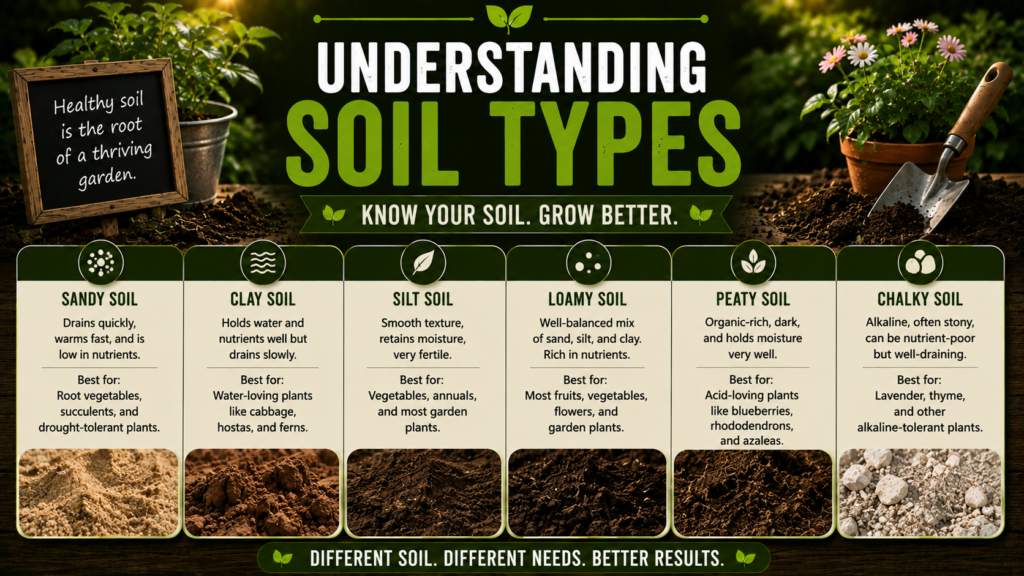
When you first start gardening, it is easy to concentrate on choosing seeds, plants, pots and fertilizer while overlooking one of the most important parts of the garden: the soil.
Healthy soil provides plants with somewhere to anchor their roots, but it does much more than that. It stores water and nutrients, allows air to reach the roots and provides a home for countless organisms that contribute to a healthy growing environment.
Not all soil is the same, though. Some soils are light and sandy, some are heavy and sticky, while others have a loose, crumbly texture that is ideal for growing many types of plants.
Understanding the type of soil you have is one of the simplest ways to become a more confident gardener.
What Is Soil?
Soil is much more than just dirt.
It is a mixture of mineral particles, organic matter, water, air and living organisms. The proportions of these different components affect how the soil behaves.
Mineral particles come mainly from weathered rocks and are generally divided into three main sizes:
- Sand – the largest particles
- Silt – medium-sized particles
- Clay – the smallest particles
The amount of each particle type influences whether a soil is sandy, silty, clayey or somewhere in between.
Organic matter, such as decomposed leaves and other plant material, is also an important part of healthy soil. It can improve soil structure and help support soil organisms.
The Main Types of Garden Soil
Garden soil is often described according to its texture.
The main soil types beginners are likely to hear about are:
- Sandy soil
- Clay soil
- Silty soil
- Loamy soil
Many gardens do not contain one pure soil type. Instead, the soil may be a mixture of different particle sizes.
Understanding the characteristics of each type can help you work out what your plants may need.
Sandy Soil
Sandy soil contains a high proportion of sand particles.
Because sand particles are relatively large, there are plenty of spaces between them. Water can therefore drain through sandy soil relatively quickly.
Advantages of sandy soil
Sandy soil is generally:
- Easy to dig
- Quick to warm up
- Well drained
- Less likely to become waterlogged
These characteristics can be useful for plants that dislike wet roots.
Problems with sandy soil
The same fast drainage that can be an advantage can also create challenges.
Water may drain away before plants have had enough opportunity to use it. Sandy soil can also struggle to hold nutrients because nutrients may be washed through the soil more quickly.
Adding organic matter such as well-made compost can help improve the ability of sandy soil to retain moisture and nutrients.
Regularly adding organic matter is generally more useful than trying to completely change the basic nature of the soil.
Clay Soil
Clay soil contains a high proportion of very fine clay particles.
These particles fit closely together, which means clay soil can hold a considerable amount of water.
When wet, clay soil can become sticky and difficult to work. When it dries out, it can become hard and compacted.
Advantages of clay soil
Clay soil can have some useful characteristics.
It can hold water and nutrients well, which can benefit plants when the soil structure is healthy.
Problems with clay soil
Heavy clay soil can drain slowly, particularly when it becomes compacted.
Poor drainage can leave plant roots sitting in overly wet conditions, which can cause problems for plants that prefer well-drained soil.
Avoid repeatedly digging or walking on wet clay soil because this can damage its structure and make compaction worse.
Adding organic matter over time can help improve the structure of clay soil and make it easier to work.
Silty Soil
Silty soil contains a higher proportion of silt particles.
Silt particles are smaller than sand but larger than clay.
Silty soil can feel smooth or soft when handled and may hold moisture reasonably well.
It can be quite fertile, but it may also become compacted or eroded more easily than some other soil types.
Adding organic matter and maintaining good soil cover can help improve soil structure.
Loamy Soil
Loamy soil is often considered an excellent general-purpose garden soil because it contains a useful balance of sand, silt and clay.
Good loamy soil tends to:
- Drain excess water reasonably well
- Hold enough moisture for plants
- Retain nutrients
- Allow air to reach plant roots
- Be relatively easy to dig
- Support a wide variety of plants
However, there is no single perfect soil for every plant.
Some plants prefer very free-draining conditions, while others prefer more moisture. Even a good loamy soil may need to be adjusted for particular crops.
How to Tell What Type of Soil You Have
You do not necessarily need specialised equipment to get a basic idea of your soil type.
Start by taking a small handful of moist soil.
Squeeze it gently in your hand and see how it behaves.
Sandy soil
Sandy soil usually feels gritty and does not hold together very well when squeezed.
Clay soil
Clay soil can feel smooth and sticky when wet. It may hold together firmly and can sometimes be rolled into a shape.
Silty soil
Silty soil often feels smooth and soft rather than gritty.
Loamy soil
Loamy soil generally feels crumbly and holds together slightly when moist without becoming excessively sticky.
This simple test will not give you a scientific soil classification, but it can give you a useful starting point.
The Importance of Soil Structure
Soil texture and soil structure are not exactly the same thing.
Texture refers to the relative amounts of sand, silt and clay.
Structure describes how those particles group together.
Good soil structure creates spaces for both water and air. This is important because plant roots need oxygen as well as water.
A soil that is heavily compacted may have very few spaces between its particles. Water may drain poorly and roots may struggle to grow through it.
Adding organic matter and avoiding unnecessary compaction can help maintain better soil structure.
Why Organic Matter Matters
Organic matter is one of the most useful additions for many garden soils.
Compost, decomposed leaves and other suitable organic materials can help improve soil structure while also supporting beneficial soil organisms.
In sandy soils, organic matter can help improve moisture and nutrient retention.
In clay soils, organic matter can help improve structure and make the soil easier to work.
This is one reason gardeners often describe compost as a valuable soil improver.
However, it is important to use properly prepared compost or suitable organic material rather than adding fresh material that has not decomposed sufficiently.
Soil and Water
Different soils behave very differently when it rains or when you water your garden.
A sandy soil may become dry relatively quickly because water moves through it easily.
A clay soil may remain wet for much longer.
This means that two gardens receiving the same amount of rainfall can have completely different moisture conditions.
Instead of watering simply because it is a particular day of the week, get into the habit of checking the soil and considering the weather.
During hot, dry periods, sandy soil may require more frequent attention. During periods of heavy rainfall, clay soil may need time to drain before additional watering is necessary.
Soil and Plant Nutrients
Plants need a range of nutrients for healthy growth.
Soil can store some of these nutrients and make them available to plant roots.
However, nutrient availability depends on several factors, including soil type, organic matter, moisture and pH.
A soil that contains nutrients is not necessarily a soil where plants can access all those nutrients easily.
This is one reason soil testing can be useful if plants repeatedly struggle despite receiving apparently good care.
How to Improve Poor Soil
The good news is that you do not have to live with poor soil forever.
Soil can often be improved gradually.
Add compost
Adding well-made compost can improve soil structure and increase organic matter.
Avoid compaction
Try not to walk unnecessarily on planting areas, particularly when the soil is wet.
Keep the soil covered
Mulch can help protect the soil surface from drying out and erosion.
Grow plants suited to your conditions
Choosing plants that naturally tolerate your soil type can save a lot of frustration.
Improve soil gradually
You do not need to completely transform a garden bed in one weekend. Adding organic matter regularly over time can make a significant difference.
Should You Replace Your Garden Soil?
Usually, no.
If the soil in your garden is sandy, clay-heavy or otherwise challenging, it can be tempting to remove it and replace everything.
For a large garden, however, this can be expensive, unnecessary and disruptive.
In many cases, improving the existing soil gradually is a better approach.
Adding organic matter, reducing compaction, improving drainage where appropriate and choosing suitable plants can make a garden much more productive.
Soil for Containers Is Different
The soil in a garden bed and the growing medium used in a container are not necessarily the same thing.
Garden soil can become compacted inside a pot and may not drain appropriately.
For containers, it is generally better to use a good-quality potting or container-growing mix.
This is especially important for plants such as fruit trees, vegetables and herbs that will remain in containers for extended periods.
Different Plants Have Different Soil Preferences
One of the biggest mistakes beginners can make is assuming that all plants want exactly the same soil.
They do not.
For example, some herbs and Mediterranean-type plants prefer well-drained conditions, while other plants grow better where the soil retains more moisture.
Root vegetables may also be affected by very heavy or compacted soil because their roots need space to develop.
Before planting, check the general growing requirements of the particular plant rather than trying to create one soil condition for everything in your garden.
What About Soil Colour?
Soil colour can provide some clues, but it should not be used by itself to determine soil quality.
Dark soil often contains a good amount of organic matter, but colour alone does not tell you everything about fertility, drainage or pH.
Likewise, light-coloured soil is not automatically poor soil.
Look at the soil’s texture, structure, drainage and organic matter as well.
Do You Need a Soil Test?
A basic hands-on assessment can tell you a lot, but sometimes a soil test is worthwhile.
A soil test can provide information about things such as:
- Soil pH
- Nutrient levels
- Other chemical properties
This can be particularly helpful when plants repeatedly fail to thrive and you cannot identify an obvious reason.
If you are establishing a vegetable garden or dealing with persistent soil problems, testing the soil can help you make more informed decisions instead of adding products at random.
Common Beginner Soil Mistakes
Treating all soil the same
Different soils hold water and nutrients differently. Your watering and feeding routine may need to take this into account.
Adding too much fertiliser
Poor plant growth does not always mean that more fertiliser is needed. Excessive fertiliser can damage plants and upset the balance of the soil.
Working wet clay soil
Digging or cultivating clay when it is very wet can cause compaction and damage soil structure.
Ignoring organic matter
Regularly adding suitable organic matter can be one of the simplest ways to improve garden soil over time.
Trying to change everything at once
Soil improvement is a process. Small improvements made consistently are often more practical than trying to completely rebuild a garden bed.
A Simple Soil Routine for Beginners
If you are new to gardening, you do not need a complicated soil-management programme.
Start by observing your soil.
After watering or rainfall, notice how quickly the water disappears.
When the soil is moist, feel its texture.
When it is dry, see whether it becomes hard or remains loose.
Look at how easily you can dig into it.
Notice whether plants growing in the area appear healthy.
Over time, you will develop a much better understanding of your own garden soil.
Final Thoughts
Understanding soil types may sound complicated at first, but you do not need to become a soil scientist to become a better gardener.
Start by learning the basic differences between sandy, clay, silty and loamy soils. Then observe how your own soil behaves when it is wet and dry.
Most garden soils can be improved with time and care. Adding organic matter, protecting the soil surface, avoiding unnecessary compaction and choosing plants suited to your conditions can all help create a healthier growing environment.
The most important thing is to work with your soil rather than constantly fighting against it.
Once you understand what is happening beneath your plants, many other parts of gardening—including watering, feeding, planting and choosing suitable crops—become much easier to understand.
Related Articles
Container Gardening Basics
Read MoreComposting for Beginners
Read MoreBeneficial Insects vs Harmful Insects
Read MoreCommon Fruit Tree Problems
Read MoreHow Soil pH Affects Plants
Read MoreBenefits of Companion Planting
Read MoreSigns of Overwatering vs Underwatering
Read MoreCommon Seedling Diseases
Read More