
Gardening Basics, Plant Care
How Soil pH Affects Plants
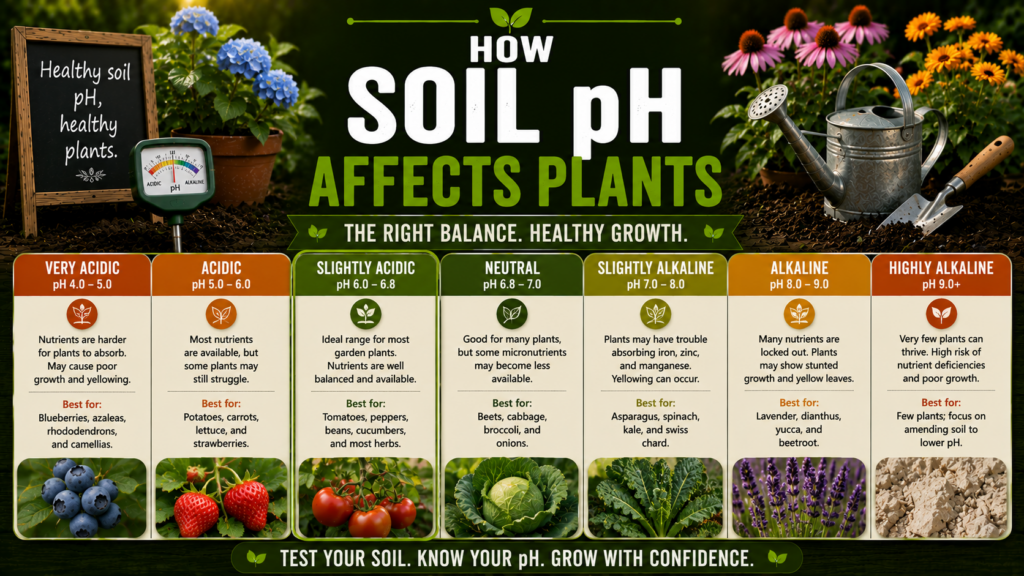
When you first start gardening, you will probably hear about sunlight, watering, fertiliser and soil. At some point, you may also come across another term: soil pH.
For a beginner, soil pH can sound rather complicated, but the basic idea is actually quite simple.
Soil pH tells you whether your soil is acidic, neutral or alkaline. This matters because soil pH can affect how easily plants are able to take up certain nutrients.
You can have soil that contains plenty of nutrients, but if the pH is unsuitable for a particular plant, some of those nutrients may not be readily available to its roots.
Understanding soil pH can therefore help explain why some plants thrive in one part of the garden but struggle in another.
What Does Soil pH Mean?
The term pH refers to the acidity or alkalinity of a substance.
The pH scale generally runs from 0 to 14:
- Below 7 – acidic
- Around 7 – neutral
- Above 7 – alkaline
Most garden soils fall somewhere within the acidic to alkaline range rather than at the extreme ends of the scale.
A pH of around 7 is considered neutral.
You do not need to memorise the entire pH scale to become a successful gardener. The important thing is to understand that different plants have different preferences.
Why Does Soil pH Matter?
Soil pH affects the availability of nutrients in the soil.
Plants need nutrients such as nitrogen, phosphorus, potassium, iron, magnesium and several others to grow properly.
However, nutrients do not behave exactly the same way at different pH levels.
When the pH is outside the preferred range for a particular plant, some nutrients can become less available.
This means that a plant may show signs that look like a nutrient deficiency even though the nutrient is actually present in the soil.
This is one reason it can be a mistake to immediately add more fertiliser when a plant looks unhealthy.
Acidic Soil
Soil with a pH below 7 is acidic.
Some plants naturally prefer acidic conditions.
Examples include:
- Blueberries
- Azaleas
- Camellias
- Rhododendrons
Certain plants have adapted to soils with lower pH levels and may struggle if the soil becomes too alkaline.
However, not every plant that grows in acidic soil has exactly the same preferred pH range.
If you are growing a plant that requires acidic conditions, check its individual requirements rather than assuming that any acidic soil will be suitable.
Alkaline Soil
Soil with a pH above 7 is alkaline.
Some plants tolerate or prefer more alkaline conditions.
Many gardeners, however, are working with soil that falls somewhere around slightly acidic to neutral, depending on the local environment.
If you are unsure about your soil, testing it is much more useful than guessing.
What Is Neutral Soil?
A pH of 7 is considered neutral.
Many common garden plants can grow successfully in soil that is close to neutral, although individual plants have different preferences.
A slightly acidic soil is also quite common in gardens and can be suitable for many vegetables, herbs and ornamental plants.
There is no single pH that is perfect for every plant.
What Happens When Soil pH Is Unsuitable?
If the soil pH is significantly outside the preferred range of a plant, the plant may have difficulty accessing certain nutrients.
Possible symptoms can include:
- Yellowing leaves
- Poor growth
- Pale or discoloured foliage
- Weak development
- Reduced flowering
- Poor fruit production
However, these symptoms can have many different causes.
Yellow leaves, for example, can be caused by watering problems, pests, disease, nutrient deficiencies or environmental stress.
You should therefore avoid diagnosing a pH problem based on one symptom alone.
Soil pH and Nutrient Availability
This is where soil pH becomes particularly interesting.
Different nutrients are more readily available at different pH levels.
For example, iron can become less available to plants when soil is too alkaline. This can result in symptoms such as yellowing between the leaf veins in some plants.
Phosphorus availability can also be affected by unsuitable pH.
The important point for a beginner is simply this:
The amount of a nutrient in the soil is not the only thing that matters. The soil conditions also affect whether the plant can access it.
How Do You Test Soil pH?
The simplest way to find out your soil pH is to test it.
Home gardening centres and nurseries may sell soil pH testing kits. Some are simple test strips or chemical testing kits, while electronic meters are also available.
For more detailed information, laboratory soil testing can provide a broader picture of soil conditions.
When testing, take samples from the areas where you actually intend to grow plants.
If you have several very different parts of the garden, testing each area separately may give you more useful information.
For example, the soil in a vegetable bed may not have exactly the same characteristics as soil near a lawn or under established trees.
Is Soil pH the Same Everywhere in the Garden?
Not necessarily.
Different parts of the same garden can have different pH levels.
This can happen because of differences in:
- Soil type
- Organic matter
- Previous fertiliser use
- Watering
- Plant material
- Natural geology
- Soil amendments
- Drainage
This is another reason not to assume that one soil test represents every part of a large garden.
What Naturally Affects Soil pH?
Soil pH is influenced by the underlying geology, climate and natural soil-forming processes.
The parent material from which the soil developed can have an important influence.
Rainfall can also affect soil chemistry over long periods.
Gardeners can influence soil pH through the materials they add, including certain fertilisers and soil amendments.
This is why it is useful to understand your soil before adding products designed to change its pH.
Can You Change Soil pH?
Yes, soil pH can sometimes be adjusted.
However, changing soil pH is not something you should do simply because you have heard that a particular product is good for plants.
The correct approach is to test your soil first and then determine whether a change is actually necessary.
Materials commonly used to raise soil pH include garden lime.
Materials such as elemental sulphur may be used to lower soil pH under appropriate conditions.
The amount required depends on several factors, including the existing pH and soil type.
Clay soil, for example, may respond differently from sandy soil.
Always follow the instructions for the particular product and avoid adding large quantities without knowing what your soil needs.
Don’t Try to Change Your Soil Without Testing It
One of the easiest mistakes for a beginner to make is adding lime or another soil amendment simply because a plant appears unhealthy.
If the soil is already at a suitable pH, changing it unnecessarily can create a new problem.
Think of soil amendments as tools rather than cures.
First identify the problem.
Then test where appropriate.
Only make changes when you have a good reason to do so.
Organic Matter and Soil pH
Adding organic matter such as compost is one of the best general practices for improving soil health.
Compost can improve soil structure, support soil organisms and help with moisture management.
However, compost should not be viewed as a quick way to dramatically change soil pH.
The effect of organic matter on pH depends on the material and the soil itself.
The main benefit is that adding suitable organic matter helps create a healthier soil environment overall.
Soil pH and Vegetable Gardens
Many common vegetables grow well in soil that is slightly acidic to close to neutral.
Examples include:
- Carrots
- Lettuce
- Beans
- Peas
- Tomatoes
- Cucumbers
- Squashes
- Radishes
However, individual varieties and growing conditions can differ.
If you are establishing a vegetable garden, a soil test can be particularly useful before making major changes.
It is generally better to work with your existing soil where possible rather than trying to force it into a completely different condition.
Soil pH and Herbs
Many culinary herbs are quite adaptable, but some have particular preferences.
Mediterranean herbs such as rosemary, thyme and oregano generally prefer well-drained growing conditions and can tolerate relatively dry soil once established.
Other herbs may prefer more moisture and different soil conditions.
When growing herbs, look at the plant’s overall requirements rather than focusing only on pH.
A suitable combination of sunlight, drainage, moisture and soil structure is just as important.
Container Plants and pH
Plants grown in containers can have different soil requirements from plants growing directly in the garden.
Using a good-quality potting mix designed for containers is generally preferable to filling a container with heavy garden soil.
Commercial growing mixes are often formulated with suitable characteristics for container plants.
Because the amount of growing medium is limited, nutrients and other soil properties can also change more quickly in containers.
If a container plant repeatedly struggles, check the growing medium, drainage, watering and feeding routine before assuming that pH is the problem.
What About Coffee Grounds?
Coffee grounds are sometimes recommended as a quick way to make garden soil more acidic.
This is an oversimplification.
Used coffee grounds are not a reliable method for dramatically lowering soil pH, and adding large quantities directly to soil is not recommended.
If you enjoy using coffee grounds in your garden, adding them appropriately to compost is generally a more useful approach.
As with any soil amendment, avoid adding large quantities based on gardening myths.
Can Mulch Change Soil pH?
Organic mulches can affect soil conditions as they decompose, but they should not generally be used as a quick method of dramatically changing soil pH.
The main benefits of mulch are protecting the soil surface, conserving moisture, moderating soil temperature and contributing organic material as it breaks down.
Choose mulch according to the needs of the plants and the garden rather than using it simply to manipulate pH.
Soil pH Is Only One Part of Gardening
It is easy to become overly focused on pH once you discover how important it can be.
Remember that plants need many things to grow well.
These include:
- Appropriate sunlight
- Suitable temperatures
- Water
- Good drainage
- Nutrients
- Healthy roots
- Suitable soil structure
- Enough growing space
- Protection from serious pest and disease problems
A soil pH of 6.5 will not magically make a plant healthy if it is growing in deep shade and receiving too much water.
Think about the whole growing environment.
Common Beginner Mistakes With Soil pH
Assuming every plant needs the same pH
Different plants have different preferences.
Changing pH without testing
Always establish what your soil is like before attempting to change it.
Adding too much lime
More is not necessarily better. Excessive amendments can create nutrient availability problems.
Blaming every yellow leaf on pH
Yellow leaves have many possible causes.
Ignoring drainage
A suitable pH cannot compensate for soil that remains permanently waterlogged.
Focusing on pH while ignoring soil health
Good soil structure, organic matter, drainage and biological activity are all important.
A Simple Soil pH Routine for Beginners
If you are new to gardening, you do not need to test your soil every few weeks.
Instead:
- Test your soil when you are establishing a new garden or vegetable bed.
- Record the result.
- Check the preferred growing conditions of the plants you want to grow.
- Only adjust pH if there is a genuine reason to do so.
- Follow the instructions for any soil amendment you use.
- Observe your plants and look at all possible causes when problems occur.
This simple approach can prevent unnecessary work and expense.
Final Thoughts
Soil pH is simply a way of describing how acidic or alkaline your soil is, but it can have an important influence on plant nutrition.
Understanding pH can help you make better decisions about which plants to grow and whether your soil needs any adjustments.
The most important lesson for a beginner is not to become obsessed with reaching a particular number.
Instead, understand your soil, choose plants that suit your conditions and make changes only when there is a good reason to do so.
Healthy gardening is about creating a balanced growing environment. Soil pH is one part of that environment, and once you understand the basics, it becomes much less intimidating.
Related Articles
Container Gardening Basics
Read MoreComposting for Beginners
Read MoreUnderstanding Soil Types
Read MoreSigns of Overwatering vs Underwatering
Read More10 Common Beginner Gardening Mistakes
Read MoreThe Difference Between Trees and Shrubs
Read MoreSeed Types Explained
Read MoreBulbs, Corms, Tubers and Rhizomes
Read More