
Gardening Basics, Gardening Tips
The Difference Between Trees and Shrubs
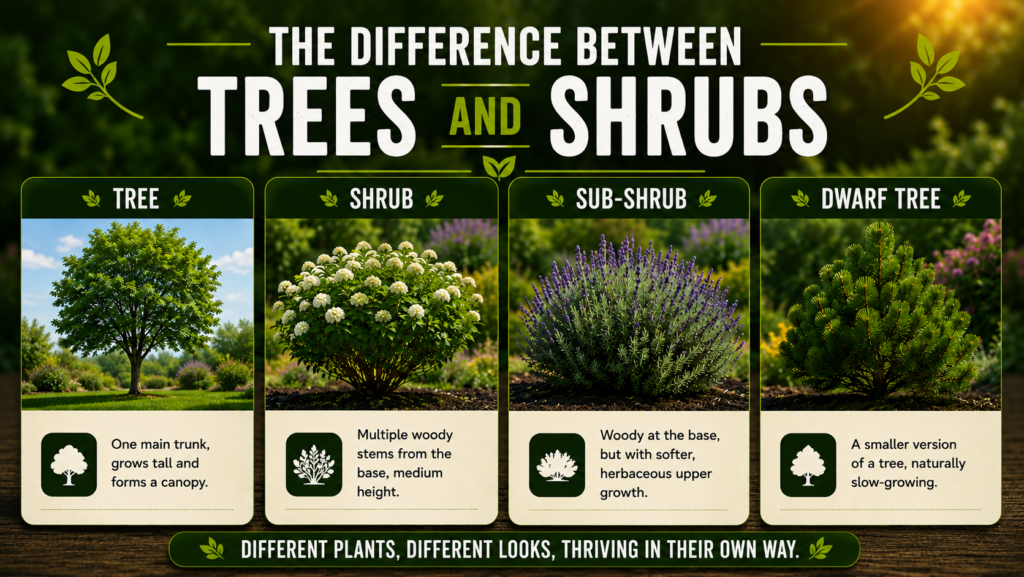
The primary difference between trees and shrubs lies in their overall size and the number of main stems. Both trees and shrubs can be either deciduous or evergreen.Trees typically have a single, dominant trunk and reach a significant height of 6m or more, while shrubs are generally smaller and have multiple stems branching from the base. Having said that, many trees can also grow in multiple stemmed forms while being tall enough to be trees, such as oak or ash. Therefore, having a single trunk is not always the definitive and only difference between trees and shrubs.
Also, many trees do not reach their ideal mature height, because of less than ideal growing conditions or pruning and some tree species have a specific maximum mature height, which is much shorter than standard trees, and instead resemble shrub-sized plants. A good example of this is for instance the Curry leaf tree.
You also get dwarf trees such as Dwarf Tamarillo or Dwarf Myrtle, where the tree is characterized by it’s small size, compact form, and slower growth rate compared to standard-sized trees. They typically reach a mature height of 2.5m to 5m, making them suitable for smaller spaces like patios, gardens, and even containers.
Shrubs on the other hand are often less than 6m in height and they are small to medium-sized perennial woody plants. Shrubs have persistent woody stems above the ground which are usually produced from near the soil line of the plant. They are distinguished from trees by their multiple stems and shorter height. Small shrubs, that reach a mature height of less than 2m, are sometimes termed as sub-shrubs. Plants such as Lavender are termed as sub-shrubs.
Related Articles
Container Gardening Basics
Read MoreComposting for Beginners
Read MoreBeneficial Insects vs Harmful Insects
Read MoreCommon Fruit Tree Problems
Read MoreHow Soil pH Affects Plants
Read MoreUnderstanding Soil Types
Read MoreBenefits of Companion Planting
Read MoreSigns of Overwatering vs Underwatering
Read More